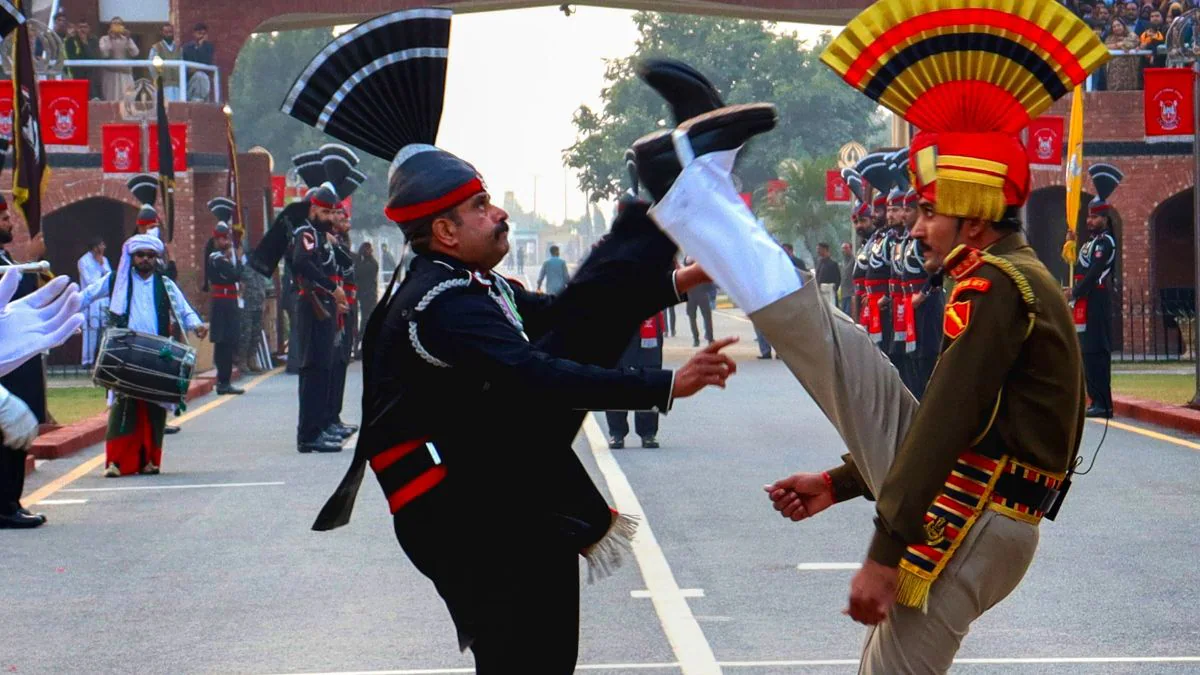
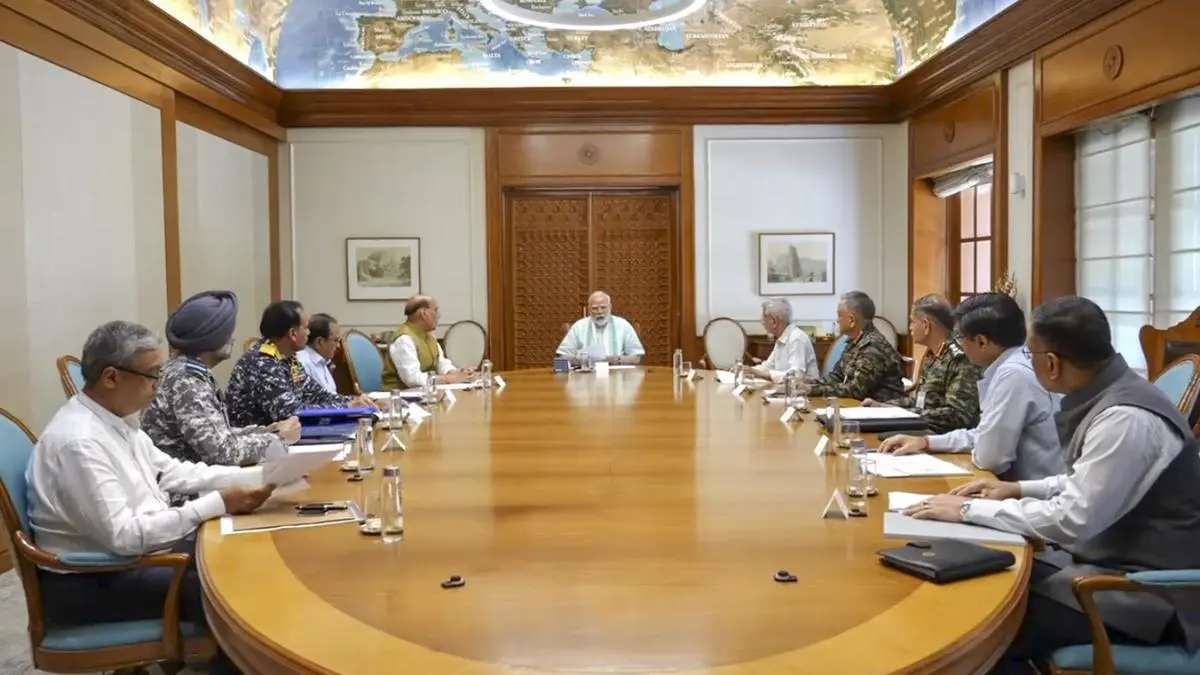
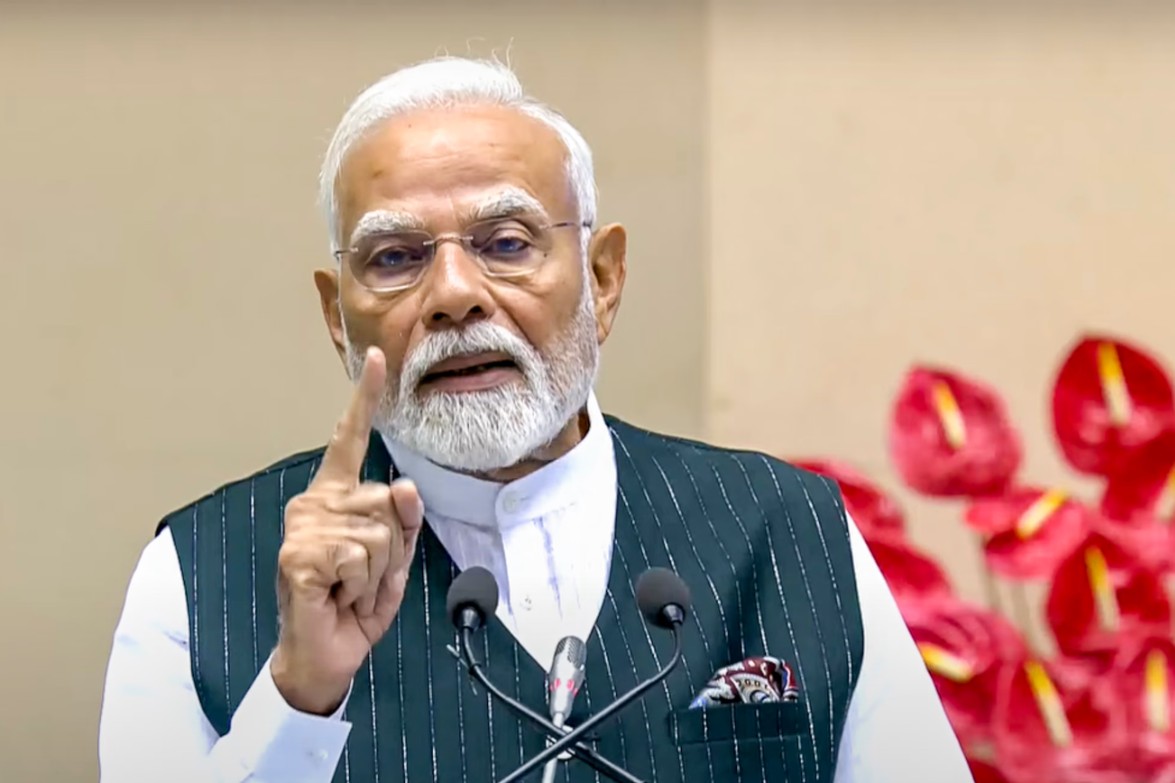
Baby Chakraborty, KalimNews, May 16, 2025, Delhi : In a significant development on Thursday, Pakistan’s Prime Minister visited the Kamra Air Force Base and delivered a message of peace, asserting that his country is committed to dialogue and is willing to engage in talks with India. However, he attached a condition that has raised eyebrows—insisting that the issue of Kashmir must be addressed as part of any peace discussions. This announcement comes amidst a tense backdrop of India and Pakistan’s complicated relations, prompting questions as to why Pakistan, which has recently been involved in violent clashes, is suddenly advocating for peace.
Category Archives: National
Padma Shri Awardee Scientist Subanna Ayyappan Found Dead in Cauvery River; Police Investigating Cause
Baby Chakraborty, KalimNews, May 15, 2025, Delhi : Subanna Ayyappan, the renowned Padma Shri awardee and former Director General of the Indian Council of Agricultural Research (ICAR), was found dead in the Cauvery river in Srirangapatna, Karnataka, on Saturday, three days after his disappearance. His body was recovered by local authorities after being spotted floating in the river, triggering a wave of confusion and speculation regarding the circumstances of his death.
According to police sources, the body was initially unidentifiable, and it wasn’t until Sunday that it was confirmed to be Ayyappan’s after his scooter was found nearby on the banks of the river. Ayyappan, a respected scientist who lived in Mysore with his wife and two daughters, had gone missing after leaving his home on May 7. His family was notified of his death on Sunday evening.
Initial investigations suggest the possibility of suicide, as police believe Ayyappan may have taken his own life. However, the Srirangapatna police have launched a thorough investigation to determine the exact cause of death. Local authorities are exploring all angles, including whether Ayyappan’s regular visits to a nearby ashram for meditation might have played a role in the incident. Family sources confirmed that Ayyappan frequently went to the ashram near the Cauvery river for spiritual reflection, and investigators are trying to ascertain if he had visited the site on the day he went missing.
The tragic news has sent shockwaves through the scientific community, with colleagues and friends mourning the loss of a distinguished figure who made significant contributions to Indian agriculture and research. As the investigation continues, questions remain about the circumstances surrounding his death, and authorities are working to uncover more details to bring clarity to the case.
India Rejects Trump’s Claim of Mediation in Ceasefire, Slams Unfounded Allegations
Baby Chakraborty, KalimNews, Delhi, May 14, 2025 : Tensions flared as the Indian government responded sharply to former U.S. President Donald Trump’s recent statements regarding the India-Pakistan ceasefire. Trump had claimed that both India and Pakistan had agreed to halt hostilities due to American pressure, suggesting his direct involvement in bringing about the ceasefire. India, however, has expressed strong disapproval of these remarks, clarifying that the ceasefire was not influenced by external intervention.
On Tuesday, India’s Ministry of External Affairs (MEA) issued a formal response, vehemently denying any suggestion that the United States played a role in the ceasefire agreement. The MEA made it clear that the decision was a result of India’s own strategic interests and diplomatic discussions, not any foreign pressure. External Affairs Secretary Randhir Jaiswal addressed a press conference in which he explained that while there had been ongoing talks between Indian and American leaders, they had nothing to do with trade or the Kashmir issue.
The controversy began after Trump’s remarks last weekend, where he claimed credit for brokering the ceasefire, stating, “After a long night of talks, both countries have agreed to a complete ceasefire from this moment. Congratulations to both sides for using realism at the right time.” Trump went on to assert, “We pressured the two nuclear powers to cease hostilities. I warned them not to stop the war, not to stop trade either. That worked. I stopped the India-Pakistan war.”
In response, India made it clear that while discussions with the U.S. leadership were held throughout the course of Operation Vermilion, which began on May 7, no pressure was applied regarding the ceasefire. The Foreign Secretary categorically stated that the situation on the ground and the evolving military dynamics were the primary focus of the talks, with no mention of any trade-related conditions or mediatory efforts by the U.S.
Furthermore, the Indian government reaffirmed its longstanding position on the Kashmir issue, emphasizing that it remains a bilateral matter between India and Pakistan, with no room for external mediation. “Kashmir was, is, and will remain a bilateral issue between India and Pakistan,” Jaiswal reiterated, making it clear that India would not entertain any attempts to internationalize the dispute.
The Indian government’s firm stance highlights its commitment to maintaining sovereignty and safeguarding its national interests. While diplomatic channels between India and the U.S. remain active, the statement sent a clear message that India’s foreign policy will not be shaped by external pressures, particularly when it comes to matters of national security and territorial integrity.
As the situation continues to evolve, it remains to be seen how these diplomatic exchanges will impact future relations between the two countries, but one thing is certain: India’s leadership is resolute in its position on the ceasefire and the Kashmir issue.
Modi Asserts India’s Unyielding Stance: No Talks with Pakistan Except on Terrorism and PoK
Baby Chakraborty, KalimNews, May 13, 2025, Delhi : Prime Minister Narendra Modi reaffirmed on Monday that India will not engage in any dialogue with Pakistan unless the discussions are strictly confined to terrorism and Pakistan-occupied Kashmir (PoK). Addressing the nation following a period of heightened military tensions, the Prime Minister made it clear that terrorism and diplomacy cannot go hand in hand, emphasizing that “terror and talks cannot coexist.”
One Militant Killed in Ongoing Shopian Encounter Amid Operation Sindoor
Baby Chakraborty, KalimNews, May 13, 2025, New Delhi : Security forces killed one militant during an encounter in the Shopian district of Jammu and Kashmir on Tuesday, as part of the ongoing counter-terrorism initiative, Operation Sindoor. According to initial police reports, the slain militant was affiliated with the proscribed group Lashkar-e-Taiba. The operation, launched based on intelligence inputs about militant movement in the forested region of Kellar in Jinpath, has escalated into an active gunfight with two more militants still engaged in the encounter.
Prime Minister Narendra Modi’s Address on Operation Sindoor and India’s Stance on Terrorism
Baby Chakraborty, KalimNews, May 12, 2025, Kolkata : In a strong address to the nation today, Prime Minister Narendra Modi highlighted India’s strength, resilience, and commitment to eradicating terrorism. The Prime Minister began by saluting the nation’s armed forces, intelligence agencies, and scientists, commending them for their extraordinary efforts in safeguarding India’s security. He also acknowledged the unwavering courage and valor of the Indian soldiers in achieving the objectives of Operation Sindoor, dedicating their unparalleled bravery to every mother, sister, and daughter in the country.
Modi condemned the barbaric terrorist attack in Pahalgam on April 22, 2025, describing it as a brutal and shocking act of terror. Innocent civilians, enjoying their holidays, were targeted and killed in front of their families and children, merely because of their faith. The Prime Minister emphasized that the attack was not just an act of cruelty, but an attempt to fracture India’s social harmony. He praised the unity shown by every Indian citizen, community, and political party, which demanded strong action against terrorism.
Reaffirming the government’s commitment to combating terrorism, Modi assured the nation that the armed forces were given full freedom to neutralize the terrorists responsible for the attack. He declared that terrorists now understand the consequences of harming the dignity of Indian women.
Operation Sindoor was presented as not only a military operation but a symbol of the emotions of millions of Indians. Modi reiterated that the Indian Armed Forces had executed precise strikes on terrorist hideouts and training centers in Pakistan on May 6-7, 2025, delivering a decisive blow to terrorism. He emphasized that such a bold move was unimaginable for the terrorists, but India’s unity and commitment to “Nation First” led to impactful results. The Prime Minister pointed out that Indian strikes had shattered both the infrastructure and morale of terrorist organizations, particularly targeting key locations in Pakistan such as Bahawalpur and Muridke, which had long been centers of global terrorism.
These sites had been linked to some of the world’s most devastating terror attacks, including the 9/11 attacks in the US, the London Tube bombings, and numerous terrorist incidents in India. Modi declared that since these terrorists had dared to attack the dignity of Indian women, India had taken decisive action to eliminate the heart of terrorism. As a result, over 100 dangerous terrorists were eliminated, including key figures who had long plotted against India.
The Prime Minister also addressed Pakistan’s reaction, noting that after India’s forceful strikes, Pakistan resorted to reckless aggression by targeting Indian schools, temples, military bases, and civilian homes. He emphasized that India’s advanced air defense systems had successfully neutralized Pakistani missiles and drones. The precision of India’s counter-strikes had left Pakistan with significant losses, leading Pakistan to seek de-escalation.
On May 10, 2025, after suffering considerable damage, Pakistan’s military reached out to India’s Director General of Military Operations (DGMO) and assured that it would cease all military aggression and terrorist activities against India. Modi confirmed that India had reviewed the situation and decided to temporarily suspend its counter-operations, but clarified that the suspension was not a conclusion. India would continue to monitor Pakistan’s actions and assess their compliance with their commitments.
The Prime Minister emphasized that India’s armed forces remain on high alert, ensuring national security. He stated that Operation Sindoor had set a new benchmark in India’s counter-terrorism policy and that it would serve as a key pillar of India’s future security strategy. He outlined three main principles of India’s security doctrine:
-
Decisive Retaliation: Any terrorist attack on India will be met with a firm and resolute response, targeting terror hubs at their roots.
-
No Tolerance for Nuclear Blackmail: India will not be intimidated by nuclear threats, and any safe havens operating under such pretexts will face precise strikes.
-
No Distinction Between Terrorists and Their Sponsors: India will no longer treat terrorist leaders and governments that shelter them as separate entities.
Modi pointed out that during Operation Sindoor, Pakistan’s deep involvement in state-sponsored terrorism was exposed. Senior Pakistani military officials had openly attended the funerals of eliminated terrorists, a clear indication of Pakistan’s complicity.
The Prime Minister also reflected on India’s military capabilities, stating that the success of Operation Sindoor proved India’s superiority in both traditional and modern warfare. He highlighted the effectiveness of “Made in India” defense systems, which played a pivotal role in India’s military successes.
In a firm message to Pakistan, Modi warned that its continued support for terrorism would lead to its own downfall. He declared that Pakistan must dismantle its terror infrastructure if it seeks peace and survival. He further stated that terror and talks cannot coexist, terror and trade cannot run parallel, and blood and water cannot flow together.
Finally, addressing the global community, Modi reaffirmed India’s policy that any negotiations with Pakistan would be focused solely on terrorism and the issue of Pakistan-Occupied Kashmir (PoK). Reflecting on the teachings of Lord Buddha on Buddha Purnima, the Prime Minister stated that the path to peace must be guided by strength, and India would continue to stand strong in safeguarding its dignity and values.
Concluding his address, Prime Minister Modi once again saluted the valor of the Indian armed forces and expressed his deep respect for the courage and unity of the people of India.
South Asia Journalists Federation (SAJF) Formed to Strengthen Press Freedom in Region
KalimNews, Pokhara, Nepal, May 11, 2025: In a historic development for journalism in South Asia, the South Asia Journalists Federation (SAJF) was officially established today, marking a significant step toward uniting journalists across the region to confront critical challenges to press freedom and professional integrity. The formation ceremony, held at Niwas Hotel in Pokhara, Nepal, was a milestone in regional cooperation and media advocacy.
The SAJF was founded in alignment with the constitution of the Federation of Asia Pacific Journalists (FAPaJ), a regional body of the International Federation of Journalists (IFJ). The federation comprises eight countries that are affiliated with the IFJ, including India, Pakistan, Nepal, Bhutan, Afghanistan, Maldives, Bangladesh, and Sri Lanka.
During the event, a new committee was formed to lead the federation’s efforts. Geetartha Pathak, from the Indian Journalists Union, was unanimously elected as President, while Shakeel Ahmed of the Pakistan Federal Union of Journalists (PFUJ) was appointed General Secretary. Other key office bearers include Siva Lamsal of Nepal Press Union (NPU) as Senior Vice President, Rashed Hadi of Afghanistan’s National Journalists Union (ANJU) as Vice President, and Khairuzzaman Kamal of Bangladesh Manabadhikar Sangbadik Forum as Treasurer. Representatives from Bhutan, Maldives, and Sri Lanka were inducted as executive body members.
The creation of the SAJF comes at a critical time for press freedom in South Asia, which is currently under unprecedented pressure. Recent years have witnessed a sharp decline in the region’s press freedom index, with numerous incidents of violence against journalists, legal harassment, and the imposition of severe charges on media professionals. Notably, the Bangladesh interim government has accused over 300 journalists of murder, further highlighting the precarious environment for media workers in the region.
In response to these alarming trends, the SAJF aims to serve as a robust monitoring and advocacy platform for protecting media freedom and safeguarding the rights of journalists. The federation will actively work to address critical issues, including promoting professional excellence, improving working conditions, and ensuring job security for journalists across South Asia.
“The establishment of the SAJF is not just a timely initiative—it is a necessity,” said Geetartha Pathak, President of SAJF. “Our mission is to support journalists in their fight for press freedom, to ensure their safety, and to uphold the values of free expression and journalistic integrity.”
The federation’s leaders are calling on governments, media organizations, and civil society to support their mission. “We urge all stakeholders to join us in creating an environment where journalists can perform their duties without fear of reprisal and contribute meaningfully to the democratic processes in our societies,” Pathak added.
With the launch of the SAJF, there is renewed hope for the protection and empowerment of media professionals across South Asia, a region where press freedom remains under constant threat.
Coastal Surveillance Intensified in South 24 Parganas Despite Ceasefire Between India and Pakistan
Baby Chakraborty, KalimNews, South 24 Parganas, May 12, 2025 : Despite the announcement of a ceasefire between India and Pakistan effective from the evening of May 10, heightened security measures continue to remain in place across various sensitive regions, including the Sundarbans in South 24 Parganas. While the immediate threat of military confrontation has eased, authorities remain on high alert, especially in the North and North-West frontier areas.
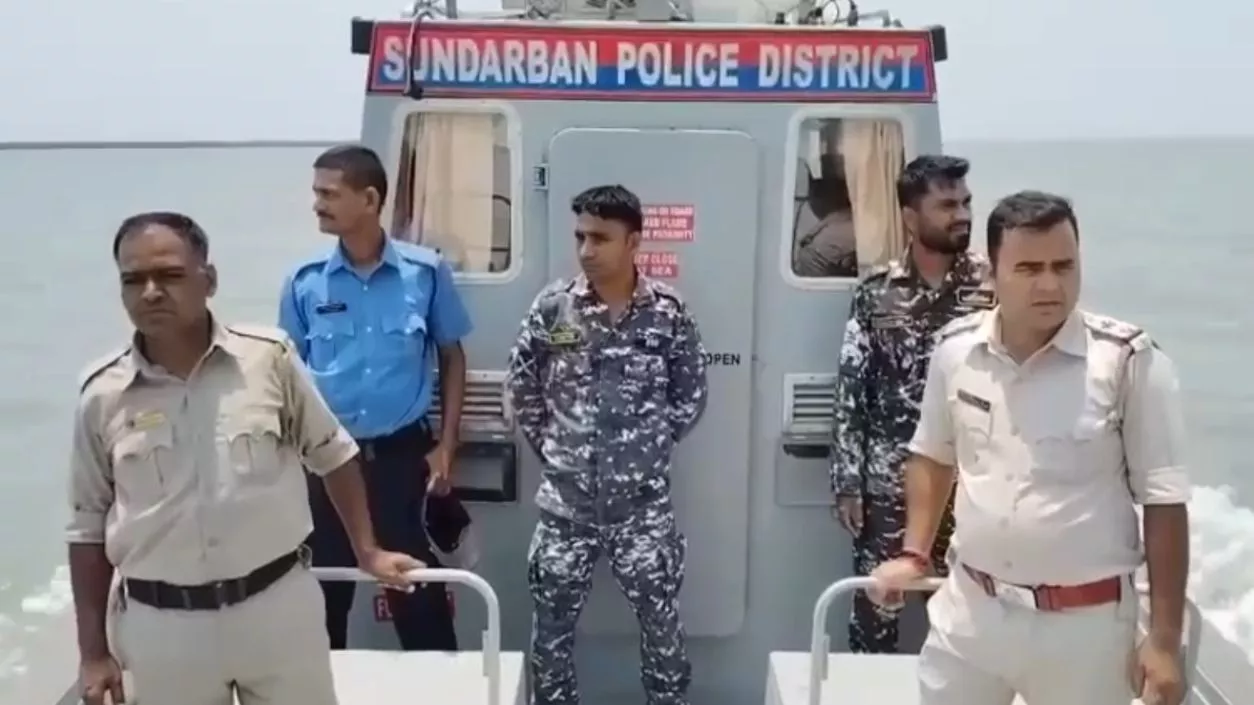
Amidst the ongoing ceasefire, enhanced vigilance has been observed in the waterways and coastal zones of the Sundarbans. In response to the tense geopolitical environment, joint patrol operations are being conducted by the Fraserganj police station and the Indian Coast Guard as part of Operation ‘Raksha Orange’. Surveillance activities are being carried out across rivers, estuaries, ferry piers, and key sea routes using the Fast Interceptor Boats (FIBs) stationed at Fraserganj.
Security forces have been instructed to interrogate any suspicious vessels or watercraft sighted in the region. All coastal police stations within the Sundarbans have been placed on high alert. Stretching over approximately 150 kilometers, the water boundary of the Sundarbans poses a potential risk for infiltration, prompting extensive deployment of BSF personnel along the riverine and forested zones.
The Indian Coast Guard is maintaining watch from floating border outposts in the Bay of Bengal, employing advanced surveillance tools including drones, sensors, fixed and mobile cameras, and night vision equipment. Regular round-the-clock patrolling is being carried out by both the Coast Guard and state police forces, especially in vulnerable stretches of the river and coastline.
In adherence to ongoing security protocols, a complete ban on fishing activities in rivers and the sea has been imposed. Fishermen have been instructed to refrain from using watercraft, and any vessel found operating is being thoroughly inspected.
The developments in South 24 Parganas are a part of the broader national preparedness, reflecting the unresolved tensions that persist despite diplomatic moves toward de-escalation.
G7 Nations Condemn Pahalgam Attack, Urge Restraint and Dialogue Amid Rising India-Pakistan Tensions
Baby Chakraborty, KalimNews, May 10, 2025, Kolkata : The Group of Seven (G7) countries has strongly condemned the deadly terrorist attack that took place on April 22 in the Baisaran area of Pahalgam, where 26 civilians were killed. The attack was carried out by militants who appeared to have specifically targeted the victims based on their identities. The Resistance Front (TRF), an affiliate of the Pakistan-based Lashkar-e-Taiba, has claimed responsibility. India has directly accused Pakistan of being involved in the assault, a claim that has further intensified tensions between the two nuclear-armed neighbours.
In a joint statement released on May 9, the Foreign Ministers of Canada, France, Germany, Italy, Japan, the United Kingdom, the United States, and the High Representative of the European Union unequivocally condemned the Pahalgam attack. The statement urged both India and Pakistan to exercise maximum restraint, stressing the need for immediate de-escalation and a return to dialogue. “We continue to monitor events closely and express our support for a swift and lasting diplomatic resolution,” the statement read, highlighting the G7’s concern for regional stability and the safety of civilians on both sides.
Following the April 22 incident, India conducted precision military strikes on May 7, targeting suspected terror launchpads in Pakistan and Pakistan-occupied Kashmir (PoK). These operations were in direct retaliation for the Pahalgam killings. In response, Pakistan has launched a series of unprovoked attacks, including missile and drone strikes, targeting multiple locations across India from Jammu and Kashmir to Gujarat. These actions have raised alarm over escalating conflict.
The Indian Ministry of Defence confirmed that attempts to strike key installations such as airports and airbases have been thwarted, with Indian forces maintaining heightened alertness and using advanced counter-drone technologies. Indian armed forces reported that all aerial threats are being closely monitored and neutralized when necessary.
On the night of May 9, Pakistan reportedly deployed hundreds of armed drones, many of Turkish origin, and allegedly used civilian aircraft as cover to target Indian military installations. In retaliation, India launched strikes on Islamabad’s air defence systems at four strategic sites, successfully disabling one of them.
Amid the rapid escalation, the G7 reiterated the importance of maintaining peace and avoiding any further military confrontation that could endanger the region’s stability. The group emphasized its commitment to a peaceful resolution through direct communication and diplomacy between India and Pakistan.
The situation remains tense, with both nations on high alert and the international community closely monitoring developments.
Chinese-Made Pakistani Missile Fails in Attack on India; Tensions Escalate Along Line of Control
India Strikes Back: 26 Naval Ships Set Sail Towards Pakistan as Tensions Escalate
Baby Chakraborty, KalimNews, May 9, 2025, Delhi : The ongoing conflict between India and Pakistan has reached a new level of intensity, with both nations locked in a fierce military confrontation. On the night of Friday, May 8, the Karachi port, one of Pakistan’s most strategic locations, was left in ruins following an attack by the Indian Navy. Sources confirm that 26 Indian naval ships are currently heading towards Pakistan, signaling a significant escalation in hostilities not seen since the 1971 war.
Chandannagar Police Commissionerate Distributes Essential Items to Traffic Personnel Amidst Scorching Heat
Baby Chakraborty, KalimNews, May 9, 2025, Kolkata : In a heartfelt tribute to the dedication of traffic police personnel, the Chandannagar Police Commissionerate organized a welfare initiative today to support officers working under the intense heat of the summer. The event, held at the Line premises, coincided with the 165th birth anniversary of world-renowned poet Rabindranath Tagore.
The program aimed to provide relief to the traffic police who have been tirelessly ensuring the safety of the public despite the extreme weather conditions. Police Commissioner Shri Amit P. Javalgi, along with key officers including DC Headquarters Alakanand Bhawal, DC Chandannagar Ishani Pal, and Sub Inspector Mandatta Sau, personally distributed essential items to the on-duty personnel. Among the items handed over were umbrellas, sunglasses, cold water bottles, oral rehydration salts (ORS), and basic medicines to protect against dehydration and heat-induced ailments.
The initiative was a gesture of appreciation and recognition for the hard work and resilience of the traffic police, who are often exposed to the harshest weather conditions while managing the city’s bustling traffic. Speaking at the event, Shri Amit P. Javalgi praised the personnel’s relentless commitment to public safety and emphasized the importance of ensuring their well-being, especially during such extreme conditions.
This welfare program is part of a larger effort by the police department to show their support for the officers on the ground and provide them with the tools they need to perform their duties effectively while maintaining their health and safety. The event was attended by a number of senior officers, who collectively acknowledged the invaluable service provided by the traffic police of Chandannagar.
The initiative not only highlights the importance of protecting those who protect the public but also serves as a reminder of the need to stay vigilant and supportive of public safety officers during challenging conditions.
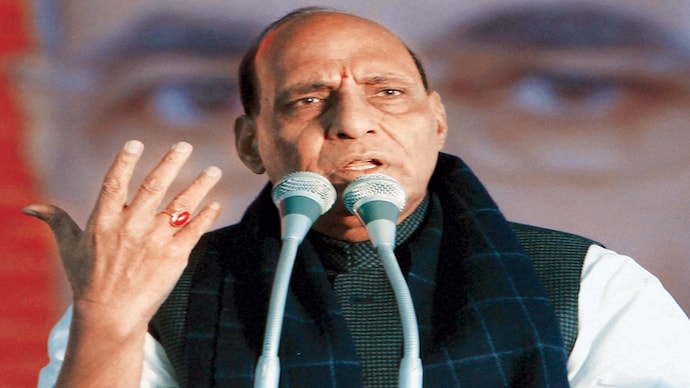
“India Will Retaliate if Pakistan Attacks Again”: Defence Minister Rajnath Singh
Baby Chakraborty, KalimNews, May 8, 2025, Kolkata :
Defence Minister Rajnath Singh delivered a strong message on behalf of Prime Minister Narendra Modi during an all-party meeting held on Thursday, reassuring the nation of India’s resolve in the face of rising tensions with Pakistan. The meeting, convened a day after the successful “Operation Sindoor,” provided detailed updates on the operation and discussed future actions.Heroine of “Operation Sindoor”: Colonel Sophia Qureshi, a Pioneer of Women Empowerment in India
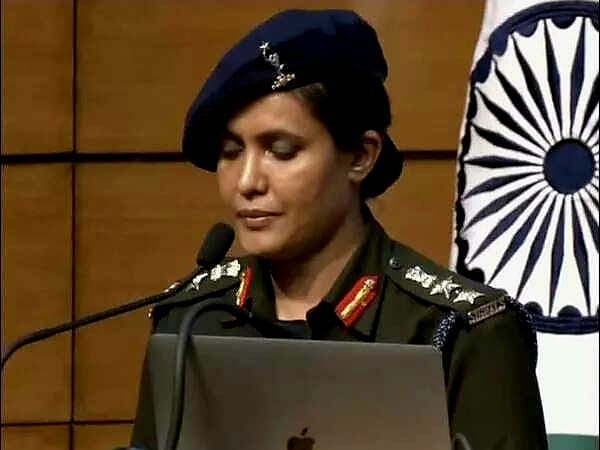
Baby Chakraborty, KalimNews, May 8, 2025, Kolkata : Colonel Sophia Qureshi has once again captured the nation’s attention with her exceptional leadership and heroic efforts during the recent flood relief operations in North-East India. Leading “Operation Sindoor,” an initiative designed to provide urgent relief to flood-affected communities in marginalized areas, Colonel Qureshi has proven that effective leadership, resilience, and compassion can save lives and inspire hope in the darkest of times.
Widely recognized for her courageous actions, Colonel Sophia Qureshi has earned admiration not only from her peers within the military but from citizens across the country. Her role in this operation has sparked discussions similar to those surrounding major national events, such as the retirements of cricketing legends Dhoni and Rohit. Her bravery in risking her own life in some of the most challenging regions has made her a symbol of strength and leadership.
Beyond her heroic contributions, Colonel Qureshi’s professional profile reflects her high level of responsibility and commitment to her nation. As an officer in the Indian Army, her salary structure includes a basic pay ranging between ₹1,21,200 to ₹2,12,400, alongside various allowances. These include a dearness allowance, a military service allowance of ₹15,500, and field area allowances ranging from ₹10,500 to ₹25,000, among others. If posted in a special forces unit, she also receives an additional allowance of up to ₹25,000, along with a uniform allowance of ₹20,000 annually.
Despite the financial structure, it is Colonel Qureshi’s intangible achievements that have truly set her apart. Her leadership and courage serve as a beacon for women across the country, inspiring countless others to break barriers and rise to positions of influence and authority. Colonel Qureshi has become more than just a military officer—she is now a symbol of empowerment, change, and resilience for women in India.
As “Operation Sindoor” continues to be discussed across the nation, Colonel Sophia Qureshi’s legacy grows ever stronger, solidifying her place as a true pioneer of women’s power in India.
Mamata’s Stance on Murshidabad Murders: Outsider Theory and Political Allegations Continue
Baby Chakraborty, KalimNews, May 6, 2025, Kolkata :
The tragic double murder of a father and son in Murshidabad has sparked intense political debate, with West Bengal Chief Minister Mamata Banerjee doubling down on her controversial claim that outsiders were involved in the violence. Despite the police arresting four local residents in connection with the crime, Mamata has continued to suggest that miscreants from other states and possibly Bangladesh were responsible for the incident, which she describes as part of a pre-planned attack.BSF Apprehends Pakistani Ranger Amid Escalating Indo-Pak Tensions
Baby Chakraborty | KalimNews | 4 May 2025 | New Delhi : The Border Security Force (BSF) has apprehended a Pakistani Ranger who crossed into Indian territory along the international border in Rajasthan on Saturday. The incident comes at a time of heightened tensions between India and Pakistan, following a series of cross-border violations and the recent detention of an Indian soldier.
According to official sources, the Pakistani Ranger, whose identity has not yet been disclosed, was taken into custody by the Rajasthan Frontier of the BSF. The arrest took place nearly two weeks after BSF Constable Purnam Kumar Sahu inadvertently crossed the international border while escorting farmers in Punjab’s Ferozepur sector. Constable Sahu has been held by Pakistan Rangers since April 23, despite repeated diplomatic efforts by India for his release.
Tensions have been further inflamed by ongoing ceasefire violations along the Line of Control (LoC). On the intervening night of May 3 and 4, Pakistani Army posts opened unprovoked small arms fire for the tenth consecutive night. The affected sectors include Kupwara, Baramulla, Poonch, Rajouri, Mendhar, Naushera, Sunderbani, and Akhnoor. The Indian Army responded swiftly, and no casualties were reported on the Indian side.
These provocations are unfolding in the shadow of the recent terrorist attack in Jammu and Kashmir’s Pahalgam, which claimed the lives of 26 people, most of them tourists. The attack has further strained bilateral relations and drawn strong condemnation from Indian authorities.
Security analysts believe Pakistan’s repeated ceasefire violations and the detention of the Indian jawan may be part of a broader strategy to escalate tensions along the border. Meanwhile, India has reaffirmed its commitment to border security and has warned that any aggression will be met with a firm response.
As the situation unfolds, both countries remain on high alert, and diplomatic channels continue efforts to resolve the ongoing standoff.
India to Develop Indigenous Air Defense System to Counter Drone Threats Along China-Pak Border
As part of the project, 48 launchers, 85 missiles, and various support equipment will be procured. According to officials, the most notable feature of the new weapon is its lightweight, man-portable design, allowing soldiers to carry and operate it from the shoulder with ease. The launcher is capable of targeting and neutralizing drones, helicopters, and low-flying aircraft swiftly and accurately, making it a versatile asset for modern combat scenarios.
Defense sources noted that man-portable air defense systems, or MANPADS, have so far been used only in a limited capacity within the Indian Army. However, with a sharp increase in aerial intrusions reported along the borders in recent months, particularly from drones, the need for a responsive, mobile, and weather-resistant air defense system has become critical. The introduction of this indigenous system is expected to fill that operational gap.
The development and deployment of this weapon will not only strengthen India’s border security but also represent a significant leap in the country’s indigenous defense manufacturing capabilities. The entire system will be developed using domestic technology, reducing reliance on foreign suppliers and contributing to the broader goal of defense self-sufficiency. In addition, the project is expected to generate employment and boost innovation in India’s defense sector.
Experts believe that this initiative signals a pivotal moment in India’s defense policy, aligning national security with the strategic vision of a self-reliant India. As the threat landscape evolves, the introduction of advanced, locally produced systems marks a crucial advancement in the country’s preparedness and sovereignty.