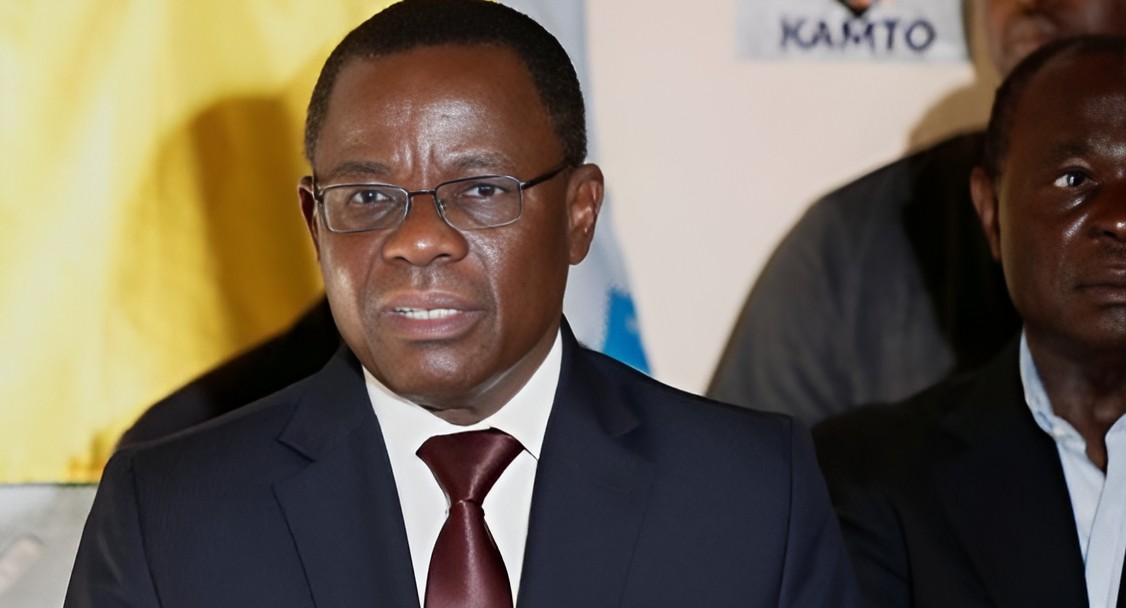
Baby Chakraborty, KalimNews, Yaoundé, Aug 10, 2025 : As the countdown to Cameroon’s 2025 presidential election intensifies, the political atmosphere remains charged, with accusations of unfair practices swirling around the exclusion of Maurice Kamto, the leading opposition figure. Kamto, who has been a vocal critic of the long-standing President Paul Biya, rejected the court’s recent ruling that barred him from standing in the October race, calling the decision “arbitrary” and part of a deliberate attempt to undermine his campaign.
All posts by Kalimpong News
Dr. Thangjam Dhabali Singh Awarded Life-Time Achievement Award for Contributions to Healthcare, Hospitality, and Tourism
KalimNews, Imphal, Aug 10, 2025 : In a remarkable recognition of his lifelong dedication to healthcare, hospitality, and tourism, Dr. Thangjam Dhabali Singh, the Chairman and Managing Director of the BABINA Group of Companies, was conferred the prestigious “Life-Time Achievement Award 2025” by the Mylai Thiruvalluvar Tamil Sangam (MTTS), Chennai. The award ceremony, held on August 9, 2025, in collaboration with the Indian Institute of Information Technology (IIIT), Manipur, took place at the Swamy Vivekananda Auditorium in Mantripukhri, Imphal.
Dr. Dhabali’s accomplishments were honored during a grand formal event attended by several distinguished personalities, including the Vice Chancellor of Manipur University, Professor N. Lokendra Singh, Dr. N. Murugan, the Founder Chairman of Thiruvalluvar, and Professor Krishnan Baskar, Director of IIIT, Manipur. This recognition comes as a testament to Dr. Dhabali’s immense contributions to multiple sectors, especially his transformative impact on the healthcare and tourism landscape of Manipur and the surrounding region.
A pioneering medical entrepreneur, Dr. Dhabali’s work has been instrumental in establishing a comprehensive network of diagnostic laboratories and healthcare facilities, notably including a state-of-the-art cancer treatment center. These contributions have not only enhanced the region’s healthcare infrastructure but also provided employment to over 1,250 professionals. His relentless efforts have broadened access to advanced medical services for the people of the region, improving the quality of healthcare available to the public.
Beyond healthcare, Dr. Dhabali has also made significant strides in the hospitality and tourism industries. As the founder of the Classic Group of Hotels, he played a critical role in the development of Manipur’s modern hospitality sector, thereby promoting tourism and bolstering the local economy. His vision led to the establishment of the Imphal Peace Museum in 2019, a project he spearheaded in collaboration with several international partners, including the Nippon Foundation and the Sasakawa Peace Foundation of Japan. The museum commemorates the Battle of Imphal and stands as a beacon for peace, reconciliation, and cultural understanding.
The Life-Time Achievement Award 2025 serves as a symbol of Dr. Dhabali’s tireless dedication to service, innovation, and the holistic growth of his community. His leadership in public service, his entrepreneurial spirit, and his role in fostering cultural understanding through tourism have earned him recognition as a key figure in the region’s development.
In addition to the Life-Time Achievement Award, the event also honored numerous other outstanding individuals from diverse fields, including science and the arts, celebrating the excellence and contribution of professionals across the spectrum. Dr. Dhabali’s award stands as a culmination of a distinguished career devoted to public welfare, service, and the improvement of society.
Dr. Dhabali’s recognition is not just a personal achievement but a milestone for Manipur, highlighting the state’s growing influence and commitment to fostering innovation, peace, and development.
Mamata Banerjee Intensifies Push to Protect Bengali Identity Amid Political Tensions with BJP
Baby Chakraborty, KalimNews, Aug 7, 2025, Kolkata : The Trinamool Congress (TMC) has launched a vigorous campaign to protect the Bengali identity, with Chief Minister Mamata Banerjee leading the charge. In a highly charged rally held in Jhargram on Wednesday, Banerjee delivered a stark message about her political resolve, signaling that she would step down voluntarily only when she chooses to do so. Her remarks quickly sparked a response from the Leader of Opposition in the state assembly, Subhendu Adhikari, who challenged the Chief Minister’s statement with a declaration of his own political intent.
Mamata Banerjee Calls for New ‘Language Movement’ Amid Tensions Over Migrant Workers and Election Controversy
Baby Chakraborty, KalimNews, Aug 7, 2025, Kolkata : Chief Minister Mamata Banerjee has intensified her stance on Bengali language issues and migrant workers’ rights, accusing the BJP government of waging a form of ‘terrorism’ against the Bengali language and labeling Bengal’s migrant workers as Bangladeshis. Speaking in Jhargram on Thursday, Banerjee once again raised her voice against the growing atrocities and injustices faced by migrant workers from Bengal in BJP-ruled states, drawing attention to what she calls an orchestrated effort to tarnish the identity of the Bengali-speaking population.
At a rally in Jhargram, Banerjee launched a fresh call for a “new language movement,” following earlier protests in Kolkata and Bolpur, where she voiced similar concerns. These protests, aimed at addressing the alleged victimization of Bengali-speaking migrant workers, culminated in a speech by the Chief Minister at the end of the Jhargram procession. During her address, Banerjee raised a series of allegations, accusing the BJP government of subjecting Bengali-speaking workers to physical abuse and detention under the false pretext that they were illegal Bangladeshi immigrants.
Banerjee went on to claim that her administration had repatriated over 2,000 migrant workers, but many others still remain trapped in detention camps in BJP-ruled states such as Assam, Gurugram, and Rajasthan. She highlighted a particularly disturbing case of a tribal girl from Malda, West Bengal, who was allegedly detained in Madhya Pradesh and subsequently deported to Bangladesh. The Chief Minister denounced such incidents as violations of human rights, asserting that Dalits, in particular, were being disproportionately targeted and mistreated.
In her remarks, Banerjee also lashed out at the Election Commission of India (ECI) over its recent suspension of four state government officials. The suspended officers, including two Electoral Registration Officers (EROs) and two Assistant Electoral Registration Officers (AEROs), were accused of tampering with the voter registration list. In response, Banerjee raised critical questions about the legitimacy of the suspensions, demanding to know the authority under which these officials were penalized. She firmly declared that no officer would be suspended from her government, further accusing the Election Commission of being a “slave of the BJP.”
The ongoing controversy revolves around the Special Intensive Revision (SIR) of the electoral rolls in West Bengal, a process that Banerjee fears could lead to the exclusion of genuine voters. She warned that the BJP was attempting to manipulate the voter list to serve its own political agenda. “Behind the SIR, there is a conspiracy to introduce the National Register of Citizens (NRC) in Bengal,” Banerjee asserted, reiterating her firm stance that no one’s name should be removed from the voter list. “The BJP is trying to create a voter list for its own convenience through the SIR,” she said.
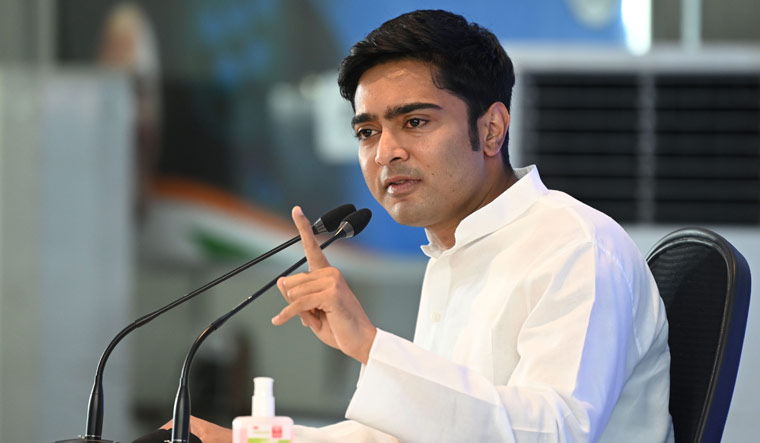
Abhishek Banerjee, the national general secretary of the Trinamool Congress (TMC), also joined in the attack against the ECI, accusing the poll body of exceeding its jurisdiction and functioning as a tool of the central government. He criticized the timing of the Election Commission’s intervention, pointing out that its actions seemed to undermine the authority of an elected state government, especially when the Model Code of Conduct had not yet come into effect.
Mamata Banerjee’s comments in Jhargram are part of an escalating campaign against both the BJP-led central government and the Election Commission. She had previously declared that she would take the issue to international forums and expose the alleged wrongdoings of the BJP if any legitimate voters were excluded from the electoral rolls in West Bengal. Banerjee’s statements reflect the growing tensions in the state over issues of identity, migration, and electoral integrity, with the Chief Minister pledging to protect the rights of the Bengali-speaking population at all costs.
The situation in West Bengal is now under intense scrutiny as both the local government and the opposition parties, led by the BJP, engage in a high-stakes political and legal battle that could have significant implications for the state’s electoral future.
Abhishek Banerjee Elevated as Trinamool’s Lok Sabha Leader Amid Generational Shift in Party Leadership
The Trinamool Congress currently holds 29 seats in the Lok Sabha. Sudip Bandopadhyay, a senior leader and long-time Lok Sabha face of the party, has been absent from parliamentary proceedings in recent months due to persistent health issues. His absence during the ongoing session of Parliament and his prior removal in May as the North Kolkata district unit president — amid rising local-level discontent — had already hinted at a possible shift.
During the virtual meeting, Mamata Banerjee cited Sudip’s medical condition as the key reason for the change. “Given that our Lok Sabha leader, Shri Sudip Bandyopadhyay, is unwell and undergoing medical treatment, the MPs have unanimously decided to entrust Shri Abhishek Banerjee with the responsibility of leading the party in the Lok Sabha as the leader of the party until Sudip da returns to good health,” she stated.
Abhishek Banerjee’s appointment marks a symbolic and strategic generational transition within the party. Often seen as Mamata Banerjee’s political heir, Abhishek will now wield significant influence over the party’s functioning in the lower house — including deciding who speaks on which subjects and when. The final list of speakers and topics will be shown to Mamata Banerjee, but Abhishek will serve as the operational head for all Lok Sabha proceedings going forward.
This change follows an evolving pattern of leadership transition within the party, where responsibilities are gradually being transferred to younger leaders. A similar process was initiated when Abhishek first raised the idea of “rotation” based on age and performance. Observers within the party suggest that the broader goal is to prepare the next generation of leadership while ensuring continuity of the party’s core vision and control under Mamata Banerjee.
The reshuffle also brings into focus the health of other senior Trinamool leaders. Veteran MP Saugata Roy, another influential figure, is currently hospitalised and has not attended the current Parliament session even once. This has led to mounting concerns within the party regarding the active roles of its ageing leadership.
According to the Trinamool’s organizational structure, the party maintains two separate parliamentary leaders — one for each house of Parliament. Derek O’Brien continues to lead the party in the Rajya Sabha, while Abhishek Banerjee now assumes leadership in the Lok Sabha. However, Mamata Banerjee remains the overall chairperson of the Trinamool’s parliamentary wing in both houses, retaining supreme authority over strategic decisions.
The reshuffle, though anticipated by many, comes at a politically crucial juncture — with Assembly elections due in early 2026 and opposition unity efforts under the INDIA alliance gaining momentum. Abhishek, who is also seen as the bridge between Trinamool and the broader opposition bloc, is now expected to amplify the party’s presence and assertiveness at the national level.
Political analysts note that while Abhishek’s ascendancy represents continuity with change, it may also hint at a shift in the balance of power within the party. Over recent years, Abhishek has occasionally appeared to chart an independent path, sometimes diverging from the party mainstream, leading to speculation over his growing clout. His formal elevation in the Lok Sabha is likely to reinforce that perception.
For now, Sudip Bandopadhyay is expected to return to parliamentary duties after regaining health, but there is growing sentiment that this may be the beginning of a wider reshuffle affecting other senior MPs and MLAs in the months ahead.
With Mamata Banerjee signaling support for this generational shift and entrusting greater responsibilities to her nephew, the Trinamool Congress appears to be moving towards a restructured leadership model — one that balances experience with youthful dynamism, in preparation for both state and national electoral battles.
Tensions Rise in Bengal Politics as Mamata and Shah Strategize Amid Electoral Roll Controversy
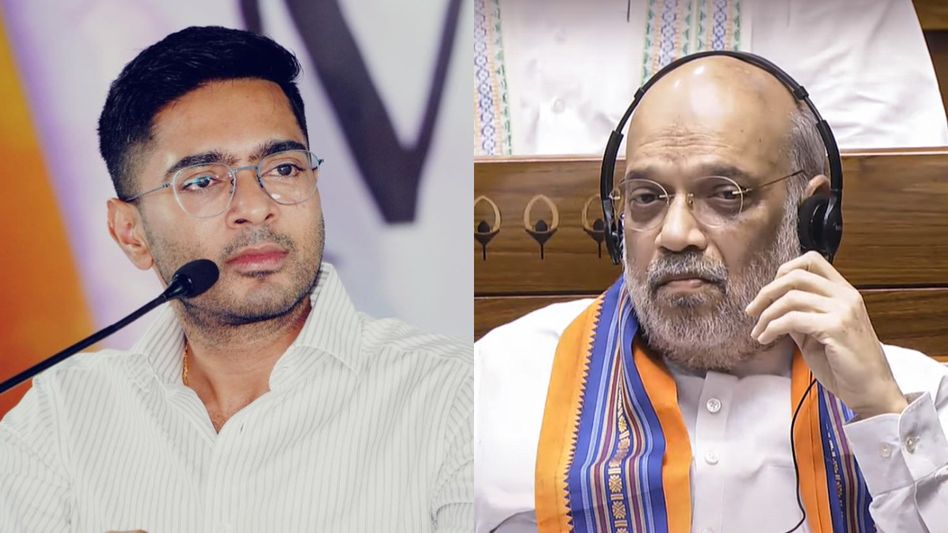
In a significant political development, West Bengal Chief Minister and Trinamool Congress (TMC) supremo Mamata Banerjee held a virtual meeting on Sunday with all party Members of Parliament (MPs) from both Lok Sabha and Rajya Sabha. Simultaneously, Union Home Minister Amit Shah is scheduled to meet with 12 BJP MPs from Bengal on Monday during a packed visit to assess the political dynamics of the state and chalk out electoral strategies.
Although the proximity of the two high-level meetings raises questions about whether one is a response to the other, no official statement has confirmed a counter-strategy. However, both parties appear to be in battle-ready mode as the electoral climate intensifies.
During the TMC meeting, Ms Banerjee oversaw a dramatic shake-up within the party’s parliamentary structure. As senior MP Sudip Bandyopadhyay remains unwell and under medical treatment, MPs unanimously entrusted Lok Sabha leadership responsibilities to Abhishek Banerjee, the party’s national general secretary and Mamata Banerjee’s nephew, until Sudip’s recovery.
But what was meant to be a brief 12-minute virtual discussion quickly turned turbulent. The Chief Minister criticized Chief Whip Kalyan Banerjee for inadequate coordination among MPs, prompting him to resign on the spot. He then went public with pointed remarks against fellow TMC lawmakers. “Those whom Mamata Banerjee made MPs don’t even attend Lok Sabha. South Kolkata, Barrackpore, Bankura, North Kolkata… hardly anyone attends Parliament. What can I do? What is my fault?” he asked, visibly agitated.
Sources indicate that the original plan was to remove Kalyan Bandopadhyay, while Sudip Bandopadhyay’s exit was not intended for announcement at this stage. However, the public outburst by Kalyan created a domino effect, culminating in Sudip’s replacement as well. The developments underscore an ongoing realignment within TMC, aimed at consolidating control in Delhi through Abhishek Banerjee’s leadership, especially within the INDIA opposition bloc.
Despite the discord, Abhishek Banerjee extended an olive branch, indicating that he would personally meet Kalyan Banerjee in Delhi later this week, signaling attempts to maintain internal unity. Abhishek is expected to focus on strengthening the party’s national role while keeping Bengal-centric issues in the spotlight. Mamata Banerjee, meanwhile, remains the undisputed Chief Ministerial face for the 2026 elections.
Amidst these internal reorganizations, TMC is also gearing up for direct action. Next week, the party, along with other members of the INDIA alliance, plans to gherao the Election Commission office in protest against the implementation of the SIR. Abhishek Banerjee is expected to lead the demonstration on behalf of Trinamool.
The Election Commission has stated its intent to implement the SIR process in states beyond Bihar, a move that has sparked strong opposition from TMC and other opposition parties. Critics, including Mamata Banerjee, allege that the SIR could be used as a covert method to introduce the National Register of Citizens (NRC), effectively disenfranchising sections of the population. The Chief Minister has accused the EC of acting under BJP’s influence, warning that the revision process may unfairly target Bengali-speaking populations under the guise of removing “infiltrators.”
Meanwhile, the BJP has welcomed the SIR initiative, claiming that a large number of undocumented individuals have found their way into the voters’ list with alleged support from the TMC. Amit Shah’s meeting with Bengal BJP MPs is aimed at solidifying the party’s stance and strategizing a response if and when SIR is rolled out in the state. Bengal BJP president Samik Bhattacharya confirmed that the Monday meeting would include discussions on prevailing political issues and electoral preparedness, although he refrained from giving specific details.
The meeting is part of BJP’s broader roadmap for the upcoming Assembly elections, anticipated to be held in March-April 2026. Shah was joined by national general secretary in-charge Sunil Bansal, Bihar minister and Bengal co-in-charge Mangal Pandey, and BJP IT cell head and co-incharge Amit Malviya. All leaders focused on pre-poll planning, candidate selection strategies, and regional coordination.
The ideological clash over SIR has now escalated into a full-blown political face-off between TMC and BJP. While Mamata Banerjee positions herself as a defender of Bengali identity and constitutional rights, the BJP accuses her government of protecting infiltrators for “vote bank politics.” Both sides appear firmly entrenched, with Bengal once again emerging as a flashpoint in national political discourse.
As tensions mount, the role of Abhishek Banerjee will be closely watched—both as a generational shift within TMC and as a critical figure in the INDIA bloc’s strategy against the BJP-led Centre. Whether this internal reorganization and opposition alliance will translate into electoral advantage remains to be seen, but the battle lines are now clearly drawn.
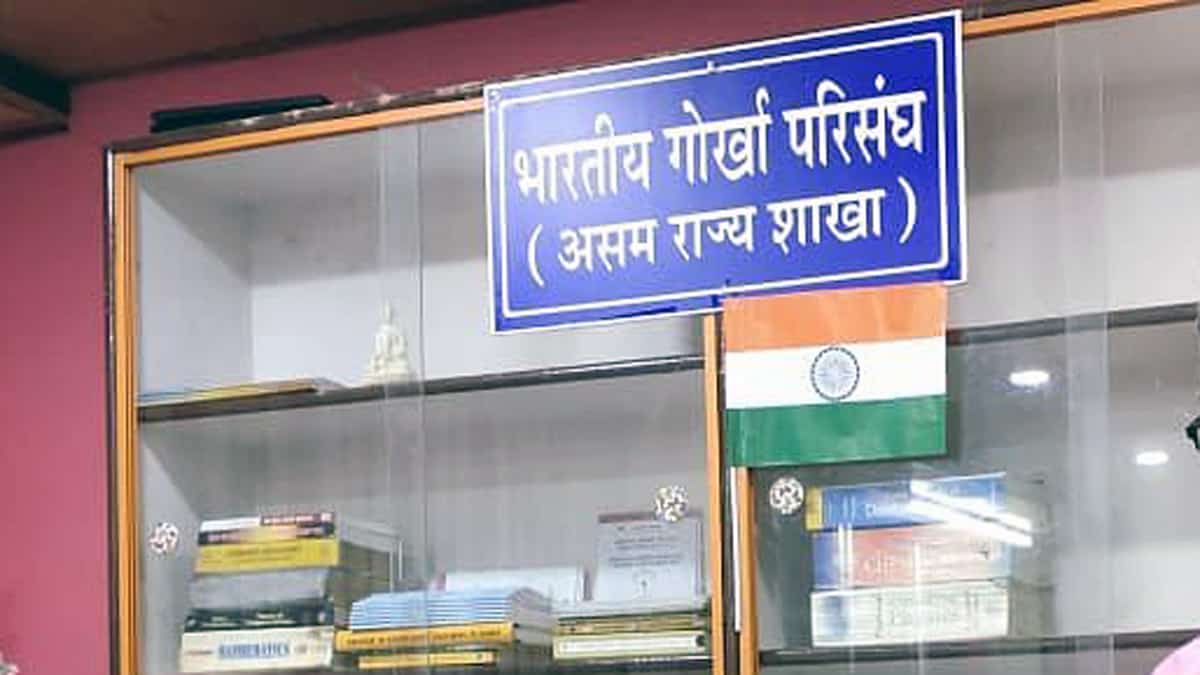
Assam Cabinet Grants ‘Protected Class’ Status to Gorkhas and Six Other Communities in Tirap Tribal Belt, Marking a Historic Step for Land Rights and Inclusion
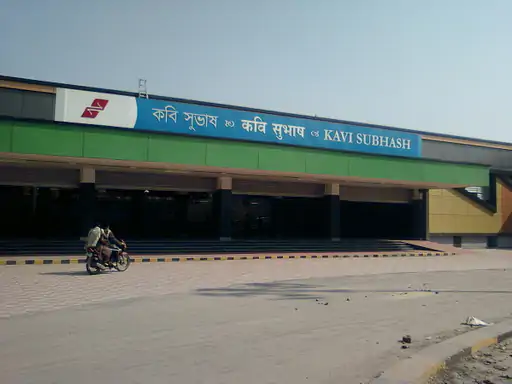
Cracks, Collapse, and Controversy: Kolkata Metro’s Kavi Subhash Terminal Faces Demolition Amid Passenger Chaos and Safety Concerns
Following record-breaking rainfall on July 28—the heaviest in the last five years—cracks were discovered in four load-bearing columns (numbered 11, 16, 17, and 20), suspected to have been caused by foundation subsidence due to uneven ground settlement. As a precautionary measure, all passenger services to and from Kavi Subhash station were immediately suspended at 12:45 p.m. on that day. Since then, Metro services on the Blue Line are operating uninterrupted only between Shahid Khudiram and Dakshineswar stations.
A formal assessment by engineering consultancy firm RITES Ltd led to the decision to rehabilitate the Up platform through partial dismantling and full reconstruction. According to the Metro Railway’s statement, the restoration plan includes removal of the platform’s roof truss and sheeting, demolition of compromised columns and slabs, and rebuilding the structure. The entire project is expected to take nine months to complete, with the tender process already underway and work set to begin on a “war footing.”
In the meantime, the Kavi Subhash–Ruby Crossing segment on the Orange Line remains fully operational, and empty metro rakes are still being moved to Kavi Subhash for reversal and maintenance purposes. However, public access to the terminal station has been completely halted.
This marks the first time in Kolkata Metro’s history that a station is being dismantled due to structural failure, raising pressing questions about the quality of design, construction standards, and maintenance protocols. According to a Metro Railway spokesperson, the remaining 25 stations on the North-South line have been deemed structurally sound.
The sudden closure has created immense inconvenience for thousands of daily commuters, particularly those who use the Kavi Subhash terminal as a junction point to connect with Sealdah South Branch trains. With no alternative transport arrangements or replacement services in place, passengers are being forced to walk long distances, with many expressing frustration at the lack of preparedness and poor crisis management.
Experts are skeptical about the official explanation attributing the cracks solely to recent rainfall. Professor Partha Pratim Biswas of the Engineering Department at Jadavpur University noted, “Such cracks do not appear overnight. They are typically the result of prolonged structural stress, rusting, or lack of regular maintenance.” He also pointed out that the area was once part of a wetland, which may have affected the soil’s bearing capacity—an issue that should have been accounted for during the initial planning phase.
The broader implications of the incident have sparked debate across the city, with urban planners, engineers, and the public questioning whether this failure was the result of natural forces or administrative negligence. Transport analysts argue that proper inspection, routine structural audits, and timely maintenance could have averted the crisis altogether.
As the Kavi Subhash terminal—once hailed as a vital lifeline for Kolkata’s southern suburbs—now becomes a symbol of infrastructural miscalculation, residents are left grappling with disrupted routines and an uncertain timeline for restoration. The Metro authorities have issued a public apology for the inconvenience and reiterated their commitment to safety and transparency during the rebuilding process.
Tensions Escalate as Israel Threatens Gaza Annexation Amid Stalled Ceasefire Talks and Mounting Humanitarian Crisis
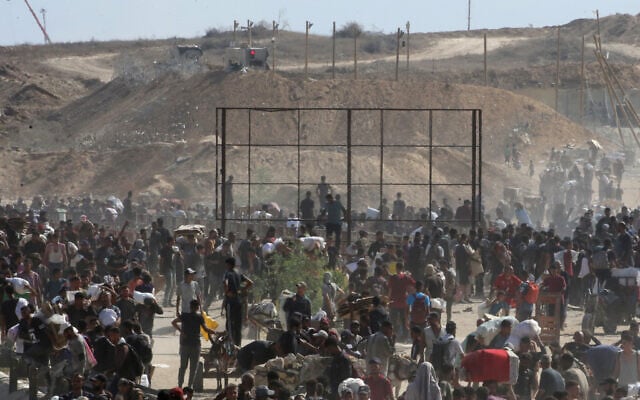
| Displaced Palestinians gather to receive aid from a GHF aid distribution point in the so-called ‘Netzarim corridor’ area in the central Gaza Strip on July 30, 2025. (Eyad Baba/AFP) |
Sources in Israeli media reported that Netanyahu met with a select group of ministers this week, reiterating that Hamas would be offered one final opportunity to agree to the ceasefire. Should they reject the terms, Israel is prepared to occupy strategic areas of the Gaza Strip, particularly along its perimeter. This development has intensified fears among the population in Gaza, which many describe as a region already devastated by war, starvation, and displacement.
Hamas, for its part, has accused both Israel and the United States of trying to coerce it into an unfavorable agreement “at gunpoint.” In response, President Trump argued that Hamas has repeatedly sabotaged peace efforts and suggested that the group is deliberately prolonging the conflict. As ceasefire talks stall in Cairo following the withdrawal of Israeli and American negotiating teams from Qatar, frustration is mounting in both Jerusalem and Washington.
A senior Israeli official disclosed to Channel 12 News that Israel submitted a formal document to mediators outlining its non-negotiable positions, including retaining control of the Philadelphia Corridor on the Gaza-Egypt border, denying the reopening of the Rafah Crossing, and rejecting Hamas’s sweeping demands for prisoner releases. These demands, Israeli officials argue, would leave them without leverage to secure the release of the final group of Israeli hostages.
Despite the apparent impasse, the United States is actively working to address the worsening humanitarian crisis in Gaza. Steve Witkoff, the U.S. Special Envoy to the Middle East, arrived in Israel on Wednesday to assess the situation. His visit comes in the wake of global outrage over rising deaths from malnutrition and ongoing violence near aid distribution centers. Witkoff, who had previously postponed a planned visit to Doha for hostage negotiations, is expected to meet with Israeli officials and may even enter Gaza to oversee the operations of the U.S.- and Israeli-backed Gaza Humanitarian Foundation (GHF).
| An Israeli flag flies from a main battle tank deployed at a position along the border with the Gaza Strip and southern Israel on July 29, 2025. (Jack GUEZ / AFP) |
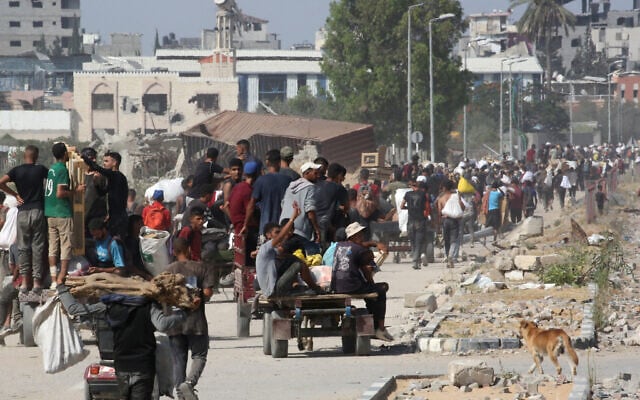
The GHF has been at the center of controversy, with allegations from Hamas that more than 1,000 Palestinians have been killed by Israeli forces near its aid sites. Local reports confirm frequent shootings around these centers as desperate civilians attempt to obtain food, often outside designated safe zones. While Israel accuses Hamas of hoarding aid and manipulating casualty figures, it has acknowledged some civilian deaths in such incidents. The Red Cross, too, has raised concerns, stating that many aid sites are located in or near evacuation zones, making them inaccessible and hazardous.
While ceasefire negotiations appear to have stalled, Israel has initiated daily “humanitarian pauses” in hostilities to allow more aid into Gaza. Nevertheless, aid agencies argue these measures are insufficient. The International Committee of the Red Cross (ICRC) noted that even with increased food deliveries, it could take weeks to stabilize the situation, as existing supplies are dwindling rapidly.
In parallel with military and diplomatic developments, there is growing support among Israeli lawmakers and ministers for the annexation and resettlement of parts of Gaza. On Wednesday, Ze’ev Elkin, a cabinet member from the New Hope party, suggested that the threat of annexation could be used as a pressure tactic against Hamas. He stated that losing land would be the “most painful” outcome for Hamas and urged an ultimatum to force a resolution.
That same day, 22 cabinet ministers and coalition lawmakers signed a letter urging Defense Minister Israel Katz to allow settlement groups to tour northern Gaza to evaluate potential sites for future Jewish settlements. Among the signatories were Communications Minister Shlomo Karhi, National Security Minister Itamar Ben Gvir, and other far-right figures. These groups, including the controversial Nachala Movement, have been actively promoting Jewish resettlement in Gaza, with some activists organizing marches near the Gaza border to mark the 20th anniversary of Israel’s withdrawal from the territory.
The humanitarian toll of the war continues to mount. According to the Hamas-run Health Ministry, over 60,000 people have died in Gaza since the start of the conflict. This figure, however, remains unverified and does not distinguish between civilians and combatants. On the Israeli side, 459 soldiers have died in ground operations in Gaza and related border conflicts. Hamas still holds 50 hostages, 49 of whom were abducted during the October 7, 2023 attack that triggered the war, in which approximately 1,200 people in southern Israel were killed and 251 taken hostage.
In the face of this deteriorating situation, international actors including the United Arab Emirates, Jordan, and Egypt have joined Israel in air-dropping humanitarian aid into Gaza. Israeli officials praised the multinational effort and called on more countries to participate. In a statement posted on social media, the Prime Minister’s Office declared, “We secured the skies, secured the drops, and made sure the food got through. Any country that truly wants to help is welcome to join us.”
As political rhetoric hardens and conditions on the ground worsen, the prospect of a near-term breakthrough remains bleak. Officials in both Israel and the United States have expressed pessimism about the chances of reviving the negotiations, even as intermittent communication between the parties continues. With pressure mounting from all sides, the coming days could mark a pivotal moment for Gaza’s future — and for regional stability as a whole.
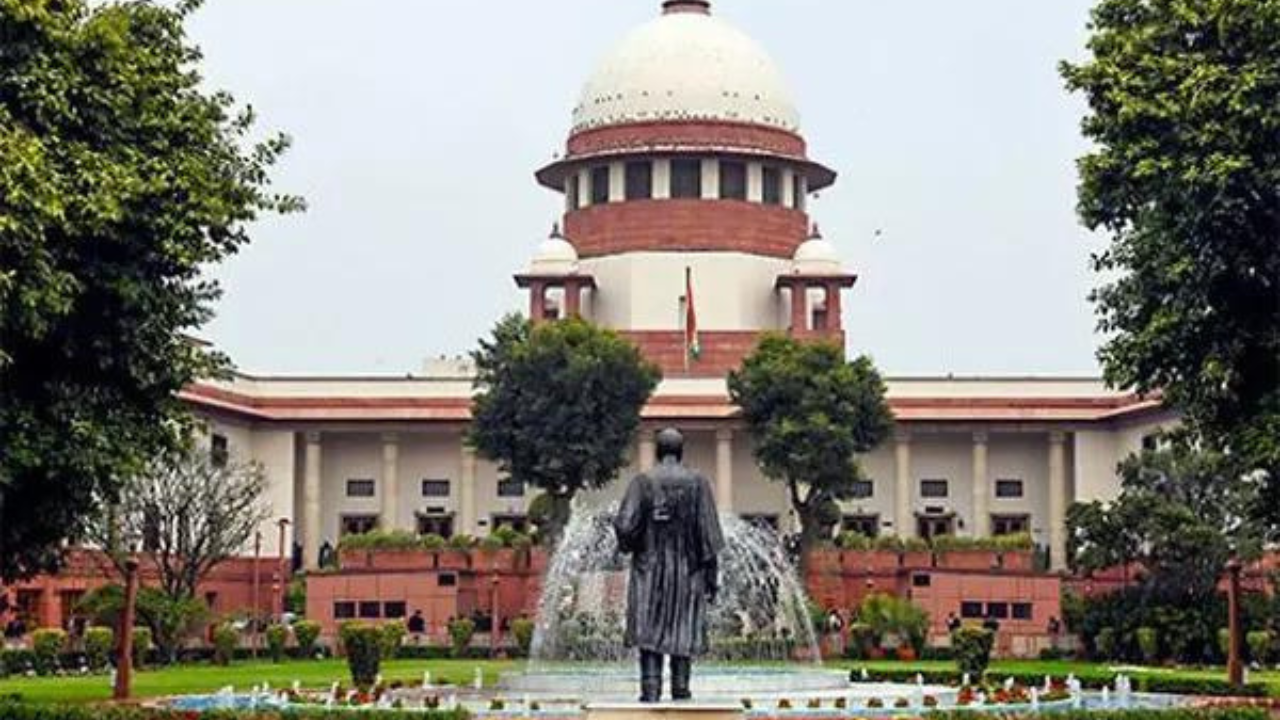
Supreme Court Stays Calcutta High Court’s Ruling on OBC List in West Bengal, Providing Relief to State Government
The controversy stems from a June 17 ruling by the Calcutta High Court, which had effectively blocked the state government’s notification on the new OBC list. The list, compiled by the State Backward Classes Commission, sought to recognize 77 tribes as OBCs. However, in May 2024, the High Court had dismissed the state’s attempt to include these 77 tribes in the OBC category, nullifying about 12 lakh OBC certificates issued since 2010. This verdict had triggered widespread unrest and confusion, particularly within the ruling party, which faced significant political pressure from various OBC groups.
At the heart of the legal dispute is the contention over whether the executive can independently issue OBC lists or whether the approval of the legislature is required. The Calcutta High Court had asserted that only the legislature had the authority to approve the OBC list, raising concerns that the executive’s action might not comply with constitutional provisions. This decision led to the state government filing a Special Leave Petition in the Supreme Court, seeking an urgent stay on the High Court’s order.
Advocate Kapil Sibal, representing the state government, pressed the Supreme Court for an immediate intervention, citing the disruption caused by the High Court’s ruling. He argued that the stay had halted numerous appointments and promotions, leaving several government operations in limbo. Moreover, Sibal pointed out that the High Court had initiated contempt proceedings against the state, which had only exacerbated the situation.
In Monday’s hearing, Chief Justice Gavai expressed surprise at the High Court’s decision, questioning how the court could impose a stay on an executive function. He emphasized that executive instructions were sufficient for providing reservations, and there was no requirement for new legislation to implement the OBC list. CJI Gavai remarked, “How can the High Court stay like this? Reservation is part of executive functions. This is settled law right from the Indira Sawhney case – the executive can do it.”
In his argument, Sibal clarified that the state had followed due process by conducting a fresh survey and engaging the State Backward Classes Commission. He rejected the High Court’s claim that the state had not followed proper procedures. The state, he said, had already taken steps to rectify previous errors by conducting a fresh exercise for the identification of OBCs.
Despite objections from Senior Advocates Ranjit Kumar and Guru Krishnakumar, who represented the respondents and argued that the new list had not been approved by the legislature, the Supreme Court bench was inclined to grant the stay. The respondents contended that the OBC list preparation lacked adequate data and legislative approval. However, CJI Gavai and his colleagues held firm in their view that the executive could issue such lists, with the court ultimately staying the High Court’s ruling.
As the Supreme Court bench issued a notice on the matter, they expressed concern over the “prima facie erroneous” reasoning of the High Court. CJI Gavai suggested that the High Court could hear the case expeditiously but through a different bench. “We will ask the Chief Justice to constitute another bench to hear the matter on an expedited timeline,” Gavai said.
The Supreme Court’s stay provides immediate relief to the West Bengal government, which had been struggling to proceed with key administrative functions affected by the High Court’s decision. According to legal experts, the ruling also clarifies that executive action, in this case, the issuance of an OBC list, does not necessarily require legislative approval, a position that aligns with settled legal precedents.
The state government’s challenge to the High Court’s decision continues, with the Supreme Court indicating that the final judgment will be based on a more comprehensive review of the case. In the meantime, the stay ensures that the new OBC list remains in effect, pending a final resolution.
This case has significant implications for the state’s political dynamics, particularly ahead of upcoming elections. The ruling has ended the immediate crisis for the ruling party, which had faced mounting pressure from various OBC groups, and it will likely influence the ongoing discourse on reservation policies in the region.
The legal battle over the OBC list is far from over, but Monday’s intervention by the Supreme Court has shifted the tide in favor of the West Bengal government. The outcome of this case will continue to shape the state’s political and legal landscape in the coming months.
Matrimony Scam: Woman Drugged and Robbed After Meeting Man from Matrimony Site
Sudip Bose, a resident of Lelinagar in New Barrackpore, had been conversing with Jia Singh, a woman he met on a popular Bengali matrimonial site. After several conversations, they decided to take the next step and meet in person. The two arranged to meet at a hotel near Dumdum Airport. Initially, everything seemed normal as they sat down to have tea together. However, things soon took a dark turn.
According to Sudip, Jia Singh, under the guise of offering him a warm drink, spiked his tea with drugs, causing him to lose consciousness. When he regained his senses, he realized his wallet, mobile phone, and other valuables had been stolen. In shock and disbelief, Sudip tried to contact Jia using the phone number she had provided him but received no response. Desperate for answers, he went to the airport police station and filed a complaint.
Taking swift action, the police initiated an operation based on Sudip’s complaint. They called the woman using the number provided through the matrimonial site, arranging another meeting at the same hotel. When Jia Singh arrived at the designated location, she was promptly apprehended by the police. Authorities have now requested her to be presented before the Barrackpore court for further legal proceedings and have taken her into custody.
This incident has raised significant concerns about the safety and legitimacy of online matrimonial sites, particularly with the rise of scams involving fraudulent individuals. As the investigation continues, experts urge users to exercise caution and trust their instincts when engaging with people online.
The airport police have assured the public that they are closely monitoring such incidents and will continue to investigate further, particularly with respect to whether Jia Singh has been involved in similar activities in the past.
In light of this distressing incident, users of matrimonial sites are advised to take extra care in verifying the identities of potential matches and to avoid meeting in isolated or private locations. While online platforms can offer opportunities for connection, incidents like these serve as a stark reminder of the risks involved.
This case is also likely to stir further debate on the need for tighter regulations and safeguards in the online matrimony industry to prevent such fraudulent and dangerous activities.
Allegations of Financial Misconduct and Harassment Against Actor and BJP Leader Mithun Chakraborty Spark Controversy in Kolkata
Baby Chakraborty, KalimNews, July 28, 2025, Kolkata : In a serious development that has created a political storm, actor and BJP leader Mithun Chakraborty is facing allegations of financial misconduct and harassment following a complaint filed by the wife of his former secretary. The allegation, which has gained significant attention, involves Chakraborty’s failure to honor promises of remuneration and financial security made to his former secretary, a claim that has now led to an FIR being lodged at the Chitpur police station in Kolkata.
Abhishek Banerjee Condemns Harassment of Bengali Migrant Workers, Slams BJP’s Double Standards
Baby Chakraborty, KalimNews, July 28, 2025, Kolkata : Abhishek Banerjee, Rajya Sabha Member of Parliament, has voiced strong opposition against the alleged harassment faced by Bengali migrant workers in other states. Speaking out against the mistreatment, Banerjee condemned the actions of the ruling governments in Uttar Pradesh, Delhi, and Odisha, accusing them of targeting Bengali-speaking individuals in the name of migration.
During a media interaction, Banerjee highlighted the recent incidents where Bengali migrant workers were detained and harassed simply for speaking their native language, a situation that sparked widespread outrage. He emphasized that such discrimination was not isolated and had become a troubling trend. “Whenever we get a chance in Parliament, we will speak in Bengali. Today, during the discussion on Operation Siddur, we will speak in Bengali as well. Bengali migrant workers are being harassed in Uttar Pradesh, Delhi, and Odisha under the BJP’s double-engine government,” he said.
The MP further criticized the Election Commission’s impartiality, alleging that it had been complicit in voter intimidation, particularly targeting the common people under the pretext of conducting the voter ID process. Banerjee remarked, “Voters are being intimidated in the name of SIR. The rights of the common man are being taken away. Meanwhile, voter ID cards are being issued in the name of dogs. All this is done to favor a particular party, and it’s shameful.”
Banerjee also referred to the disturbing incidents that occurred during the 2021 West Bengal election, when voters in Shitalkuchi were allegedly killed in broad daylight, and he expressed similar concerns over the handling of the 2024 elections. He accused the Election Commission of being subservient to political interests, leading to a compromised electoral process.
“Flattery and servitude are being practiced by the ruling party. The land that gave the world four Nobel laureates—Rabindranath Tagore, Mother Teresa, Abhijit Vinayak Banerjee, and Amartya Sen—has now been reduced to a political battleground,” Banerjee remarked. He also criticized the BJP’s national leadership, specifically targeting BJP President Amit Shah, accusing him of ignorance regarding the birthplace of Rabindranath Tagore and the party’s destructive actions, such as the alleged vandalization of Vidyasagar’s statue under Shah’s leadership.
Turning to the political landscape in Bengal, Banerjee warned that those who continued to oppress the people of Bengal would face consequences similar to those in the 2021 and 2024 elections. “The people of Bengal will not betray their own. They will give the BJP the same lesson they gave them in 2021 and 2024, come 2026,” he asserted.
In a passionate plea, Banerjee questioned why the BJP was engaging in politics of division, pointing out that if the ruling party had truly been concerned about such politics, they could have halted developmental work in the Jangalmahal region, where the BJP had performed well in the past. However, Banerjee proudly stated that the ruling party in Bengal had maintained an inclusive development agenda across the state, without discrimination.
“This is politics, and this should be the policy of the government of this country. It’s unfortunate that we have to fight against such divisions. We will speak out. If BJP believes that insulting the people of Bengal will teach them a lesson, they are gravely mistaken. They should be prepared for a much tougher lesson,” Banerjee concluded, sending a strong message of resilience and unity from Bengal.
The MP’s statement has added to the ongoing political discourse surrounding migrant workers’ rights, voter integrity, and the integrity of the electoral process, and has raised the stakes for upcoming political
Dilip Ghosh Alleges Social Media Conspiracy, Files Complaint with Kolkata Cyber Crime Cell
In his written complaint, Ghosh stated, “This is a preplanned conspiracy against me. Identify those who have manufactured this video and made it viral and take legal action.” The BJP leader has urged the police to identify the individuals responsible for creating and disseminating the video, and has called for stringent legal action against them under existing laws.
The complaint follows Ghosh’s public assertion on Friday that he would be approaching the police to report the matter. He reiterated his stance that the video is fake and technologically manipulated, and stressed that the person seen in the clip is not him. Several BJP leaders close to Ghosh have also supported this claim, suggesting that the video is a product of digital fabrication aimed at defaming him.
In his detailed submission to the Cyber Crime Police Station, Ghosh expressed concern that digital platforms and social media are being misused as tools in a deeper political conspiracy. He accused unnamed individuals of attempting to smear him both socially and politically and requested that law enforcement act decisively to bring the perpetrators to justice.
Ghosh’s political trajectory has recently been a subject of speculation. On April 30, the day of the inauguration of the Jagannath Temple in Digha, he was seen visiting the coastal town with his wife. Notably, he met Chief Minister Mamata Banerjee on the same day and appeared to be in good spirits. His interaction with the Chief Minister, especially amidst strained ties with certain sections of his own party, raised eyebrows within the state BJP.
Following this, rumours began to circulate that Ghosh might be considering a shift to the ruling Trinamool Congress. These speculations gained further momentum with suggestions that he could appear at Trinamool’s annual Martyrs’ Day rally on July 21. However, Ghosh was present at a BJP meeting in Kharagpur on that very day. Addressing the gathering, he said, “Those who misled workers by saying that Dilip Ghosh would join the BJP are the party that eats eggs and rice.” While refraining from naming individuals, his remarks were seen as a direct attack on a section of the BJP leadership.
Now, with the emergence of the controversial video and his subsequent legal action, Ghosh has once again taken a combative stance, alleging that a politically motivated attempt is underway to undermine his credibility. The developments come at a time when internal rifts within the BJP and broader electoral dynamics in West Bengal remain under intense public and media scrutiny.
BJP Prepares for Voter List Revision in Bengal: Training Party Workers for Smooth Process
Baby Chakraborty, KalimNews, July 26, 2025, Kolkata : Ahead of the crucial revision of the voter list in Bengal, the Bharatiya Janata Party (BJP) has initiated a comprehensive training program for its party workers. This move comes amid ongoing controversies surrounding the voter list updates, particularly following the Election Commission’s announcement that 56 lakh names would be removed from the voter list in Bihar.
While the Commission has clarified which names will be removed, the issue has continued to spark political debate. Against this backdrop, BJP leaders in Bengal, including Shamik Bhattacharya, are preparing to ensure a smooth process when the revision of the voter list begins in the state. To this end, the party has rolled out an extensive training program for its leaders and workers, which has already commenced.
The Training Process
The training is being conducted in two phases, with a distinct focus on different aspects of the voter list revision. The first phase, known as BLO One, focuses on assembly-based training. The second phase, BLO Two, is booth-based and aims to equip party workers with the tools needed for a more localized, hands-on approach. Each assembly will have three BLO Ones, who are responsible for coordinating with the Electoral Registration Officer (ERO) and the District Election Officer (DEO), or the District Magistrate. The names of these trained workers will be submitted to the relevant authorities as part of the formal process.
Those trained as BLO One workers will, in turn, be responsible for training the BLO Two workers, ensuring that the entire process is carried out efficiently across different levels. The BJP has set an ambitious target, with plans to train between 3,000 to 3,500 party workers for the BLO One phase. This training is expected to continue until August 20.
Role of BJP Trainees in the Voter List Revision
The BJP contends that the training initiative is crucial, as it will empower party workers to assist the general public during the voter list revision. Many people, the party claims, may not be fully aware of the procedures involved, and the trained workers will play a critical role in helping voters fill out the necessary forms and submitting the required documents. Additionally, there are often allegations of negligence on the part of booth-level officers, which the BJP aims to address by having its trained workers monitor these proceedings closely, ensuring that no errors or oversights occur during the process.
This effort is part of the BJP’s broader strategy to be proactive in managing the voter list revision process, ensuring that it is both fair and transparent. With the state’s electoral landscape being politically sensitive, the BJP is aiming to establish a strong presence at both the assembly and booth levels to maintain its political momentum.
The party’s leadership hopes that this initiative will not only streamline the process but also help mitigate potential issues that could arise during the voter list revision in Bengal, a state that is central to the party’s political aspirations.
Kharge, Rahul Question Modi’s Leadership Longevity Amid RSS Call for Retirement at 75
Bengal BJP Launches Large-Scale Training Drive Ahead of Voter List Revision Amid National Concerns
This move by the BJP comes at a time when debates and controversies are intensifying around the voter list cleansing initiative, especially after the Commission clarified who is being removed in Bihar. Although the Commission has issued statements regarding the process, questions continue to be raised across the political spectrum, prompting regional units of parties like the BJP to proactively gear up.
In West Bengal, senior BJP leaders, including Shamik Bhattacharya, are leading efforts to ensure party preparedness ahead of the electoral roll update. The party has already begun conducting structured training sessions for thousands of its members, aimed at enhancing grassroots involvement in the revision process. The training program is divided into two distinct tiers: BLO One and BLO Two.
BLO One refers to assembly-based training. Each assembly constituency will have three such BLO One-level trainees whose names will be officially submitted to the Electoral Registration Officer (ERO) and the District Election Officer (DEO), the latter usually being the District Magistrate. These trained personnel will then be responsible for instructing booth-level workers, termed BLO Two, who will operate at the polling booth level.
The BJP has planned to train approximately 3,000 to 3,500 party workers as BLO Ones across the state. This training program, which commenced recently, is scheduled to continue until August 20. Once trained, these individuals will play a pivotal role in supporting the electoral roll revision exercise.
According to BJP insiders, the aim of the training is not only to streamline the voter list revision process but also to bridge the information gap for common voters who may not be fully aware of the procedural intricacies. These party trainees are expected to assist citizens with filling out necessary forms, advising them on the documentation required, and clarifying doubts during the revision period.
Moreover, party officials have pointed to instances in the past where booth-level officers allegedly neglected duties or failed to communicate effectively with voters. To address such issues, the trained BJP workers will act as supplementary support, monitoring the process to prevent lapses or negligence.
The training initiative reflects the party’s broader electoral strategy and preparedness, particularly in a politically sensitive and closely watched state like West Bengal. As the voter list revision progresses, the presence of such trained cadres on the ground is likely to influence both administrative efficiency and political narratives in the run-up to future elections.
The development adds yet another layer to the national discourse around voter registration, transparency, and fairness, particularly in light of recent electoral policy updates and scrutiny of large-scale deletions elsewhere in the country.