Migrants threatening survival of indigenous people of Manipur: Biren Singh

 Manipur CM says steps being taken to deport illegal immigrants

IANS, 

Imphal, May 9, 2024 :  Manipur Chief Minister N. Biren Singh said that immigrants from across the border threatened the survival of indigenous people in the state and the government would not allow it to continue.

Singh in his series of social media posts without naming Myanmar said that till May 7, a total of 5,457 illegal immigrants have been detected and biometric data of 5,173 of them have been collected while the deportation process is underway.

“In this crucial juncture, we have noticed certain homegrown groups, based out of Western countries, criticising the steps taken up against illegal immigration by giving a communal tone and propagating it as violations of religious freedom,” the Chief Minister said.

“Ironically, this lobby is quiet about Western countries’ stance against illegal immigration but raises objections to the actions taken in Manipur, India. This selective outrage raises concerns about the agendas and propaganda pursued by these groups with secessionist tendencies.”

Singh, who also holds the home portfolio, during the past few days has been posting on various social media about aspects of illegal migrants in Manipur from neighbouring Myanmar.

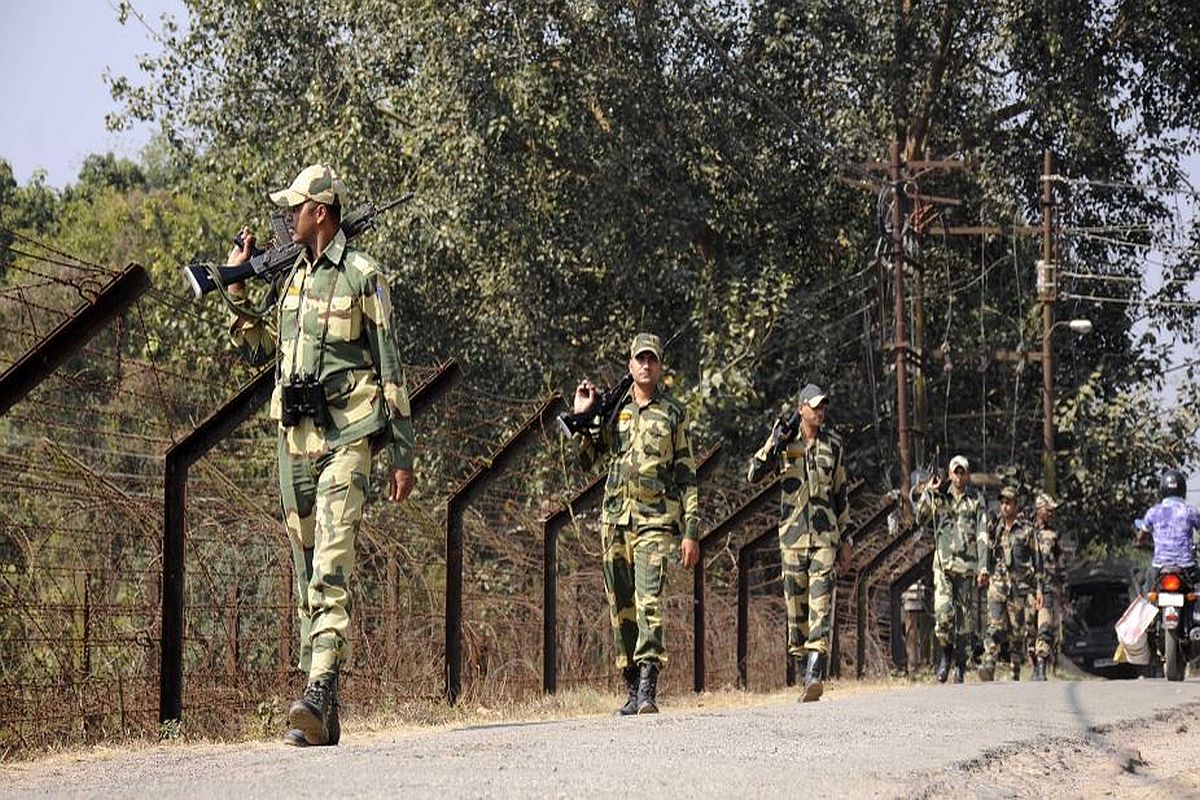
Manipur shares around 400 km of international border with Myanmar. Works for fencing of the 20 km of the mountainous borders are now underway.

The Chief Minister had said that the influx of illegal immigrants from Myanmar led to the emergence of 996 new villages in the state in the past 18 years.

“The unnatural growth of 996 new villages since 2006 and illegal immigration from Myanmar is a threat to the indigenous people and national security. The immigrants have set up settlements by encroaching upon forest lands, leading to deforestation and environmental degradation,” a Manipur government report said.

It added that the immigrants have engaged in illicit activities such as poppy cultivation, further exacerbating the socio-economic and ecological challenges faced by the region.

In response to these challenges, the Manipur government has initiated several measures aimed at addressing the issue of illegal immigration and its associated impacts.

The report, accessed by IANS, said the state government following the advice of the Ministry of Home Affairs (MHA) has been collecting biometric data of the illegal immigrants and geotagging their settlements.

According to the report, the state government has taken various measures to curb the illegal influx from across the border.

The measures include enhancing security along around 400 km India-Myanmar border in Manipur, engagement of indigenous communities, empowering them to safeguard their rights and interests against encroachment and exploitation and urged the Central government to scrap the Free Movement Regime (FMR) between India and Myanmar.

The FMR allowed citizens residing close to both sides of the border to move 16 km into each other’s territory without a passport or a visa.

The Manipur Chief Minister had said that 877 square km of forest cover in the northeastern state were destroyed in 34 years (1987-2021), primarily for the illegal cultivation of poppy, which has been used to manufacture various drugs.

Singh, who also holds the Home portfolio, said that forest cover in Manipur was 17,475 sq km in 1987 and in 2021, it was destroyed to 16,598 sq km, primarily for the cultivation of poppy.

The eviction of unauthorised encroachers carried out ever since the BJP government led by him came to power in Manipur in 2017 and 291 encroachers were evicted from the Reserve Forest and Protected Forest throughout the state, the Chief Minister had said.

It was never targeted towards any particular community, Singh pointed out.

President of India confers Padma Shri on renowned bamboo craftsman Jorden Lepcha

PIB, GANGTOK, MAY 9, 2024 : President of India Droupadi Murmu conferred Padma Shri on Jorden Lepcha from Sikkim in the field of Art at a Civil Investiture Ceremony in New Delhi today. Born on July 28,1971, in the serene village of Rubeyam Ram, nestled amidst the stunning landscapes of Dzongu, Mangan District, Sikkim, Lepcha’s early years were shaped by the teachings of his parents who introduced him to the art of bamboo crafting.

 
Driven by a deep passion to revive ancient traditions, Lepcha immersed himself in mastering the intricate techniques of crafting Lepchahats, known as Thyaktuks. The pivotal moment came in 1997 when he participated in a six- month training programme for traditional hat weaving organized by the Government of Sikkim’s Industry department. Despite facing challenges in selling his creations initially, he persevered, taking on additional jobs to support his family while honing his craft.
In 2005, Lepcha began sharing his knowledge by conducting training sessions for aspiring artisans in Gangtok, summoned by the Directorate of Handicrafts &Handlooms (Govt. of Sikkim). 
 
His commitment extended to offering free training sessions at his own residence, empowering individuals to embrace and propagate the ancient craft of Lepcha hat weaving. Lepcha’s legacy goes beyond individual accomplishments; it’s about the impact one person can have in preserving and perpetuating cultural traditions. 
 
Through his efforts, he has not only safeguarded a cherished cultural heritage but also empowered countless individuals to embrace their heritage and sustain themselves through craftsmanship.
 
Through dedication and hard work, Lepcha’s expertise gained recognition, earning him accolades such as a Certificate of Merit from the Ministry of Textile(Government of India) and the esteemed title of Master Craftsman for the State of Sikkim. But beyond personal achievements, his journey has always been about giving back to his community and preserving their cultural legacy.
 
Brief citation about the life and work of the awardee Jorden Lepcha is given below-
 
1. Shri Jorden Lepcha is a famous bamboo craftsman from Sikkim.
 
2. Born on July 28, 1971, in the serene village of Rubeyam Ram, nestled amidst the stunning landscapes of Dzongu, Mangan District, Sikkim, Shri Lepcha’s early years were shaped by the teachings of his parents who introduced him to the art of bamboo crafting.
 
3. Driven by a deep passion to revive ancient traditions, Shri Lepcha immersed himself in mastering the intricate techniques of crafting Lepcha hats, known as Thyaktuks. The pivotal moment came in 1997 when he participated in a six- month training program for traditional hat weaving organized by the Government of Sikkim’s Industry department. Despite facing challenges in selling his creations initially, he persevered, taking on additional jobs to support his family while honing his craft.
 
4. In 2005, Shri Lepcha began sharing his knowledge and skills by conducting training sessions for aspiring artisans in Gangtok, summoned by the Directorate of Handicrafts & Handlooms (Govt. of Sikkim). His commitment extended to offering free training sessions at his own residence, empowering individuals to embrace and propagate the ancient craft of Lepcha hat weaving.
 
5. Shri Lepcha’s legacy goes beyond individual accomplishments; it’s about the impact one person can have in preserving and perpetuating cultural traditions. Through his efforts, he has not only safeguarded a cherished cultural heritage but also empowered countless individuals to embrace their heritage and sustain themselves through craftsmanship.
 
6. Through dedication and hard work, Shri Lepcha’s expertise gained recognition, earning him accolades such as a Certificate of Merit from the Ministry of Textile (Government of India) and the esteemed title of Master Craftsman for the State of Sikkim. But beyond personal achievements, his journey has always been about giving back to his community and preserving their cultural legacy.

Guv Bose shows CCTV footage of Raj Bhavan to common people

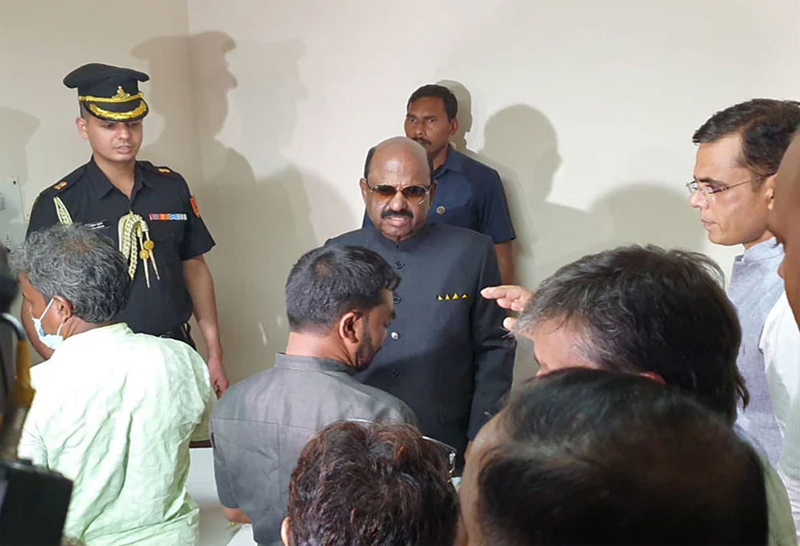
IANS, Kolkata, May 9, 2024 : Amid allegations of molestation against West Bengal Governor C.V. Ananda Bose, the Governor’s House on Thursday showed 69-minute CCTV footage of the Raj Bhavan premises dated May 2 to around 100 ‘common people’.


On May 2, a temporary female staff at the Raj Bhavan filed a police complaint accusing the Governor of ‘outraging her modesty’, triggering a political storm in the state.

Denying the charge vehemently from the beginning, the Governor on Wednesday announced that the CCTV footage of the Raj Bhavan will be screened at the Governor’s House for the common people, barring Chief Minister Mamata Banerjee and members of the police force, on Thursday.

In the CCTV footage screened in three parts, the Governor could not be seen in any frame.

The footage from May 2 showed recordings of two CCTV cameras installed in the North Gate of the Raj Bhavan from 5.32 p,m. to 6.41 p.m. The screening event was titled ‘Sach Ka Samna’.

Although the Governor was not spotted in the footage, the complainant was seen twice — once entering the police post inside the Raj Bhavan premises, and then coming out of it and entering an adjacent room.

Heavy deployment of police was seen in the footage on account of the arrival of Prime Minister Narendra Modi at the Raj Bhavan on the night of May 2.

Since the announcement of the screening on Wednesday, the Governor’s office received hundreds of applications from the common people seeking to attend the event.

The CCTV cameras inside the Governor’s House are maintained by the Public Works Department, while the monitoring is done by the Kolkata Police.

New videos surface, claim women deceived to lodge complaints of rape; TMC slams BJP

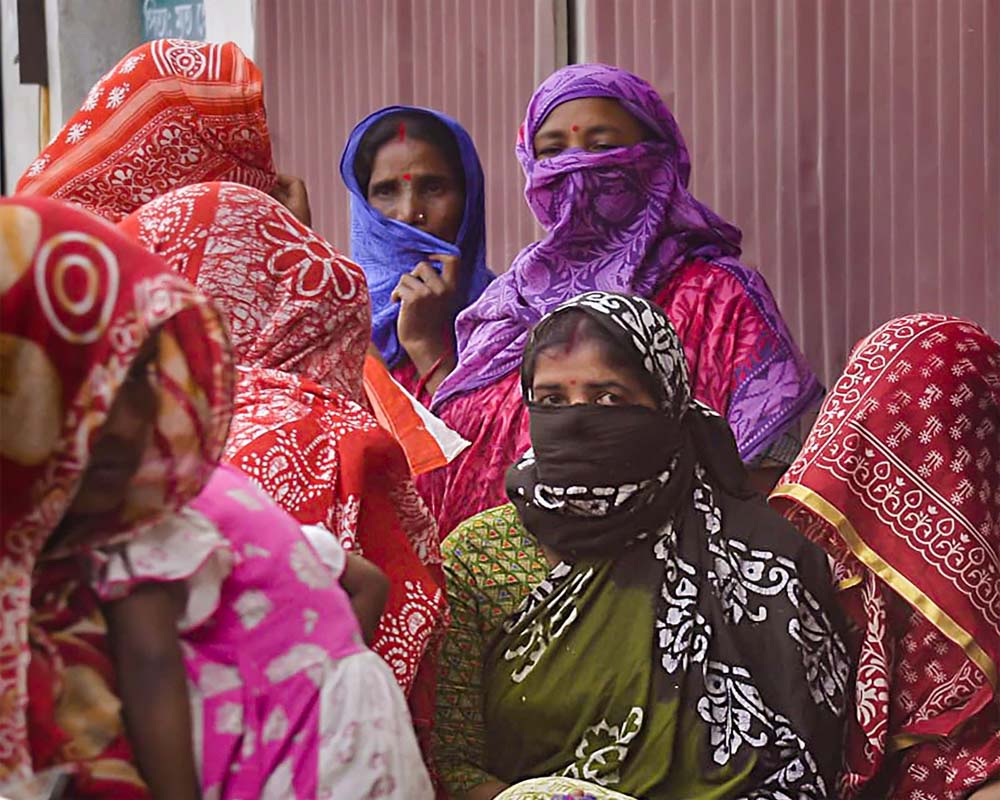
PTI, 09 May, 2024 : The Trinamool Congress on Thursday accused the BJP of spreading falsehood about the incidents of Sandeshkhali, after several purported videos claimed that a local female BJP leader made multiple women sign on blank papers, which were later filled up as complaints of sexual assault against TMC leaders.


The allegation was levelled within three days after the TMC took to social media to unveil a Sandeshkhali “sting operation” video featuring a local BJP leader Gangadhar Koyal who claimed that the rape allegations were “staged” and were lodged at the behest of state Leader of Opposition, Suvendu Adhikari.

In a bid to reassert its claims, the TMC shared a fresh set of videos on Thursday of purported women residents of Sandeshkhali who alleged they were “manipulated” by the BJP into filing “false rape cases”.

The party also shared a fresh video where BJP’s Basirhat candidate and one of the leading faces of Sandeshkhali protests, Rekha Patra, was seen questioning the identity of the contingent of “Sandeshkhali victims” who were earlier taken to Delhi by the state BJP leaders to meet President Draupadi Murmu and relate their ordeal.

On Wednesday, the TMC had alleged that BJP leaders were issuing death threats to women who have expressed their willingness to withdraw their complaints of rape.

PTI, however, could not independently verify the authenticity of any of the tapes released so far.

Referring to the newly released videos, state minister and senior TMC leader, Shashi Panja, condemned the BJP for “perpetuating a false narrative on Sandeshkhali sexual assaults” and threatening victims who sought to retract their police complaints.

“Sandeshkhali victims may have had a few complaints over land grab. But they never had complaints of sexual offence. This again proves that the BJP is spreading falsehood. This despicable act of fabrication and intimidation will not go unpunished,” Panja said.

West Bengal’s Leader of Opposition Suvendu Adhikari, on the other hand, dismissed TMC’s claims, alleging that the videos were fabricated by ‘bhaipo’ (nephew), an oblique reference to TMC leader Abhishek Banerjee and the party’s private poll-cum-political consultant, I-PAC, who “distributed money” to get the job done.

“We are soon moving court against both and will ensure they are taken to task for spreading such malicious lies,” Adhikari said while participating in a nomination filing rally of Rekha Patra at Basirhat.

BJP Rajya Sabha MP and party spokesperson Samik Bhattacharya told reporters that the more such videos surface, the higher the margin of votes by BJP from Sandeshkhali assembly segment under Basirhat Lok Sabha seat.

He said the state administration itself prepared a list of those whose plots of land had been taken away by TMC leader Shahjahan Sheikh, who was arrested and later suspended by the party, and started the process of returning those.

So circulating one video after another now contradicts the state’s move to set right the wrongs committed by the ruling party, he said.

Bhattacharya said the BJP Sandeshkhali mondal president, whose name figured in the purported video, requested the CBI to include the clipping in its probe.

Leader of Opposition Adhikari claimed that people could see through the web of Trinamool’s deceit and Patra would gain a lead of 1.5 lakh votes from the Sandeshkhali region itself.

In one of the latest videos, a woman was heard saying, “We were deceived into signing on blank papers. We discovered later that rape complaints had been lodged in our names. This is a blatant lie.” The woman said the authorities should take action against the woman BJP leader who manipulated them to sign blank papers.

Another alleged Sandeshkhali resident echoed similar sentiments in a separate video, claiming that they have become victims of a scheme orchestrated by BJP leader Piyali Das.

According to information last received, Das has been summoned by the local police for questioning.

In the video which features Patra, the BJP candidate was heard seconding another woman standing next to her who alleged that the victims who were taken to meet the President were arbitrarily chosen by local BJP leaders.

“Several oppressed women were taken to meet the President. We weren’t part of that group. We had gone to meet the Prime Minister (in Barasat where he addressed a public meeting on March 6). If not us, then who were these so-called oppressed women who met the President?” she asked.

“We have a right to know that if we were in Sandeskhali at that time, then who became our faces to meet the President?” Patra was heard adding.

Regarding this, Bhattacharya said hundreds of women had levelled charges of atrocities against TMC leaders from different islands of the area.

“It is clear that Patra did not know every one of them and this purported video must have been recorded before she was fielded as a candidate from Basirhat,” he said.

The TMC, meanwhile, has moved the Election Commission urging the poll body to initiate criminal proceedings against the BJP leaders concerned, including Adhikari, for “orchestrating the conspiracy including paying bribes to the women of Sandeshkhali to falsely raise complaints and attempting to influence central investigating agencies and other constitutional authorities”.

CPI(M) Basirhat Lok Sabha candidate Nirapada Sardar claimed that both TMC and BJP are trying to confuse the people of Sandeshkhali by circulating such videos. 

ED to file chargesheet against Kejriwal, Kavitha

 Enforcement Directorate plans to file a charge sheet in the Delhi excise policy-linked money laundering case, naming Arvind Kejriwal, BRS leader K Kavitha, and others as accused, including individuals and companies.

PTI, May 09, 2024: The Enforcement Directorate (ED) is expected to soon file a fresh charge sheet in the Delhi excise policy-linked money laundering case and it may name Chief Minister Arvind Kejriwal, BRS leader K Kavitha and some others as accused, official sources said on Thursday. The federal agency had arrested Kejriwal from his official residence here on March 21 under the Prevention of Money Laundering Act (PMLA) while Kavitha, the MLC daughter of former Telangana chief minister K Chandrashekar Rao, was taken into custody from Hyderabad on March 15.

Official sources said a prosecution complaint against half-a-dozen entities, including the two politicians, some linked individuals and companies, has been readied and the agency may file it before a special PMLA court here within the next 4-5 days.

The accused will be charged with money laundering and the prosecution complaint will be filed under sections 45 and 44(1) of the PMLA, the sources said.

The agency may also name the Aam Aadmi Party (AAP) in this charge sheet along with attachment of some fresh assets in the case that was registered in 2022.

BJP, Oppn at loggerheads overEAC-PM paper on population

 ‘The question arises that if by this pace the population is increasing and Congress is hell bent upon giving reservation to the Muslims on the basis of population, they will cut the share of the SCs, STs and the OBCs’ 
PTI, New Delhi, 09.05.24 :  The BJP on Thursday expressed concern over the pace of increase in Muslim population in the country and wondered its impact on the reservation provided to SCs, STs and OBCs, claiming the Congress is “hell bent” on providing quota to the minority community if voted to power.

The ruling party’s reaction came after a recent working paper by the Economic Advisory Council to the Prime Minister (EAC-PM) said the share of the Hindu population decreased by 7.82 per cent between 1950 and 2015 in India, while that of Muslims increased by 43.15 per cent, suggesting that there is a conducive environment in the country to foster diversity. The paper titled ‘Share of Religious Minorities: A Cross-Country Analysis (1950-2015)’ further said the share of Jains in the population of India decreased from 0.45 per cent in 1950 to 0.36 per cent in 2015.

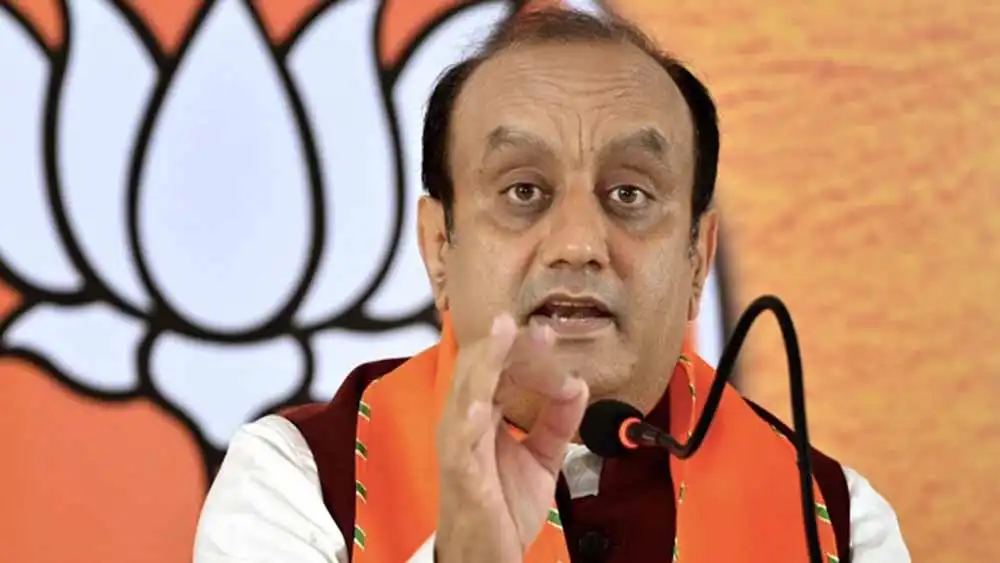
The report comes ahead of the fourth phase of the Lok Sabha polls. “It’s a very well-known fact, which has been in the public domain for around a decade. If you see the 1951 census, Hindus were having 88 per cent population and Muslims 9.5 per cent. In the 2011 census, Hindus (population) reduced to 79.8 percent from 80 percent while Muslims’ percentage went up by more than 14.5,” BJP national spokesperson Sudhanshu Trivedi told PTI, when asked for comment.

“But, the question arises that if by this pace the population is increasing and Congress is hell bent upon giving reservation to the Muslims on the basis of population, they will cut the share of the SCs, STs and the OBCs,” he added.

Trivedi said the Congress, if voted to power will, then keep on “changing” the share of reservation in future with increase in the Muslim population, “which is more likely because they (Muslims) are having possibility of multiple marriages”. Muslims share in the reservation will keep on increasing also because of “conversion and infiltration because they are having a secular cover from them (the Congress)”, he added.

“So this is a bigger question and a bigger challenge which they (Congress) have to answer,” the BJP spokesperson said. Senior BJP leader and Union minister Rajeev Chandrasekhar said that the EAC-PM’s report raises many questions because one particular community is “increasing its population in a manner where demography of India is being altered, changed”.

“This leads to some questions that need to be asked and answered,” he said, adding “How much of growth in Muslim community is being caused by illegal immigration and conversion?” he asked. “What is the impact of this significant increase in the minority community’s (Muslims) population on the rights and opportunities (available) for the other minority communities? There are Jains, Buddhists, Sikhs and Christians. Is there any crowding out of these minority communities as a consequence of this (rise in Muslim population)?” Chandrasekhar asked. He alleged that some political parties including the Congress are making “huge attempt to alter the Constitution and bring religion based reservation”.

“So, what will be the consequence when you have the Muslim community increasing its population so rapidly, from 9 per cent to 14.5 per cent and there are political forces that want to give them reservation,” he told PTI. “What will be the consequence of that on the OBC, SC and ST communities who suffered for centuries in India and have been excluded from development,” he said, adding that these are the questions which needs to be asked and answered because they will shape the future of India.

Chandrasekhar said: adding “How much of growth in Muslim community is being caused by illegal immigration and conversion?” “What is the impact of this significant increase in the minority community’s (Muslims)population on the rights and opportunities (available) for the other minority communities? There are Jains, Buddhists, Sikhs and Christians. Is there any crowding out of these minority communities as a consequence of this (rise in Muslim population)?” the Union minister asked. 

He alleged that some political parties including the Congress are making” huge attempt to alter the Constitution and bring religion based reservation”. “So, what will be the consequence when you have the Muslim community increasing its population so rapidly, from nine per cent to 14.5 per cent and there are political forces that want to give them reservation,” he told newspersons. 

“What will be the consequence of that on the OBC,SC and ST communities who suffered for centuries in India and have been excluded from development,” he said, adding that these are the questions which needs to be asked and answered because they will shape the future of India.
However, Opposition leaders accused the BJP of trying to create communal divide over the report. CPI general secretary D Raja and RJD leader Tejashwi Yadav slammed the Union government for not conducting the census, and called the working paper by the Economic Advisory Council to the Prime Minister (EAC-PM) an attempt to get votes by creating strife. Union minister and BJP leader Giriraj Singh meanwhile used the report to target the Congress, and alleged that Hindu population in the country has gone down due to its politics of appeasement. Asked about the report, Yadav said the BJP is trying to spread hatred.

“The census that was to happen in 2020-21 has not been done till now, it’s 2024… Their aim is only to mislead the people of the country, and to spread hatred. This is the agenda of Prime Minister Narendra Modi and BJP. They have fooled people of this country for ten years, and they want to do that again,” he alleged. Raja questioned the timing of the report and said: “Why has the PM’s economic advisory council come out with this report at a time when the country is going for elections? 

The Prime Minister is already trying to polarise people in the name of Muslims, talking about handing over keys of Ram Mandir to Muslims… he is taking up all such issues. That means there is an attempt to polarise people by bringing out such data. People should be cautious of such reports.

“The CPI leader said it is a “study between 1950 and 2015. Mr Modi came to power in 2014. This government has not conducted any census, has not given any data for those who died due to Covid. They have not given any data on migrant workers, or prevailing poverty. But how was this data collected?” Singh, the Union Rural Development Minister who is fighting from the Begusarai seat in Bihar, said some people want to mislead the nation, but the truth cannot be hidden. “In 1947, we had around 88 per cent Hindu population, now we are 70 percent. Muslims were eight percent, now government figures say they are 15-16 per cent, I would say they are 20 percent…” Singh claimed.

“Congress made this country a ‘dharmshala’ (inn). In 1971, the Bangladeshi infiltrators who came, made India and Bihar a sanctuary for Rohingyas, Bangladeshis… They were converted into a vote bank, it was a conspiracy to finish Sanatan. Now they are giving reservations through the backdoor…,” he alleged.

“Hindu population is decreasing, Muslim population is increasing… It shows that in the days to come, they want to make India an Islamic state, “the Union minister claimed. According to the working paper” Share of Religious Minorities: 

A Cross-Country Analysis (1950-2015)”, share of the Hindu population decreased by 7.82 percent between 1950 and 2015 (from84.68 per cent to 78.06 per cent). The share of Muslim population in 1950was 9.84 per cent and increased to 14.09 per cent in 2015 — a 43.15 percent increase in their share, it claimed. 

The paper said the data indicates that “there is a conducive environment to foster diversity in the society,” adding that it is not possible to promote better life outcomes for the disadvantaged sections of society without providing a nurturing environment and societal support through a bottom-up approach

SC reserves orders on state’s challenge to CBI probing cases

The stand taken by the Central government today was the reiteration of the position stated by it in the course of its submissions on 3 May and earlier in its affidavit in response to West Bengal government’s petition.

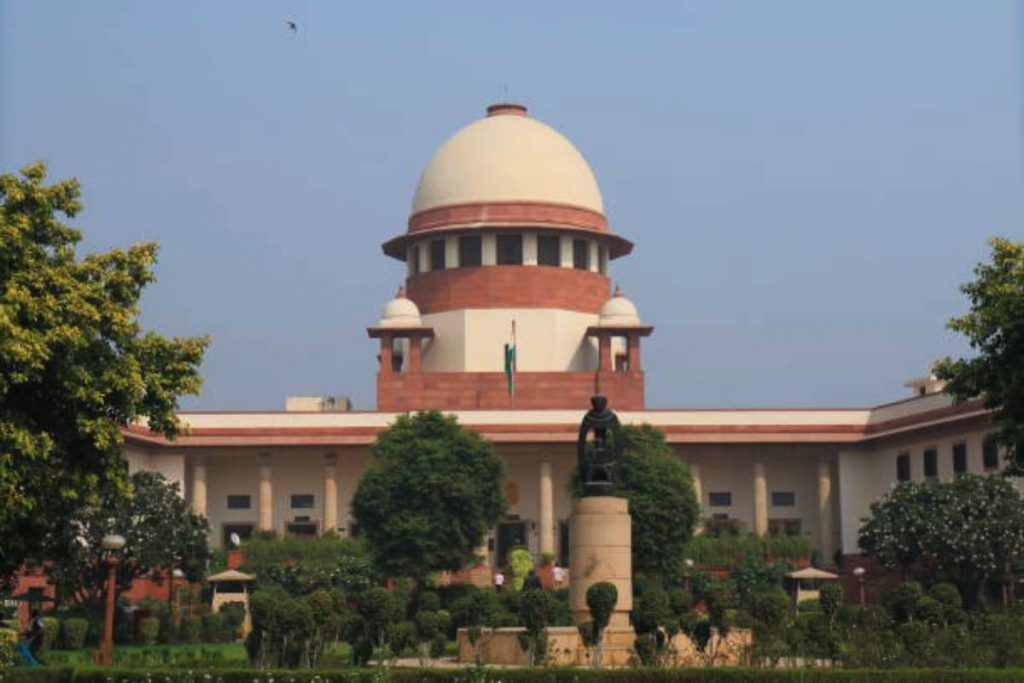
Parmod Kumar | SNS  |  New Delhi | May 9, 2024 : he Supreme Court on Wednesday reserved its judgment on the West Bengal government’s plea challenging the Central Bureau of Investigation undertaking investigation into the cases in the state without its statutorily mandated prior consent, as state government asserted that such a situation would be in derogation of the federal nature of Centre-State relationship under Indian constitution.

Reserving the judgment, a Bench of Justice B R Gavai and Justice Sandeep Mehta gave both – the petitioner West Bengal government and the central government time till Friday, 17 May, to file note of their respective submissions not more than 20 to 25 pages each. Giving time till 17 May to file written submissions, the Bench said that they would be writing the judgment during a seven week-long summer vacation of the top court starting from 20 May.

While the West Bengal government asserted that the Central Bureau of Investigation cannot register cases and undertake any investigation in the State without its prior nod, after it has already withdrawn its general consent since 16 November, 2018, the central government reiterated that the central investigating agency was an independent of its control and was not functioning under its control and supervision.

By its 16 November decision, the West Bengal government has withdrawn its general consent permitting the CBI to undertake any investigation in the state.

The Solicitor General, Tushar Mehta appearing for the central government said that its (central government) presence in the CBI was limited to the transfer, posting, territorial jurisdiction – areas it can investigate – and the finances of the agency including emoluments. As far as registration of cases and their investigation was concerned, the agency was an autonomous and independent entity.

On a poser from the Bench as to under which ministry the CBI comes, the Solicitor General Mehta said that it could be the department of personnel & training (DoPT) or the ministry of home affairs. However, the Solicitor General said that the government cannot ask the CBI to register cases.

The stand taken by the Central government today was the reiteration of the position stated by it in the course of its submissions on 3 May and earlier in its affidavit in response to West Bengal government’s petition.

However, an attempt by the Solicitor General Mehta drawing a parallel between the independence enjoyed by the CBI with that of the independence of the judiciary was not accepted by the Court. The bench said any comparison of independence of CBI with that of judiciary is an “incorrect analogy”.

Appearing for the West Bengal government, senior advocate Kapil Sibal told the Bench that after the state government withdrew its general consent to the CBI to probe cases in the state, the central agency could not have undertaken any investigation in the State without prior consent of the state government.

“The West Bengal government had withdrawn the consent on 16 November, 2018. The cases registered by the CBI, which are under the challenge, after the withdrawal of the consent” could not be investigated, Sibal told the Bench pointing out that, “The constitutional question is whether after the withdrawal of the consent, can you (central government) allow your agency to enters my State, without my consent.”

He further argued that when in parliament a question is asked about the CBI, it is the DoPT under the Prime Minister that answers the questions.

Assailing the Centre’s stand that CBI can register cases on its own, Sibal said, “That is the most dangerous proposition that the Centre has advanced before the court, which will be destructive of the federal nature of the Centre-State relationship.”

Sibal cited the instance of “CBI registering a case in a state without its prior nod and the same is challenged and by the time the matter is decided it would take 4 to 5 years and by then the trial in the case would be over.”

The West Bengal government in its suit has challenged the registration of cases by the CBI without its consent. It has referred to the provisions of the Delhi Special Police Establishment Act 1946, stating that the CBI is mandated under the statute to take the State government’s consent before registering cases.

Delhi High Court asks Google, Microsoft to seek Delhi High Court asks Google, Microsoft to seek review of ruling on removal of non-consensual intimate images

They said the search engines do not ‘host’ any content, and once an objectionable content has been removed from the site hosting it, it will not appear in search results as well

PTI, New Delhi, 09.05.24 : The Delhi High Court on Monday asked Microsoft, which owns ‘Bing’, and Google to seek a review of an order by a single judge directing them to identify and de-index non-consensual intimate images without requesting for their specific URLs, after the search engine giants filed an appeal against the ruling.

The senior counsel for the appellants said unlike in cases of child sexual abuse material, non-consensual intimate images cannot be detected by their current technology and therefore it was not possible for them to comply with the order passed by the single judge in April 2023.
Their senior lawyers assured the court a new technology is being developed but it has not yet reached a stage where it can detect such non-consensual content on its own.

They said the search engines do not “host” any content, and once an objectionable content has been removed from the site hosting it, it will not appear in search results as well.

Stating that “no one can ask you to do the impossible”, a bench headed by Acting Chief Justice Manmohan asked them to approach the single judge to reconsider his directions.

“Keeping view of the aforesaid, it would be appropriate if the appellants file a review and bring the aforesaid facts to the notice of the single judge. In the event the appellants are aggrieved by order of the single judge in the review petition, the appellants shall be at liberty to revive the present appeals,” the bench, also comprising Justice Manmeet PS Arora, said.

As the senior counsel for Google sought sought an assurance that no coercive action would be taken against them for non-compliance with the single judge’s directions, the court observed no such action has been taken till now.

In an order passed on April 26, 2023, the single judge had said it was the responsibility of the search engines to immediately cease access to any offending content and the victim cannot be made to face humiliation or harassment by having to approach the authorities again seeking the same relief.

The ruling came on a petition by a woman who sought blocking of certain sites exhibiting her intimate images.

The single judge had stated “Non-Consensual Intimate Images (NCII) abuse” , which includes “revenge porn”, violates the right to privacy and causes psychological damage to the victim.

The single judge had asserted that search engines were obligated to observe due diligence while discharging their duties under Rule 3 of the IT Rules, including making reasonable efforts to prevent hosting, displaying, uploading or sharing of any information that is invasive of another person’s privacy and violates any law for the time being in force, or they will lose the protection from liability accorded to them under Section 79 of the IT Act.

“If information is relating to content which is prima facie in the nature of any (NCII) material.., the search engine is required to take all reasonable and practicable measures to remove or disable access to such content which is hosted, stored, published or transmitted by it,” the single judge had said.

“The time-frame as stipulated under Rule 3 of the IT Rules must be strictly followed without any exceptions, and if there is even minor deviation from the said time-frame, then the protection from liability accorded to a search engine under Section 79 of the IT Rules cannot be invoked by the search engine,” the single judge bench had stated.

ED in SC opposes interim bail to Delhi CM Arvind Kejriwal, says electioneering not fundamental right

It is relevant to note that the right to campaign for an election is neither a fundamental right nor a constitutional right and not even a legal right: ED
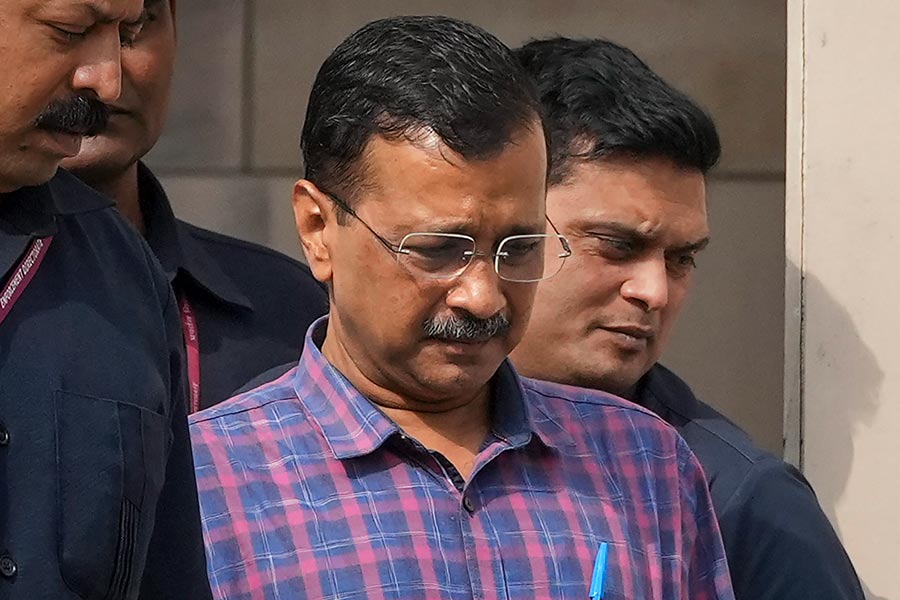
Arvind Kejriwal : File photo

PTI, New Delhi, 09.05.24 : The Enforcement Directorate (ED) on Thursday opposed in the Supreme Court the grant of interim bail to Delhi Chief Minister Arvind Kejriwal in a money-laundering case linked to the alleged excise policy scam, saying the right to campaign in elections is neither fundamental nor constitutional.

In a fresh affidavit filed in the top court, the ED said no political leader has ever been granted interim bail for campaigning even if he is not contesting polls.
“It is relevant to note that the right to campaign for an election is neither a fundamental right nor a constitutional right and not even a legal right,” the agency said. It added that to its knowledge, “no political leader has been granted interim bail for campaigning even though he is not the contesting candidate. Even a contesting candidate is not granted interim bail if he is in custody for his own campaigning”.

On Wednesday, Justice Sanjiv Khanna, who headed the bench that heard Kejriwal’s petition against his arrest in the case, said, “We will pronounce the interim order (on bail) on Friday. The main matter related to the challenge to arrest will also be taken up on the same day.” The Aam Aadmi Party (AAP) leader was arrested on March 21 and is currently lodged in Tihar Jail under judicial custody.

On May 7, the bench, also comprising Justice Dipankar Datta, had reserved its verdict on Kejriwal’s interim bail plea.

On Tuesday, a Delhi court extended Kejriwal’s judicial custody in the case till May 20.

The Delhi High Court had, on April 9, upheld the AAP leader’s arrest, saying there was no illegality and the ED was left with “little option” after he skipped repeated summonses and refused to join the investigation.

The matter relates to alleged corruption and money laundering in the formulation and execution of the Delhi government’s now-scrapped excise policy for 2021-22.

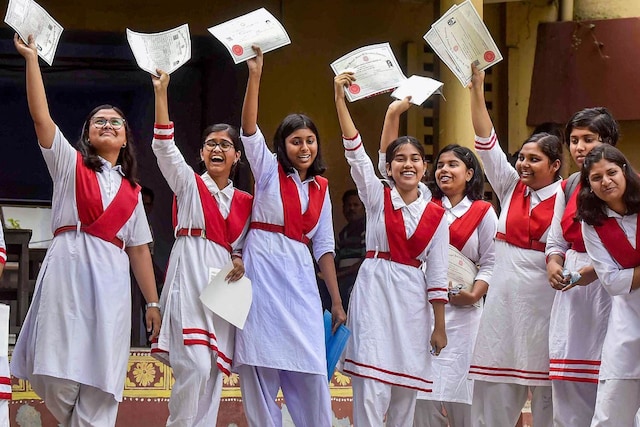
Top 10 of HS examination of Kalimpong district

 KalimNews, Kalimpong, 9 May 2024 : The following ten student examinees are the toppers of the Kalimpong district


1. ROJY KHATOON of KALIMPONG GIRLS’ HIGH SCHOOL- 461 -92.2%

2. BISHANT BASNET of SCOTTISH UNIVERSITIES MISSION INSTITUTION 461-92.2%

3. NIKITA LIMBU of SCOTTISH UNIVERSITIES MISSION INSTITUTION 456-91.2%

4. PRANITA THAPA of SCOTTISH UNIVERSITIES MISSION INSTITUTION 456-91.2%

5. KANCHAN CHETTRI of SCOTTISH UNIVERSITIES MISSION INSTITUTION 453-90.6%

6. SAKCHI GURUNG of ST. GEORGES HIGH SCHOOL 443-88.6%

7. KARAN KUMAR SHARMA of BAGRAKOTE HIGH SCHOOL 443-88.6%

8. SUNIDHI MOKTAN of KALIMPONG GIRLS’ HIGH SCHOOL 441-88.2%

9. SAFAL CHHETRI of LOLAY SAMPU HIGH SCHOOL 438- 87.6%

10. CHEYONG LEPCHA of SCOTTISH UNIVERSITIES MISSION INSTITUTION 437-87.4%

11. PRAYASH CHHETRI of JUDHABIR HIGH SCHOOL 436- 87.2%

12. SHNEHA BHUJEL of ST. PHILOMENA’S GIRLS HIGH SCHOOL 433- 86.6%

13. PRESCILLA PRADHAN of SCOTTISH UNIVERSITIES MISSION INSTITUTION 432-86.4%

14. SAMJANA BASTOLA of ST. PHILOMENA’S GIRLS HIGH SCHOOL 432-86.4%

HS: Science stream performs better in overall pass percentage

MP, 9 May 2024, Kolkata: With 97.19 pass percentage in Science stream of Higher Secondary Examination 2024, it performs better in overall pass percentage. However, more candidates from Humanities score 90 per cent and above. 

The result of Higher Secondary Examination 2024 was announced by the West Bengal Council of Higher Secondary Education on Wednesday. 
Out of the total 7,55,324 candidates, 1,05,810 appeared in Science stream and 1,02,838 passed making the pass percentage 97.19 per cent which was the highest. A total of 38,429 appeared in Commerce stream, out of which 36,924 passed with 96.08 pass percentage. 
A total of 5,95,292 who appeared in Humanities stream, out of which 5,25,030 passed with 88.2 pass percentage. The pass percentage of all three streams have increased compared to 2023, wherein the pass percentage in science was 95.91 per cent, for commerce it was 92.94 per cent and for humanities it was 87.69 per cent. 
Amongst candidates who scored 90 per cent and more which was 8,331 candidates, 3022 were from science stream, 4462 were from Humanities and 718 were from commerce. 
According to a Council official, even with fewer students from Science stream, they performed better. Only 1.23 per cent of students scored 90 per cent and above this year. 
Council president Chiranjib Bhattacharjee said that he is hopeful that with the introduction of the semester system, more students will be able to perform better. 
Moreover, the Council will start giving percentiles along with scores in the marksheet. Currently, the candidates are able to see the overall percentile along individual percentile in the marks uploaded online. 
https://www.millenniumpost.in/bengal/hs-science-stream-performs-better-in-overall-pass-percentage-563033

Phase 3 records 77.53% voter turnout in 4 LS seats in state

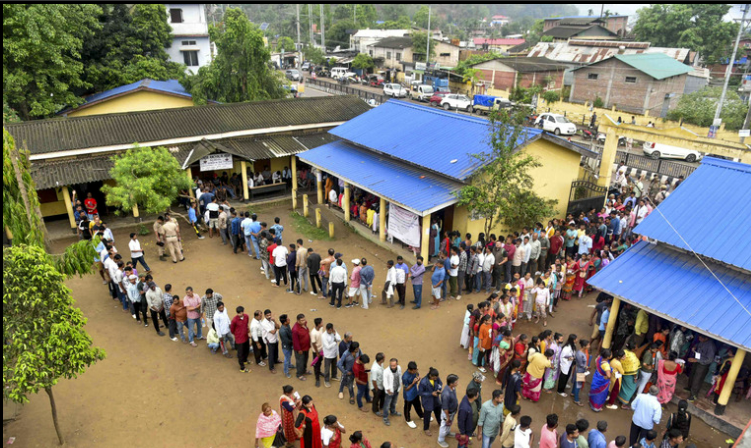
MP, 9 May 2024, Kolkata: The four Parliamentary constituencies in Bengal that went for polls on Tuesday in the third phase of elections, witnessed the lowest voter turnout in the last four decades. 

The four constituencies that had consistently witnessed 80 per cent turnout recorded 77.53 per cent voting, with the only saving grace being Murshidabad that saw over 80 per cent polls. Considering the last two Lok Sabha elections, there has been a decline of nearly four per cent. In 2019 and 2014, the four constituencies saw an average voter turnout of 81.66 and 81.85 per cent, respectively. 
Murshidabad, historically known for high voter participation, recorded 81.52 per cent in this election making it the lowest ever turnout in the last 40 years. In the 1980 Lok Sabha polls, Murshidabad recorded a turnout of 80.31 per cent, which is less than the current polling percentage.
Similarly, Jangipur registered a turnout of only 73.71 per cent, its lowest since 1977 when it was 58.07 percent. In Malda district, comprising Malda South and Malda North constituencies, the voter turnout was also low with Malda South recording 76.69 per cent and Malda North at 76.03 per cent. 
Prior to this, the district only saw a turnout of 75.54 per cent in 1980, which is lower than the current turnout. Interestingly, before the delimitation in 2004, Malda was only one constituency, which was subsequently divided into Malda South and Malda North. 
“The installation of CCTV cameras in all the polling stations and the strategic deployment of Central Forces have contributed significantly in keeping away the unwanted elements from the election process. We have also taken suitable measures for corrections in the voters list that resulted in weeding out fake voters from the list. This may have contributed to this turnout.  However, considering the other constituencies in the country that went for polls, our polling has been satisfactory,” an official in the office of Bengal CEO (Chief Electoral Officer) said. He added that there was hardly any complaint of false voting in this election. The genuine voters only exercised their franchise. 
A section of political analysts however believe that absentee voters and public apathy toward engaging in the democratic process, possibly due to widespread political corruption in recent months, may have significantly contributed to the low voter turnout in this election. 
https://www.millenniumpost.in/bengal/phase-3-records-7753-voter-turnout-in-4-ls-seats-in-state-563034

NH 10 opens today after 3 days closure and carpeting

KalimNews, Kalimpong, 9 May 2024 : After 3 days of closure NH 10 from Rabi Jhora to 29th Mile opened today from 6 am. Normal traffic is plying in this highway. The road was closed for some repairing work and bituminous work. 

Earlier Balasubramanian T, District Magistrate of Kalimpong had notified that the said highway from Rabi Jhora to 29th Mile shall be closed from 6th May for 72 hours for carrying out bituminous work. 

His earlier order stated that a prayer has been received from the Executive Engineer II, National Highway, Division IX, P.W (Roads) requesting restriction and diversion of movement of all type of vehicles to carry out bituminous work at the stretch between Rabi bora to Gail Khola along NH 10. Therefore the administration finds it necessary to impose temporary restriction for movement of all type of vehicles to carry out the said bituminous work at the stretch between Rabi bora to Gail Khola along NH 10 to be carried on by PWD, National Highway, Division IX, P.W (Roads). 

There was protest from the drivers for closure of the highway as normal traffic on NH 10 was closed for several times and they had to follow the restriction of movement for all types of vehicles in the NH 10 specially from Rabi Jhora to 29th Mile.  

The alternative route allowed to were diversion routes for small vehicles to move from Rangpoo towards Siliguri via Munsong – 17’1′ Mile – Algarah – Lava -Gorubathan and to Siliguri and vice versa round the clock. 

For small vehicles was from Chitrey – Kalimpong town Algarah – Lava – Gorubathan and to Siliguri and vice versa round the clock. 

For goods Vehicle was from Chitrey – Kalimpong town Algarah – Lava – Gorubathan and to Siliguri and vice versa from 21.00 hrs to 06.00 hrs. 
And for goods vehicle and small vehicles from Reshi – Pedong – Algarah – Lava – Gorubathan and to Siliguri and vice versa round the clock. 

Rabindra Jayanti observed at Mungpoo

Photo Courtesy: Hill Times, Facebook

EOI, DARJEELING, MAY 8/–/The West Bengal Information and Cultural Affairs department Darjeeling along with representatives of those associated with plantation of cinchona and other medicinal plants observed the164th birth anniversary of Nobel laureate Rabindranath Tagore at Mungpoo on Wednesday in a sombre manner. 

Mungpoo, houses the Rabindra Bhawan and a museum dedicated to the bard. Tagore had visited Mungpoo four times between1938 and 1940 and wrote several of his poems and writings, here. The Darjeeling Additional District Magistrate, Anirban Chatterjee said locals and tourists and officials of the Cinchona plantation and district administration attended the programme to pay homage to the Nobel laureate on his birth anniversary. 
 “We organized a programme to pay our respect and remember Tagore. Many tourists attended the programme and participated in singing Rabindra sangeet. Even the local residents participated which was very encouraging,” he said. 
The Rabindra Bhawan houses important artefacts and personal belongings of Tagore including the bed and furniture he used and original writings. 
“When we visit Darjeeling, we make it a point to come to Mungpoo. This time our visit coincided with Tagore’s birthday. We are blessed. It was nice to sing the songs composed by the poet. It is nice that such events are organized in Mungpoo to remember Tagore who is our national treasure,” said Debashree Das, housewife from Kalighat. 
Sources said the unlike previous years the grandeur of the event was kept low key due to the ongoing Lok Sabha election

American nationals apprehended at Border with fake Aadhar card

Photo Source & courtesy : Siliguri Times

PRASHANT ACHARYA, EOI, SILIGURI, MAY 8, 2024 : SSB’s 41 battalion on Tuesday afternoon apprehended two American nationals along with an Indian while they were entering India from Nepal via Panitanki border outpost. 

The arrested were identified as Naina Kala Poudel and Younis Biswakarma, both US national and Nima Poudel, a resident of Kalchini under Alipurduar district. 
According to SSB sources, Naina Kala Poudel (40) resident of English Drive in US along with her niece Eunice Biswa (11) of New York City came to India from America and landed at Bagdogra airport on March 19 this year. 
The two US citizens and the Indian were arrested with fake Aadhaar at Kharibari Indo-Nepal border.  
KalimNews: Siliguri Times reports that According to reports, the incident unfolded after Neena and Nima Tamang engaged in holy matrimony on April 13 in India, following which they embarked on a honeymoon trip to Nepal on April 21. 
However, their return journey encountered a setback when they were intercepted by Sashastra Seema Bal (SSB) personnel at the border checkpoint. Sources within the SSB revealed that the trio attempted to enter India using counterfeit Aadhaar cards, raising suspicion among border security officials. 
Siluri Time further adds that  Upon investigation, it was revealed that the American nationals paid ₹10,000 in Hamiltonganj of Alipurduar for the making of the counterfeit aadhaar cards and left for Nepal. Subsequently, they were arrested at the Indo-Nepal border. Following their apprehension, the SSB handed over the individuals to Kharibari police for further legal proceedings. At present, the case has been forwarded to the Siliguri Sub-Divisional Court while the matter is under further investigation.  (source: https://siliguritimes.com/two-american-citizens-arrested-at-indo-nepal-border-with-fake-aadhaar-cards-in-kharibari/)

Smugglers shot dead in Phansidewa

EOI, SILIGURI, MAY 8, 2024 : Two suspected smugglers were killed in BSF firing on the India-Bangladesh border under Phansidewa in Darjeeling district. Iftikar-ul Hasan, OC Phansidewa police station along with BSF officers visited the spot to enquire into the incident.

According to Sujoy Kumar Roy, officer-in-charge of Tetuloa Model police station in Bangladesh the dead bodies were that of Abdul Jalil (24) and Yasin Ali (23)both residents under Bagduria district of Bangladesh., Quoting their families and neighbours, 
Roy said that BSF personnel opened fire when the t
wo tried to bring in cows illegally from India. (

Banned outfit’s cadre held in Manipur

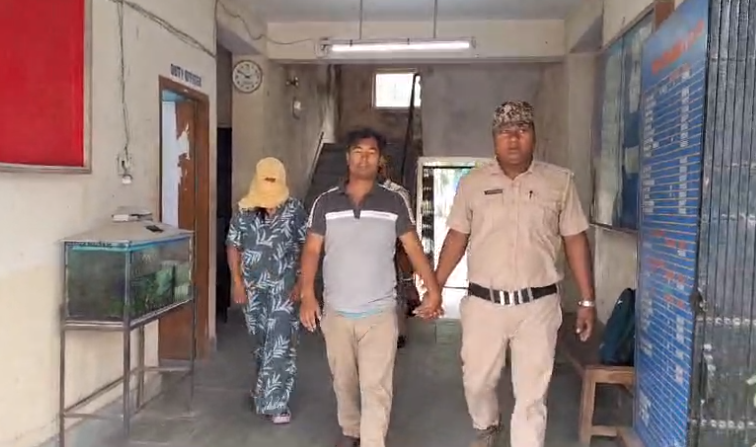
PTI, Imphal, May 8, 2024 :  A 33-year-old cadre of the banned National Revolutionary Front of Manipur was arrested from Imphal, police said on Wednesday.


Heisnam James Singh, an active member of the proscribed outfit, was involved in extortion and apprehended from the vicinity of the Regional Institute of Medical Sciences here on Tuesday, a police statement said.

A two-wheeler was seized from his possession, it said.

Search operations and area domination by security forces continued in the fringe and vulnerable areas of hill and valley districts in ethnic strife-torn Manipur, police said.

More than 219 people were killed and thousands displaced from homes after ethnic clashes broke out on May 3 last year in Manipur, when a ‘Tribal Solidarity March’ was organised in the hill districts to protest against the Meitei community’s demand for Scheduled Tribe (ST) status.

Meiteis account for about 53 per cent of Manipur’s population and live mostly in the Imphal Valley. Tribals – Nagas and Kukis – constitute little over 40 per cent and reside in the hill districts. 
error: Content is protected !!
Exit mobile version