Heatwave strikes Delhi, maximum temperature highest in 79 years

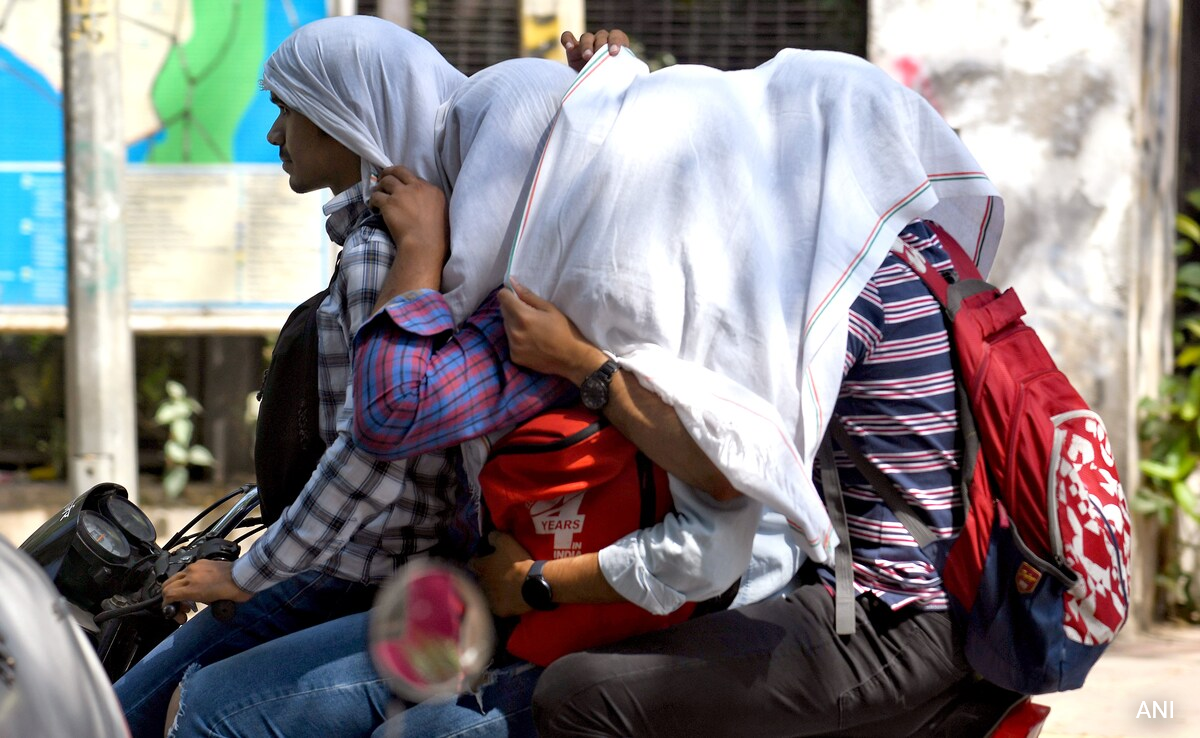
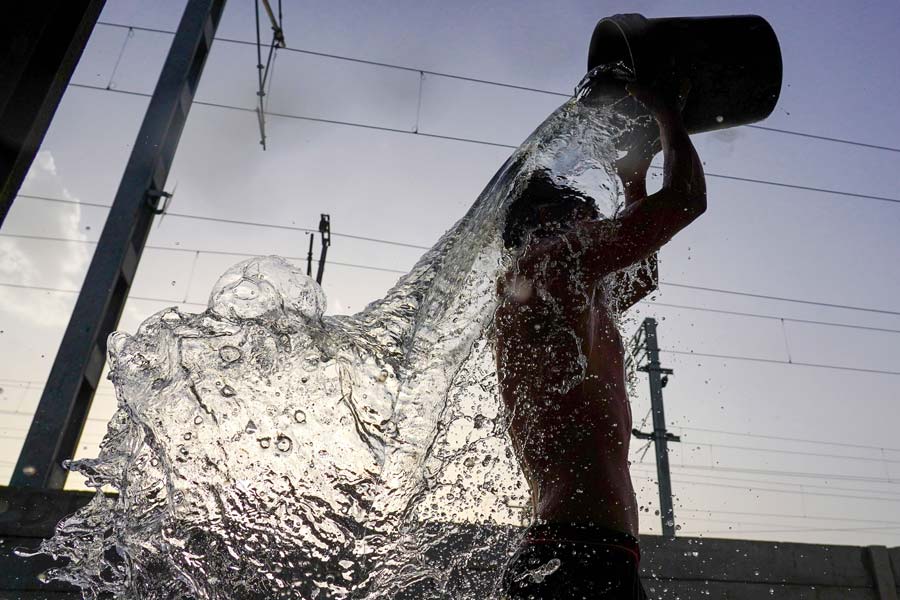
PTI & Agencies, 29 May 2024 : Amid the intense heatwave in northern India, several cities on Wednesday witnessed temperatures well above 45 degrees Celcius. 


Delhi’s Mungeshpur on Wednesday logged a maximum of 52.9 degrees Celsius, the highest ever temperature recorded in the city, even as the India Meteorological Department said it is examining sensors and data of the area’s weather station for error.

Delhi’s primary weather station Safdarjung Observatory on Wednesday recorded a maximum temperature of 46.8 degrees Celsius, the highest in 79 years, according to India Meteorological Department (IMD) data. It was 46.7 degrees Celsius on June 17, 1945.

Apart from the national capital, several places in Northern India are also reeling under the sweltering heat with temperatures hovering close to 50 degrees Celsius.

Here is a list of 10 other hottest places in India today:
Haryana’s Mahendragarh- 49.4 degrees Celsius
Delhi’s Najafgarh- 49.1 degrees Celsius
Haryana’s Rohtak- 48.8 degrees Celsius
Uttar Pradesh’s Prayagraj- 48.8 degrees Celsius
Punjab’s Bhatinda – 48.5 degrees Celsius
Uttar Pradesh’s Agra- 48 degrees Celsius
Madhya Pradesh’s Gwalior- 48 degrees Celsius
Haryana’s Rohtak- 47.7 degrees Celsius
Rajasthan’s Alwar- 47.5 degrees Celsius
Uttarakhand’s Dehradun – 43.1 degrees Celsius

The national capital and large swathes of north India have been reeling under heat wave conditions for the past few days, with at least three weather stations here — Mungeshpur, Narela and Najafgarh — recording nearly 50 degrees Celsius even on Tuesday.

Delhi’s primary weather station Safdarjung observatory on Wednesday recorded a maximum temperature of 46.8 degrees Celsius, the highest in 79 years, according to India Meteorological Department (IMD) data. It was 46.7 degrees Celsius on June 17, 1945.

On the temperature at Mungeshpur, the IMD, however, said it is examining sensors and data of the weather station for the area. “The maximum temperature over Delhi-NCR varied from 45.2 degrees Celsius to 49.1 degrees Celsius in different parts of city. 

Mungeshpur reported 52.9 degrees Celsius as an outlier compared to other stations. It could be due to error in the sensor or the local factor. 

IMD is examining the data and sensors,” the department said in a statement.

In a post on X, Minister of Earth Sciences Kiren Rijiju said, “It is not official yet. Temperature of 52.3 degrees Celsius in Delhi is very unlikely. Our senior officials in IMD have been asked to verify the news report. The official position will be stated soon.” Other areas of the city also sizzled with maximum temperatures recorded at 49.1 degrees Celsius in Najafgarh, 49 degrees Celsius at Pusa and 48.4 degrees Celsius at Narela, according to the data.

The temperatures soared in the national capital as hot winds blew into the city from Rajasthan, according to officials.

In the evening, there was a sudden change in weather, with drizzle in some parts of the city. However, this could increase the humidity level, compounding the unease for people as forecast shows heat wave and hot weather condition not relenting in the coming days. Delhi’s relative humidity oscillated between 43 per cent and 30 per cent during the day, according to the IMD. The city has been witnessing a steady rise in temperatures in the final days of May.

For Thursday, the IMD predicted partly cloudy skies with heatwave conditions in a few places along with the possibility of thunderstorms and dust storms accompanied by very light rain and drizzling with gusty winds at speeds of 25 to 35 kmph.

Delhi Lt Governor VK Saxena directed that a paid break from 12 noon to 3 pm be given to labourers, along with water and coconut milk at construction sites, as he flagged the “lack of sensitivity” on the part of Chief Minister Arvind Kejriwal.

Hitting back, Health Minister Saurabh Bharadwaj said the AAP government was making heatwave preparations even before the LG office became active and urged Mr Saxena to “give up negativity”.

Mr Saxena directed that the three-hour break for labourers has been implemented by the Delhi Development Authority since May 20 and will continue across all sites till temperatures come down below 40 degrees Celsius, according to a letter sent to Delhi Chief Secretary Naresh Kumar by the principal secretary to the Lt Governor.

The Delhi government announced that a fine of ₹ 2,000 will be imposed on water-wasting activities like washing vehicles with a hose and using domestic water supply for construction and commercial purposes amid unprecedented summer heat.

Water Minister Atishi has directed the Delhi Jal Board (DJB) to deploy 200 teams across the city to prevent wastage of water.

The extreme summer heat also pushed Delhi’s peak power demand to an all-time high of 8,302 MW on Wednesday afternoon, officials said.

It is the first time in the history of the national capital that its power demand has crossed the 8,300-MW mark. Power distribution companies had estimated the power demand to peak at 8,200 MW this summer, the discom officials said.

The threshold for a heatwave is met when the maximum temperature of a weather station reaches at least 40 degrees Celsius in the plains, 37 degrees in the coastal areas, and 30 degrees in the hilly regions, and the departure from normal is at least 4.5 notches.

A severe heatwave is declared if the departure from normal exceeds 6.4 notches.

In a forecast released, the IMD has urged “extreme care for vulnerable people” due to the heatwave.

Explaining the reason behind the scorching heat in the outskirts of Delhi, Mahesh Palawat, Vice President of Meteorology and Climate Change at Skymet Weather, said: “In open areas with vacant land, there is increased radiation. Direct sunlight and lack of shade make these regions exceptionally hot.” Palawat added that when wind blows from the west, it affects these outlying areas first in Delhi contributing to rise in temperature.

Kuldeep Srivastava, the regional head of IMD, said the city’s outskirts are the first areas to be hit by hot winds from Rajasthan.

“Parts of Delhi are particularly susceptible to the early arrival of these hot winds, worsening the already severe weather. Areas like Mungeshpur, Narela and Najafgarh are the first to experience the full force of these hot winds,” he said.

Open areas and barren land are contributing to higher temperatures due to increased radiation, said IMD’s Charan Singh. 

Mamata challenges Modi to prove his claim on providing funds to Bengal

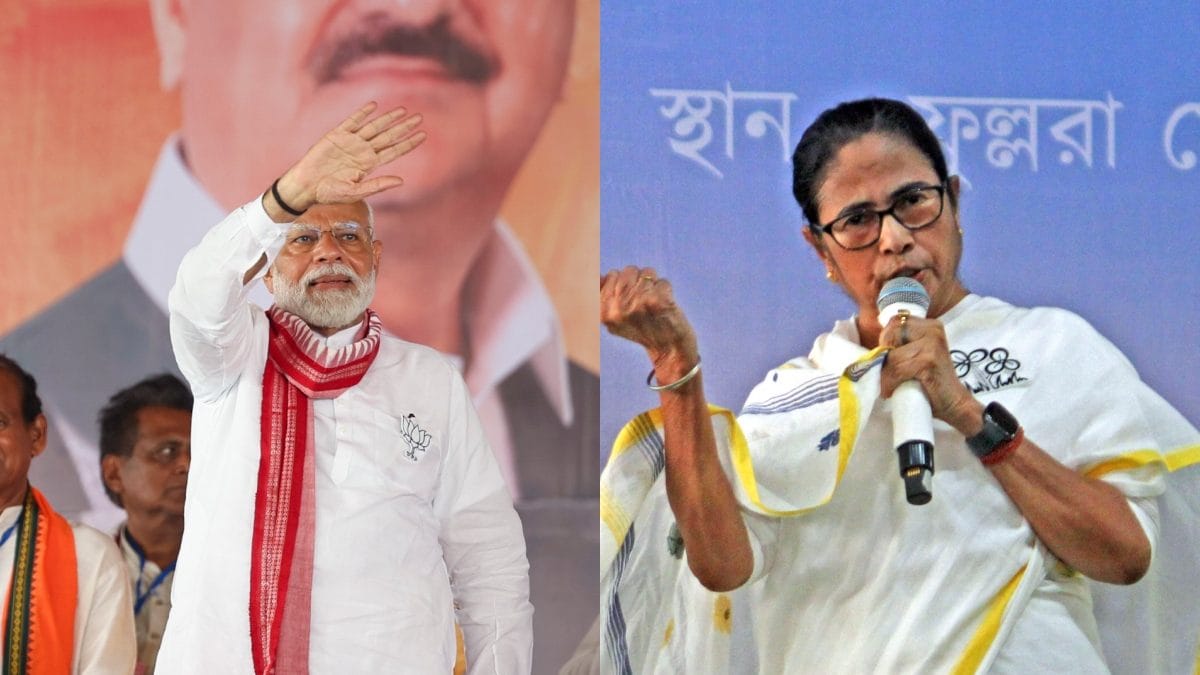
PTI, Kolkata, May 29, 2024 :  West Bengal Chief Minister Mamata Banerjee on Wednesday accused Prime Minister Narendra Modi and the BJP of “spreading lies” about funds being provided to the state and challenged the PM to prove his claim.


Addressing a rally at Metiabruz in Diamond Harbour constituency, the Chief Minister said she was “ready to sacrifice her life” but wouldn’t allow divisive politics of the saffron camp such as the CAA, NRC and UCC in the state.

“Prime Minister while addressing rallies in Bengal is saying the Centre has sent funds for the state which the TMC has siphoned off. He is saying the Centre had sent funds but those were looted by us. The PM is lying. I challenge him to prove that the Centre has released funds for the state. This is a blatant lie,” she said.

Reacting to Banerjee’s remark, BJP state spokesperson Samik Bhattacharya said, “The Prime Minister has only tried to highlight the corruption during the TMC regime. It is a well-known fact that the TMC is neck-deep in corruption. The remarks by the Chief Minister reflect that she is rattled after being exposed.” Claiming that the BJP will pay for their arrogance in the polls, Banerjee said the PM’s recent remarks that the BJP’s best results will come from Bengal is “actually an admission that the party will face a rout in other parts of the country.” “So does that mean that the BJP will lose elections in Uttar Pradesh, Maharashtra and Bihar? It seems the saffron party has conceded defeat even before the polls are over,” she said.

The CM alleged that the BJP has been spreading canards through misleading advertisements.

“As part of Modi Babu’s guarantee, they were publishing misleading advertisements in newspapers against us. We lodged multiple complaints but there was no action. Yesterday, the High Court also stated it is illegal. They don’t release MGNREGA funds but spend crores on conspiracies, to buy votes and spread propaganda,” she said.

Expressing skepticism about the BJP’s ambitious target of achieving 400 seats in the Lok Sabha elections, she said people will reject them.

“The entire country has understood that the BJP is a party full of thieves. It is the TMC which will show the way after the elections,” Banerjee said.

The TMC had walked out of the INDIA bloc in West Bengal in January but asserted that she would continue to be part of the opposition bloc at the national level.

Vowing not to allow the implementation of CAA and NRC in the state, she said, “If people do not want divisive CAA, NRC or UCC that will erase our diversity, they must vote against the BJP.” 

Staff at Sikkim High Court to get menstrual leave

Prajwal Khatiwada, the registrar general of the high court, issued a notification to the effect on Monday with the approval of Chief Justice Biswanath Somadder

Vivek Chhetri, TT, Darjeeling, 29.05.24 : Sikkim High Court has decided to grant menstrual leave to women employees for up to three days every month.

Prajwal Khatiwada, the registrar general of the high court, issued a notification to the effect on Monday with the approval of Chief Justice Biswanath Somadder.
“Women employees in the High Court Registry may henceforth avail menstrual leave of 2-3 days in a month, provided they approach the Medical Officer attached to the High Court first and obtain the latter’s recommendation for such leave,” reads the notification.

The notification added that “their leave account shall not be debited on availing such leave”.

Anamika Sharma, the project manager of DLR Prerna, a non-government organisation in Darjeeling that regularly conducts menstrual hygiene workshops, welcomed the move. “This is such good news on World Menstrual Hygiene Day which is celebrated today (Tuesday). Such a move is a great motivator to educators like us,” added Sharma.

She said it was not long ago that people, including menstruating women, would refuse to talk on the issue. “I think the continuous sensitisation on the subject is bringing about a change,” said Sharma.

The issue of mandatory paid menstrual leave for women employees was much debated in the country recently after Union women and child development minister Smriti Irani voiced her opposition to the idea.

Responding to a question in the Rajya Sabha by MP Manoj Kumar Jha on paid menstrual leave, Irani said menstruation is a natural part of life and should not be treated as a handicap. “As a menstruating woman, menstruation and the menstruation cycle is not a handicap, it’s a natural part of women’s life journey,” Irani said.

Warning that such paid leave could lead to discrimination against women, the minister further said: “We should not propose issues where women are denied equal opportunities just because somebody who does not menstruate has a particular viewpoint towards menstruation.”

Irani’s statement drew flak from certain quarters.

Few countries have already implemented the national menstruation leave. These include Japan, Indonesia, South Korea, Taiwan and Spain.

In India, Bihar had introduced two days of menstrual leave in 1992.

Bridge swept away, traffic hit in Sikkim

 When a flash flood had occurred in the Teesta because of the outburst of the South Lhonak lake in October last year, the bridge over the river at Toong in the Mangan district of the mountain state was washed away.

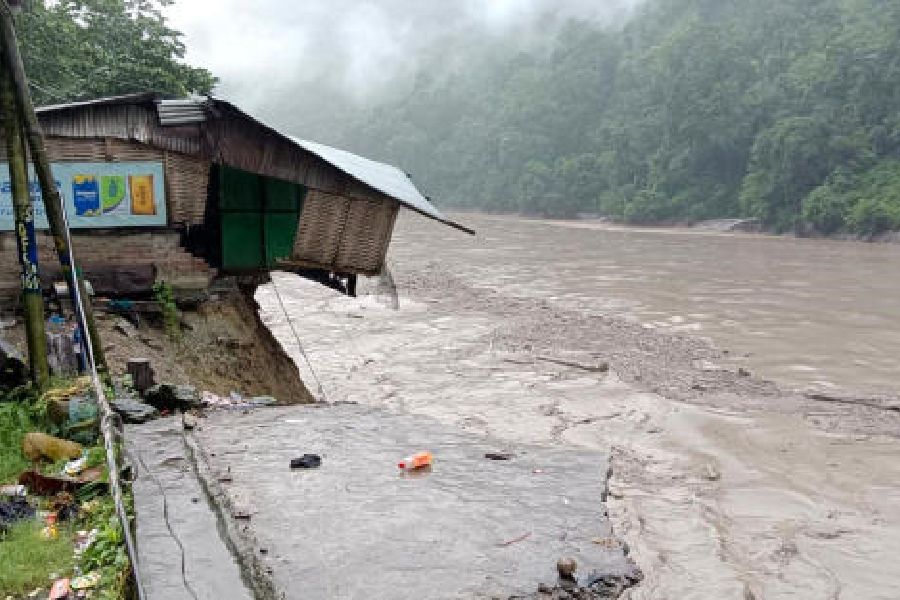
TT, Siliguri, 29.05.24 : A temporary bridge over the Teesta in northern Sikkim was on Monday washed away by the river swollen by heavy rain, prompting the administration to realign routes for traffic in the area.

When a flash flood had occurred in the Teesta because of the outburst of the South Lhonak lake in October last year, the bridge over the river at Toong in the Mangan district of the mountain state was washed away.

After the natural disaster, local transporters took the initiative to build a temporary wooden bridge over the river to facilitate travel between Mangan, the district headquarters and Chungthang, which is at the junction of popular tourist hotspots of Lachen and Lachung.

“The wooden bridge has been damaged and cannot be repaired. So, vehicles will have to take the Sangkalang- Shipgyer route, instead of the Chungthang-Mangan road,” said a source in the administration.

A circular mentioning the diversion of the route was issued by the Mangan district collector on Tuesday.

“As the route is narrow, there will be one-way traffic between Chungthang and Sangkalang from morning till evening. The vehicles on emergency duty, however, will not face any restriction,” the source added.

Vehicles heading to Sangkalang (on the way to Mangan) from Chungthang will be allowed to move from 5am to 8.30am and again from 2.30pm to 3.30pm.

On the other hand, vehicles heading towards Chungthang from Sangkalang will move along the route from 10am to 1pm and from 4pm to 6.30pm, said sources.

In Mangan, officials of the district administration held a meeting on Tuesday to discuss compensation for the land needed for a road connecting Mangan and Lachen via Toong. The road was extensively damaged in last year’s flash flood and the project will be undertaken by the Border Roads Organisation (BRO) and the General Reserve Engineer Force (GREF) under the defence ministry.

Representatives of the BRO said those who had provided land for the project would get compensation while underscoring that they should extend cooperation for the project.

North, central India sizzle under severe heatwave, nearly 50 degrees Celsius in parts of Delhi

The IMD said respite from the heatwave conditions could be in sight after May 30

PTI, New Delhi, 29.05.24  : Large parts of northern and central India were in the grip of extreme heatwave conditions on Tuesday with the mercury crossing 50 degrees Celsius in Rajasthan’s Churu and Haryana’s Sirsa and settling nine notches above normal in Delhi.

At least three weather stations in Delhi recorded maximum temperatures of 49 degrees Celsius or more. Mungeshpur and Narela in Delhi clocked 49.9 degrees followed by Najafgarh at 49.8 degrees Celsius, the India Meteorological Department (IMD) said.
This was the highest maximum temperature recorded in the capital this season. However, Mungeshpur and Narela weather stations came up in 2022 and have records only for the last three years.

The IMD said respite from the heatwave conditions could be in sight after May 30.

It said that a fresh western disturbance was expected over parts of northwest India on Thursday which could bring isolated rainfall over the region on the weekend.

IMD Director General Mrutyunjay Mohapatra has attributed the heatwave conditions over northwest and central India to the absence of western disturbances during the latter half of May.

Western disturbances are extra-tropical weather systems formed over the Mediterranean Sea that move from the west to the east.

According to the IMD, 10 weather stations recorded the highest-ever maximum temperature and the highest for the month — Agra-Taj (48.6 degrees Celsius), Dehri in Bihar (47 degrees Celsius), Hamirpur in Uttar Pradesh (48.2 degrees Celsius), Jhansi in Uttar Pradesh (49 degrees Celsius), Narnaul in Haryana (48.5 degrees Celsius), Ayanagar-Delhi (47.6 degrees Celsius), New Delhi-Ridge (47.5 degrees Celsius), Rewa in Madhya Pradesh (48.2 degrees Celsius), Rohtak in Haryana (48.1 degrees Celsius), and Varanasi in Uttar Pradesh (47.2 degrees Celsius).

In some much-needed relief, south Rajasthan districts of Barmer, Jodhpur, Udaipur, Sirohi and Jalore recorded a drop in temperatures up to four notches on Tuesday due to moist wind incursion from the Arabian Sea, indicating the beginning of abatement of heatwave conditions over northwest India.

Numerical weather prediction models showed that this decreasing trend would further extend northwards, bringing gradual respite from heatwave conditions from May 30 onwards.

Also, the incursion of moist winds from the Bay of Bengal from Wednesday onwards is likely to result in a gradual fall in maximum temperatures over Uttar Pradesh from May 30, the IMD said.

“Today, heatwave to severe heatwave conditions prevailed over most parts of Rajasthan, Haryana-Chandigarh-Delhi, in many parts of Uttar Pradesh, Madhya Pradesh and in isolated pockets of Bihar and Himachal Pradesh,” it said.

It said that heatwave conditions also prevailed in many places over Vidarbha, in some pockets over Jammu and Kashmir and in isolated pockets of Uttarakhand and Chhattisgarh.

Churu in Rajasthan was the hottest place in the country with a maximum temperature of 50.5 degrees Celsius, followed by Sirsa-AWS in Haryana (50.3 degrees Celsius), Mungeshpur and Narela (49.9 degrees Celsius), Najafgarh (49.8 degrees Celsius), Sirsa (49.5 degrees Celsius), Ganganagar in Rajasthan (49.4 degrees Celsius), Pilani and Phalodi in Rajasthan and Jhansi (49 degrees Celsius).

Warm night conditions in isolated pockets are very likely to prevail over Uttar Pradesh, east Madhya Pradesh, Punjab, Haryana, Chandigarh and Delhi over the next few days, the weather office said.

The scorching heat prompted the Haryana government to advance summer vacations in all state-run and private schools to Tuesday.

The deadly heatwave is testing power grids and leading to water shortages in parts of the country.

According to the Central Water Commission, water storage in 150 major reservoirs in India dropped to just 24 per cent of their live storage last week, exacerbating water shortages in many states and significantly affecting hydropower generation.

The Maharashtra irrigation department said that the water stock in Jayakwadi dam in the drought-prone Marathwada region stood at a mere 5.19 per cent of its capacity on Monday after recording an evaporation loss of 1.15 MCM (million cubic metres) in a single day due to the heat.

The intense heat has already driven India’s power demand to 239.96 gigawatts, the highest so far this season, with air conditioners and coolers in homes and offices running at full capacity.

Experts anticipate that power demand could rise even further and surpass the all-time high of 243.27 GW recorded in September 2023.

Severe heatwaves have impacted a large number of people in parts of India for three consecutive years, affecting health, water availability, agriculture, power generation, and other sectors of the economy. 

Why CBI, ED action against Suvendhu Adhikari and Tapas Roy stalled: Congress to PM Modi

Congress general secretary Jairam Ramesh also asked if the prime minister prioritised his PR over vaccines and funds under the National Health Mission
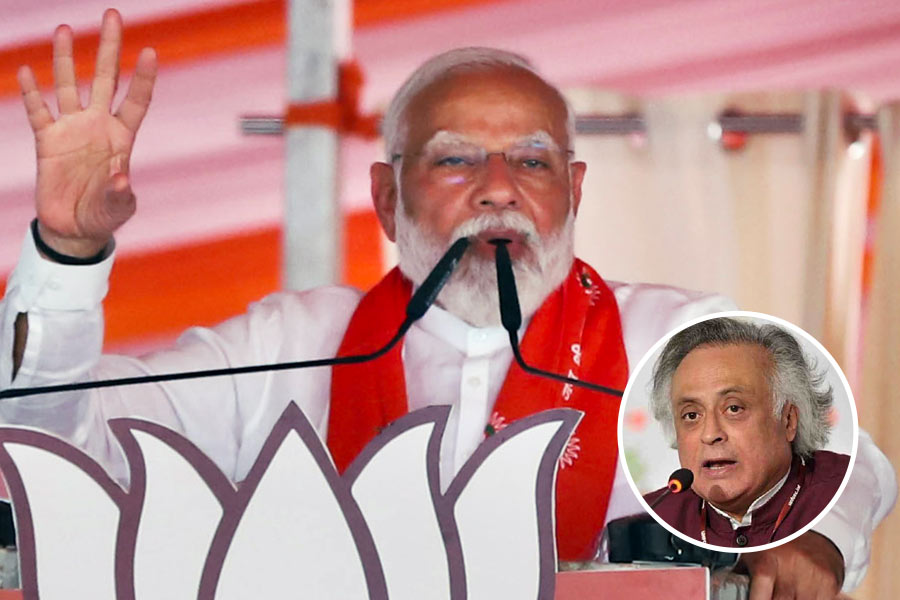
Narendra Modi and Jairam Ramesh (inset): File

PTI, New Delhi, 29.05.24 :  The Congress on Wednesday asked Prime Minister Narendra Modi whether he was withholding Rs 7,000 crore of paddy procurement funds to West Bengal and if the CBI case against Suvendu Adhikari has got “washed away” in the BJP’s washing machine.

Congress general secretary Jairam Ramesh also asked if the prime minister prioritised his PR over vaccines and funds under the National Health Mission.
“Today’s questions for the outgoing PM’s West Bengal visit: Is the outgoing PM withholding Rs 7,000 crore of ration funds so that his face is plastered on ration shops? Did Suvendu Adhikari’s CBI case get washed away in BJP’s washing machine? Does the PM prioritise his PR over vaccines for India’s children?” he asked in a post on X.

He posed the questions on a day the prime minister is campaigning in West Bengal for the last phase of elections on June 1.

“In an incredibly petty move, the Centre has been withholding National Food Security Act funds from West Bengal for not displaying the outgoing PM’s face on ration shops. In an attempt to coerce the state government into displaying sign boards and flexes featuring the outgoing PM’s photos, the Centre has withheld Rs 7,000 crore of paddy procurement funds,” Ramesh charged.

He said this could seriously hinder the state’s paddy procurement and the availability of rice for the public distribution system.

“Why has the outgoing PM so callously neglected the health and wellbeing of the people of West Bengal? Is his publicity more important than people’s daily food?” the Congress leader asked.

He said in April 2017, the CBI filed an FIR against then TMC MP Adhikari in connection with the Narada scam.

In April 2019, the CBI sought sanction from the Lok Sabha speaker to prosecute him and in December 2020, Adhikari joined the BJP, and the CBI never received the Lok Sabha speaker’s sanction.

Similarly, he said, TMC leader Tapas Roy was raided by the ED in January this year in connection with a money laundering case and by March, he had also joined the BJP. Just a few months prior to his joining, Adhikari had alleged that Roy was involved in a municipal recruitment scam but this allegation also “disappeared” once Roy joined the party, he alleged.

“The PM’s ‘Bhrashtachar Hatao’ slogan is shamelessly plastered all over the country even as his party is busy handing tickets to corrupt politicians.

“Can the outgoing PM shed any light on why CBI and ED action against these leaders has been stalled? How can the BJP make pretensions to eradicating corruption when their ‘washing machine’ is clearly at full spin in West Bengal?” Ramesh asked in his post.

He also alleged that the government has blocked the National Health Mission funding to over 11,000 sub-health centres in West Bengal. These sub-health centres form the first line of defence for India’s poor – they are staffed by nurses and provide vaccines for children, tablets, and medicines for common fever, malaria, TB, and other infectious diseases, he claimed.

While the sub-centres are supposed to be called Ayushman Bharat Health and Wellness Centres, the state government had named them Sushasthya Centres, he claimed, adding that in a letter on November 25 last year, the Union Ministry of Health and Family Welfare (MoHFW) wrote to states, ordering them to rename sub-centres “Ayushman Arogya Mandir” and paint them orange.

The medical community has criticised this attempt by the BJP to “saffronise” medical centres, and the state government has refused to implement it, he said.

“In a petty and vindictive move, the Modi Sarkar seems to have blocked funds just because the state government refused to paint sub-centres a different colour. This comes after the Centre has already blocked state funds to MGNREGA and a Central housing scheme.

“In their vindictiveness, why is the BJP denying essential health services to the poorest communities in the state? Does the outgoing PM prioritise his PR over vaccines for India’s children?” Ramesh asked. 

Adult or juvenile: Supreme Court passes slew of guidelines on heinous crimes

A bench of Justice C.T. Ravi Kumar and Justice Rajesh Bindal passed the directions while disposing of an appeal filed by the mother of a juvenile challenging the order of a juvenile justice board in Karnataka that her son be tried as an adult in a case relating to rape under the POSCO Act

R. Balaji, TT, New Delhi,  29.05.24  : The Supreme Court has passed a slew of guidelines for courts to follow in cases related to juveniles, particularly on the question of whether the juvenile/child in conflict with the law deserves to be treated as an adult for heinous crimes or under the Juvenile Justice Act.

A bench of Justice C.T. Ravi Kumar and Justice Rajesh Bindal passed the directions while disposing of an appeal filed by the mother of a juvenile challenging the order of a juvenile justice board in Karnataka that her son be tried as an adult in a case relating to rape under the Protection of Children from Sexual Offences Act (Pocso) Act, 2012.

In view of the discussions, the appeal was disposed of with the following directions:

(i) The provision of Section 14(3) of the act, providing for three months for completion of a preliminary assessment (of the juvenile’s mental status) under Section 15 of the act, is not mandatory. The same is held to be directory. The period can be extended for reasons to be recorded in writing by the chief judicial magistrate or as the case may be the chief metropolitan magistrate.

(ii) The words “children’s court” and “court of sessions” in the Juvenile Justice (Care and Protection of Children) Act, 2015, and the 2016 rules shall be read interchangeably. Primarily jurisdiction vests in the children’s court.
However, in the absence of constitution of such children’s court in the district, the power to be exercised under the act is vested with the court of sessions.

(iii) Appeal under Section 101(2) of the act against an order of the board passed under Section 15 of the act can be filed within 30 days. The appellate court can entertain the appeal after the expiry of the period, provided sufficient cause is shown. Endeavour has to be made to decide any such appeal filed within 30 days.

(iv) In all the orders passed by the courts, tribunals, boards and the quasi-judicial authorities, the names of the presiding officer and/or the members who sign the orders shall be mentioned. In case any identification number has been given, it can also be added.

(v) The presiding officers and/or members while passing the order shall properly record the presence of the parties and/or their counsels, the purpose for which the matter is being adjourned and the party on whose behalf the adjournment has been sought and granted.

A copy of the judgment will be sent to all the registrar generals of high courts for circulation amongst the judicial officers and the members of the juvenile justice boards, the directors of the National Judicial Academy and the state judicial academies.

The apex court passed the directions after senior advocates Sidharth Luthra and R. Basanth complained that many children’s courts and juvenile justice boards were not following the statutory rules prescribed under the act.

Cong on Rajkot probe

The Congress on Tuesday demanded a probe under the supervision of a sitting Supreme Court or high court judge into the fire at the Rajkot game zone and alleged that the BJP government in Gujarat was “not serious” about taking action in the case.

One day hill trail for hikers: GTA to introduce route to commemorate Tenzing’s Everest summit

On May 29, 1953, Tenzing Norgay and Edmund Hillary scaled the world’s highest peak for the first time
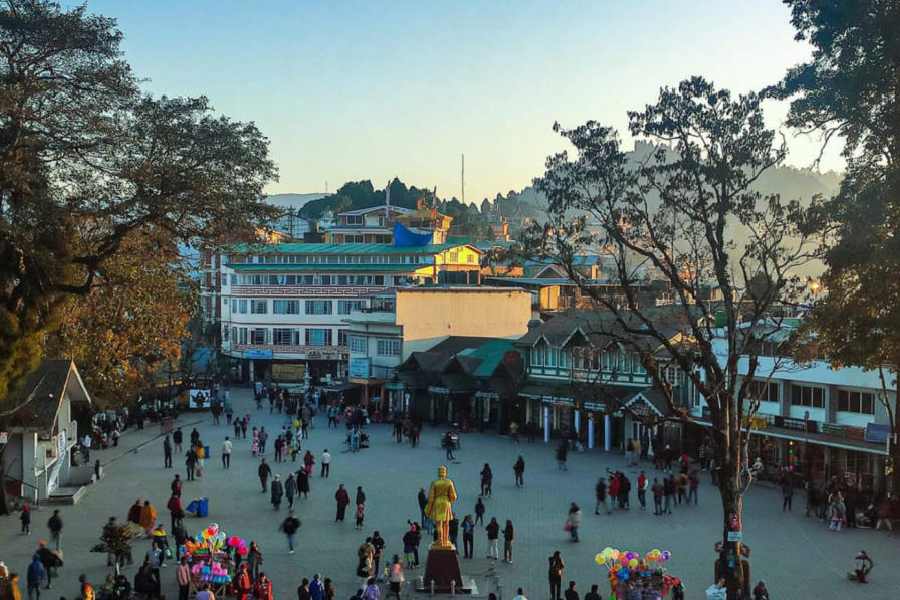
Darjeeling’s Mall or Chowrasta from where the Tenzing Norgay Hiking Trail will start.: File picture

Binita Paul, TT, Siliguri, 29.05.24 : The Gorkhaland Territorial Administration (GTA) will introduce a one-day-long hiking trail for adventure enthusiasts and tourists in general in the hilly terrains of Darjeeling on Wednesday to commemorate the 71st anniversary of the Mt. Everest summit.

On May 29, 1953, Tenzing Norgay and Edmund Hillary scaled the world’s highest peak for the first time.
S.P. Sharma, the GTA’s chief public relations officer (PRO), said the tourist-friendly one-day trail in Darjeeling had been conceived earlier but was never launched.

“From tomorrow (Wednesday), the trail will be active for tourists. Tenzing Norgay had traversed the route to practise trekking several decades ago,” he said.

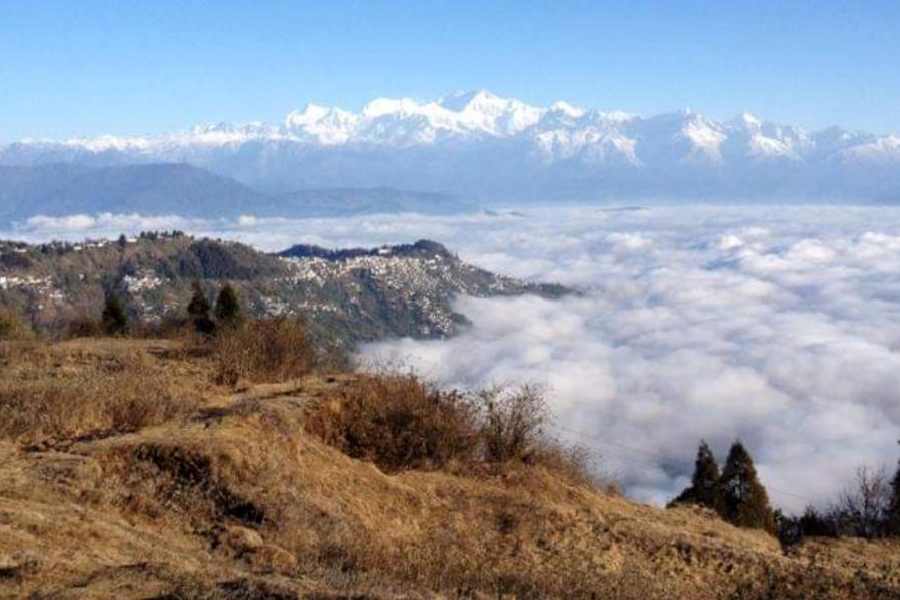
Mount Kanchenjungha as seen from Tiger Hill, the last destination of the trail. : File picture

The trail, Sharma said, will start from Chowrasta, the popular promenade in the heart of the hill town, and move through picturesque landscapes and charming villages.

“It will move through the quaint hamlet of Toongsung and people can experience the serenity of Lambadara and immerse themselves in the rich cultural tapestry of Gurung Gaon,” the GTA PRO said.

After Gurung Gaon, tourists will experience the adventure of crossing the Rungdung river.

“As one descends, the trail leads him/her to Rangeyroong, offering panoramic vistas of the majestic Himalayan peaks,” Sharma said.

In the final leg, a tourist or a trekker will move to Gaddikhan while the last destination will be Tiger Hill.

“We would like to invite tourists to experience the legacy of Tenzing Norgay and celebrate the spirit of mountaineering on the Tenzing Norgay Hiking Trail,” he added.

Sources said the hiking trail would be 12km long. “This trail is a moderate challenge and requires around five to six hours of walking at a height of 8,500ft. Along the way, tourists can witness diverse flora and fauna, including rare orchids and vibrant birds,” said a source.

Dawa Gyalpo Sherpa, the coordinator of adventure tourism at the GTA, said: “Trekking is for long trips while day-hiking is a one-day trip. We recommend it for tourists with families. We are also launching a second trail tomorrow (Wednesday),” he said.

Sherpa said the Tibetan Museum, the house of Tenzing Norgay, the Ava Art Gallery and the historic Burdwan Palace (Rajbari) fall along the second trail.

He said tourists could have a tea break at Shiv Eco-Camp before venturing through the serene Arya tea estate where they could check out the process of making the world-famous Darjeeling Tea.

Tourists will also visit the Sidrapong hydro-electrical project, which is recognised as Asia’s first hydroelectric project. From Sidrapong, tourists will drive back to Darjeeling via the Orange Valley tea estate.

“This will be a 10km-long trail with moderate difficulty level. The altitude will be from 6,800 feet to 3,600 feet. This adventure walk offers a unique opportunity to explore the region’s cultural, historical and natural heritage while promoting eco-tourism and sustainable travel practices,” said Sherpa.

Tourism stakeholders said many visitors to Darjeeling would prefer short treks.

“Usually, trekkers head for Sandakphu (the highest point in Bengal). But it takes four to five days to cover the entire route and many couldn’t afford it because of the lack of time and health reasons. They will now have the option to join these shorter treks,” said a tour operator based in Siliguri.

Hamro Party prez writes to Chief Minister seeking intervention

Amitava Banerjee, MP, 28 May 2024, Darjeeling: Ajoy Edwards, Gorkhaland Territorial Administration (GTA) Sabhasad and president Hamro Party, in a letter to Chief Minister Mamata expressed concerns over the fate of areas affected in the October 4, 2023, Teesta flash floods in Kalimpong district with the monsoons fast approaching. 

He further urged the Chief Minister for the rehabilitation of the affected families displaced in the flash floods. 
“As you are aware, due to the flash flood in the Teesta basin during the intervening night of October 3 and 4, 2023, National Highway 10, other connecting roads, villages, bazaars, bridges, buildings and the Teesta hydropower station have been submerged and washed away. 
This has severely affected communication with international borders and the strategic position of Sikkim, as well as the Kalimpong and Darjeeling districts (GTA region). It has been found that 335 houses, including 223 houses in Rangpo, 10 houses in Tarkhola, 3 houses in Mamkhola, 45 houses in Bhalukhola and Malli, 39 houses in Testa Bazar and Teesta Bridge, 9 houses in Galle Khola, 4 houses in Rayang and 2 houses in Bangay have been partly or fully damaged. 
At this moment, affected people are residing at various relief camps,” stated the letter. In his letter, Edwards wrote: “With the monsoon season approaching, the hill people are deeply concerned about the fate of the displaced families and individuals who are currently staying in various relief camps.” 
He further mentioned that with heavy siltation owing to the flash flood and with the quality of work on riverbank protection, highway (road) protection and other related works concerning the Teesta River may not have been maintained, the National Highway 10, would not be able to bear the brunt of the upcoming monsoon. 
“In such an event, the vehicles from Sikkim and also Kalimpong run via Ghoom and Darjeeling. Already our roads are overburdened and are facing serpentine traffic jams. 
The Government of West Bengal and Sikkim should coordinate to work out and streamline the traffic flow in case of such eventuality so that traffic can flow smoothly” stated Edwards, talking to the Millennium Post.
“Furthermore, initiatives for relief distribution and rehabilitation aimed at supporting displaced families and individuals affected by the Teesta River disaster should be completed without any delay,” urged the letter. 
Edwards has also written to the Chief Minister of Sikkim; Union Ministry of Road Transport and Highways; Principal Secretary, GTA and the District Magistrates of Kalimpong and Darjeeling and to the Northeast Frontier Railways. 
Courtesy & source- Millennium Post
https://www.millenniumpost.in/bengal/hamro-party-prez-writes-to-chief-minister-seeking-intervention-565686

Singalila Range claims three lives: one at Sandakphu two at Chewa Bhanjyang

Photo courtesy: Bir Yakthungba FB

EOI, DARJEELING, MAY 28, 2024 : Twenty-nine-year-old Tanmoy Kundu, a resident of of Kaliyaganj in the North Dinajpur district of West Bengal, was declared dead in a hospital on Monday after being brought back from Sandakphu.

There are reports that the bodies of two residents of Yuksom in Sikkim were found on Monday at Chewa Bhanjyang. Both Sandakphu and Chewa Bhanjyang are in the Singalila Range. Kundu along with six others went to Sandakphu, standing at an altitude of 3636 metres, a popular tourist spot 61 km from Darjeeling on May 24, it is believed that the two from Sikkim had started their trekking from somewhere at Gochela, also in Sikkim.
T. Basak, one of the friends that had gone with Kundu, said that on their way to Sandakphu they had made a night halt at Tumling and reached Sandakphu the next day. He said they were to return on May 27.
“On the day we were to return, Kundu complained of stomach aches but we did not take it much seriously as he was saying the pain was minor. But after awhile he started to complain of breathing problems which is when we started to get worried. 
A tourist in the next room was a doctor who took a look at him and advised us to admit him to the nearest hospital as soon as possible,” said Basak.
“With no medical facilities at Sandakphu or anywhere near, we hurriedly brought Kundu to the Sukhiapokhri hospital where he was declared dead,” he added.
The hospital at Sukhiapokhri is about 39 km from Sandakphu which Basak claimed took them about two and half hours to reach.
The body was brought to Darjeeling late on Monday night with his autopsy done on Tuesday. The results for the cause of death have not yet been announced.
H
is family members also arrived in Darjeeling late on Tuesday evening and took the body back home in an ambulance.
Gorkhaland Territorial Administrator Adventure Tourism Department Chief Coordinator Dawa Sherpa said:“ The cause of death could be due to Kundu suffering from high-altitude pulmonary oedema. 
The problem nowadays is that tourists from other cities go straight to Sandakphu without acclimatizing. It is learnt that Kundu was complaining of headaches and chest pain from the first day. These are the symptoms of altitude sickness.
”Sherpa said that such sickness was seen among people when they were above 9000 feet whereas Sandakhpu stood at a height of 12,000 feet. “In such cases the only solution is making the person descend to a lower altitude as soon as such symptoms are shown,” said Sherpa.
He also claimed that in Sandakphu there were some trained staff in medical emergencies with oxygen who had managed to save a lady from Bangladesh last week when she complained of similar symptoms.

Speaking about the two bodies also found, Sherpa said: “Two bodies were found by the SSB at Chewa Bhanjyang yesterday in a separate incident. Like Sandakphu, that area also falls in the Singalila Range. 
This range starts from Sandakhpu and ends at Chaurikhang in Sikkim which connects to the famous trekking route Gochela. The two could have probably trekked from somewhere there till where the body was found. 
The cause of their death is yet not known.”Speaking about preparations at Sandakphu for such emergencies, the GTA tourism department’s chief coordinator said that they had opened an information centre at Manebhanjyang to make tourists aware of many things they should take care of while visiting the area. 
He said that tourists however did not make it a point to visit it and straightaway headed to Sandakhpu.
We are also planning to have a meeting with our higher ups to decide on tourists wanting to go to Sandakhpu being asked to submit a medical certificate. We want to see if they are fit to go there or not, so such things do not happen,” he said 
According to the news published by Sikkim News 24, the bodies of the individuals found deceased in Singalila National Park have been identified and transported down the hills for post-mortem examination in Gangtok. The deceased have been confirmed as Puran Gurung, a tourist guide and resident of Yuksam in the Geyzing district, and Sabita Subba, a resident of Tikjek, Geyzing.
According to information from locals, they trekked the Gochala route, stayed at a homestay in the north, and then visited Singalila National Park on May 19. It is suspected that they were struck by lightning, a hazard common in the region.

Golay’s call for collective effort pregnant with significance

EOI, Editorial, 29 May 2024 : The call for collective effort between Sikkim and Darjeeling to secure tribal status for communities made by Chief Minister of Sikkim Prem Singh Tamang at a cultural event of the Kirat Khambu Rai community is pregnant with significance; all the more so because the Chief Minister has issued the call in the presence of Gorkhaland Territorial Ad-ministration Chief Executive Officer Anit Thapa, a senior leader from the hills of Darjeeling.

The immediate reason for the call of the Chief Minister is surely the clear signal from the outgoing BJP government at the Centre that after the formation of the new government the demand for tribal status for communities would be taken up after the elections. 
With the BJP ahead in the race for the formation of the next government, there is the expectation in the hills that the long-standing demand would now be taken up. Here, Sikkim and the hill areas of Darjeeling and Kalimpong have almost the same demand. 
While the demand in the hills of Darjeeling and Kalimpong is that 11 left-out Gorkha communities be included in the Scheduled Tribe list, in Sikkim the same demand has been made for 12 com-munities. 
Eleven of the 12 communities are also the same; so there is a strong ground that Sikkim and Darjeeling should move in tandem with this demand and it is reasonable to expect that the demands of Sikkim and Darjeeling would be fulfilled simultaneously.
It is true that Sikkim and Darjeeling have justified their demands on different grounds but that may not make a significant difference. 
Darjeeling wants scheduled tribe status for 11 left-out communities as the permanent solution for the political issues of the hills. If all the different strands of the larger Gorkha community are recognized as scheduled tribe, it would be easy to bring the autonomous hill council under the purview of the Sixth Schedule of the Constitution; with more administrative and financial powers. Sikkim, on the other hand, has justified the demand on the ground that during the rule of the Chogyal all these communities used to be treated as tribes. 
In Sikkim, of course, Delhi will have to take cognizance of the extra protections accorded to the Bhutia and Lepcha communities under Revenue Or-der no. 1; a legacy of British rule but protected under Article 371A of the Constitution.
From the historical point of view, it will be justified if the Centre treats the people of Sikkim and those of the Darjeeling hills at par while examining the issue of tribal status for communities. For, people belonging to the same communities inhabit the two adjoining hills of Darjeeling and Sikkim. 
Darjeeling was once a part of Sikkim; to be separated and included in British territory in 1835. Now 75 years after Independence there is ground for justification if the wheel turns.
It is a different question, however, if the wheel will turn full circle as the solution for the political problems for these hills. In Darjeeling, there are political parties and groups which support this idea. 
The view is different in Sikkim where the ethnic Sikkimese people enjoy several protections under the Sikkim Subject Certificate and the Certificate of Identification. If Sikkim and the hills of Darjeeling and Kalimpong are brought under the same political umbrella, these rights may get diluted.

B’desh MP murder: Police may conduct DNA test of blood found in New Town flat

PTI, KOLKATA, May 28, 2024 : The Bangladesh Police will be conducting DNA tests of the blood specimen found in a flat in New Town near here and match the results with that of one of the relatives of Bangladesh MP Anwarul Azim Anar to confirm that the politician was murdered, an officer said on Tuesday.


It is suspected that Anar, who has been missing for a fortnight, was killed in that flat and his body parts were thrown into a canal.

The DNA tests would be conducted as the last option in case the body parts of the Awami League MP could not be found, an officer of the Dhaka police visiting Kolkata as part of the investigation said.

“In case the body parts are not found, then we will conduct DNA tests on the blood samples and match the result with the DNA of one of Anar’s family members to establish the identity and start a case according to the law,” the officer said.

A three-member team of Dhaka Metropolitan Police’s Detective Branch is in the city to investigate the death of Anar. The team is being led by the Detective Branch chief Mohammad Harun-or-Rashid.

The Disaster Management Team of the Kolkata Police on Tuesday resumed search in the Bagjola canal adjacent to an amusement park near Rajarhat, an officer said.

Kolkata Police officers, however, said that finding the body parts would be a tough job due to heavy rainfall following Cyclone Remal on Monday.

“It’s been over a fortnight that the crime was carried out. The body parts were chopped into smaller parts and there was a high chance that those were eaten up by aquatic animals. The Bagjola Canal has dirty water and the body parts could be swept away by the flow,” the police officer said.

Divers were employed to spot the body parts as well as the murder tools from the canal, he added.

Assuming that blood was drained out from the bathroom of the flat, where the lawmaker of the Bangladeshi ruling party, was suspected of being murdered, a team of police officers were testing the drain pipes, he said.

The search for the missing MP, who reportedly arrived in Kolkata on May 12 to undergo medical treatment, began after Gopal Biswas, a resident of Baranagar in north Kolkata and an acquaintance of the Bangladeshi politician, filed a complaint with the local police on May 18.

Anar had stayed at Biswas’s house upon arrival.

In his complaint, Biswas stated that Anar left his Baranagar residence for a doctor’s appointment in the afternoon of May 13 and that he would be back home for dinner.

Biswas claimed that the Bangladesh MP went incommunicado on May 17, which prompted him to file a missing complaint a day later. 

Ahead of last phase of LS polls, PM and CM lead roadshows in city

PTI, Kolkata, May 28, 2024 : Prime Minister Narendra Modi and Chief Minister Mamata Banerjee led roadshows in different part of Kolkata and its surrounding on Tuesday to garner support for their respective party candidates as the Lok Sabha elections approaches its final phase. 

Prime Minister Modi led a vibrant roadshow from Shyambazar Five Point Crossing here on Tuesday. 
The roadshow was in support of BJP candidate Tapas Roy, who switched to the saffron camp just months ahead of the elections. Before the event, Modi visited Maa Sarada’s residence at Bagbazar and paid homage to her. He also paid tribute to Netaji Subhas Chandra Bose at his statue at Shyambazar Five Point Crossing. 
Accompanying him were prominent West Bengal BJP leaders, including Sukanta Majumdar and Suvendu Adhikari. 
The roadshow started around 7:10 pm. Modi stood atop a decorated vehicle, resplendent in saffron hues and adorned with flowers, images of the PM and BJP’s election symbol, the lotus. 
As the convoy made its way through the bustling streets, the Prime Minister waved at the crowd, which gathered on both sides of the street. Women supporters, dressed in saffron saris, also participated in the colourful procession. 
Chants of ‘Jai Shri Ram’ and ‘Phir Ek Baar Modi Sarkar’ reverberated in the air as the vehicle passed by, with many onlookers capturing the event on their mobile phones. On the other hand, Chief Minister Mamata Banerjee held two road shows in support of Trinamool Congress candidates in Dum Dum and Kolkata, walking nearly nine kilometres in a day. 
In the first road show, the TMC supremo walked from Birati Banik More to Airport gate number two on Jessore Road, a distance of nearly four kilometres, along with party leaders and workers. 
The roadshow in Dum Dum Lok Sabha constituency was held in support of the TMC’s veteran leader and candidate Saugata Roy, who is seeking a fourth consecutive term from the seat. 
Apart from Roy, TMC ministers Sujit Bose and Chandrima Bhattacharya accompanied Banerjee in the Dum Dum roadshow, while in south Kolkata, city mayor and minister Firhad Hakim walked along with her. In the second road show, Mamata walked nearly five kilometres from Entally Market to Ballygunge Phari in south Kolkata, treading a total of nearly nine kilometres in a single day. 
This rally was in support of TMC’s Kolkata Dakshin candidate Mala Roy, who is seeking a second term from the constituency, and Kolkata Uttar candidate Sudip Bandyopadhyay, fighting for a straight third term from the seat. 
The fate of all these BJP and TMC candidates will be decided on June 1, the closing day of the Lok Sabha elections.

Is India’s Neoliberalism Escalating Hindu Authoritarianism?

Narendra Modi being handed a Trishul by Adityanath. Photo: X/@narendramodi

Prabhat Patnaik, Jacobin.com and The Wire, 

27 May 2024 : As India’s leader, Narendra Modi has deepened the neoliberal framework in place since the early 1990s. The social crisis arising from that model drives Modi’s government to rely more and more on a dangerous, authoritarian discourse of social division.

The decade during which Narendra Modi has been the prime minister of India has witnessed a sharp increase in income and wealth inequality. According to the World Inequality Database, the share of the top 1 percent in national income, at 22.7 percent in 2023, is higher than at any time over the last century.

This increase in inequality has been accompanied by a rise in the ratio of the population facing absolute nutritional deprivation. India’s quinquennial surveys on consumer expenditure show a significant rise between 2011–12 and 2017–18 in the percentage of the population unable to access a minimum daily calorie norm per capita, which is 2,100 for urban and 2,200 for rural areas.

India is believed to be one of the fastest growing economies in the world, although growth rate figures are known to be highly exaggerated. However, it currently ranks 111 out of the 125 countries in the Global Hunger Index — a rank that has worsened over the last decade.

Neoliberal Continuity
Liberal opinion tends to put the entire blame for this extraordinary increase in inequality on the Modi government. It is certainly true that the government has pursued policies that palpably favor monopoly capitalists — especially some relatively new business houses that constitute Modi’s “cronies” — while unleashing a crisis for petty production, above all small-scale agriculture.

However, these policies are not the government’s own innovations. It has only carried forward the established neoliberal agenda faithfully and blindly. Blaming the Modi government alone, therefore, wrongly exonerates neoliberalism from the charge of impoverishing the working people.

In fact, the trends toward increasing levels of inequality and nutritional deprivation have been evident ever since the introduction of neoliberal policies in 1991. The share of the top 1 percent in national income, for instance, is estimated to have risen from 6 percent in 1982 to over 21 percent in 2014. Nutritional deprivation had increased quite substantially between the 1993–94 and the 2011–12 Consumer Expenditure Surveys.

Some measures are considered to be the specific follies of the Modi government, such as the sudden demonetization of nearly 87 percent (in terms of value) of the country’s currency notes in 2016 in the name of fighting “black money,” or the introduction of a Goods and Services Tax in 2017, in lieu of the earlier sales tax, which was supposed to facilitate “unifying the national market.”

Yet while the government has implemented these measures mindlessly, they are generally drawn from the tool kit of the international financial institutions. Moreover, Modi’s government has had the support of those institutions for such moves.

Neoliberal Crisis
The Modi government can be faulted for adhering doggedly to the neoliberal agenda even at a time when neoliberalism had run into a crisis and was generating massive unemployment. Nowhere was this more evident than in its enactment of three farm laws that would have eliminated the regime of support prices provided by the government for food grains.

Support for cash crops had been removed earlier, exposing farmers to wide fluctuations in world market prices, and thereby increasing their debt burden, which in turn has resulted in mass suicides among them. A remarkable year-long struggle by farmers forced Modi to backtrack on these laws, which if implemented would have destroyed the country’s self-sufficiency in food grain production (admittedly at low levels of consumption) and exposed it to even greater food insecurity.

An increase in economic inequality, both within countries and for the world as a whole, is an immanent tendency under neoliberalism. This is because the mobility across countries of capital-in-production that neoliberalism entails exposes real wages in all countries, including those in the Global North, to the downward drag exercised by the vast labor reserves of the Global South.

These reserves do not dwindle, despite the relocation of activities from the Global North to the Global South, because the introduction of freer trade among countries — another feature of neoliberalism — intensifies competition among them. It also accelerates technological-cum-structural change that increases the rate of growth for labor productivity in each country.

This in turn keeps down the rate of employment growth, often even to a level below the natural rate of growth of the labor force, thereby even increasing the relative size of the labor reserves. Thus, the level of real wages is suppressed under neoliberalism while labor productivity increases rapidly everywhere, raising the share of surplus in total output within countries and also globally.

The crisis of neoliberalism is directly linked to this growth in inequality. Since working people consume a much larger share of their incomes than those to whom the surplus accrues, the rise in the surplus share creates a tendency toward overproduction. This has revealed itself internationally after the collapse of the housing bubble in the United States.

Slowdown
In India, the effects of this collapse were temporarily kept in abeyance through an aggressive fiscal policy that violated the limitations on the fiscal deficit-to-GDP ratio. With the reimposition of this limit, which came roughly around the time that the Modi government took over, the slowing down has affected India as well.

The clearest manifestation of the crisis in India today is the extremely high rate of unemployment. Unemployment, as we noted earlier, was growing under neoliberalism even before the crisis, because the rate of employment growth was below the natural rate of growth of the labor force. In the Indian case, one must also mention the distressed farmers flocking to cities in search of jobs. With the onset of the crisis, we see the further addition of unemployment due to inadequate demand.

Unemployment is the single most acute problem facing India today. Because of large-scale casualization of the workforce, it takes the form of a reduction in the hours of employment for most people, rather than a complete lack of work for some. As a result, it is difficult to capture through conventional measures.

However, the results of surveys asking people about their own employment status show a significant jump in the unemployment rate during the post-pandemic years. There has also been a significant increase in the demand for jobs under the government-run rural relief program, known as the Mahatma Gandhi National Rural Employment Guarantee Scheme, which also confirms the phenomenon of rising unemployment.

Unemployment is particularly severe among young people — 44 percent in the twenty to twenty-four age group, according to an International Labour Organization  report — and in rural India. Real wages of rural workers have remained at best stagnant since 2014–15, and perhaps even declined (depending on the deflator used). In the case of construction workers, a numerically large segment of the labor force, wages certainly have declined, which further confirms the phenomenon of growing unemployment.

Indeed, the two phenomena — greater unemployment and stagnant or reduced real wages — together explain the increase in absolute nutritional deprivation mentioned earlier. This increase is only partially alleviated, but not negated, by the government’s scheme to provide five kilos of free food grains per month to about eight hundred million beneficiaries. This scheme has been continued from the pandemic years, against the professed convictions of those in power.

Corporate-Hindutva Alliance
The Modi government’s wholehearted embrace of neoliberalism, even when the crisis of that economic model is causing mass distress, is precisely what constitutes its attraction for Indian monopoly capital.

Earlier support for neoliberalism in the belief that it would bring about rapid growth that would ultimately benefit everyone disappears when there is mass unemployment and acute distress. That is when neoliberalism requires a new prop to sustain itself, for which it forms an alliance with neofascist elements.

In India, this neoliberal/neofascist alliance has taken the specific form of a corporate-Hindutva alliance. The Modi government is an expression of this alliance.

Its purpose is to bring about a change in discourse so that issues of unemployment, inflation, and economic distress are pushed to the background. Meanwhile, Hindu supremacism comes to the forefront, even as the government continues to pursue an aggressive neoliberal strategy to the benefit of globalized capital and the domestic monopoly capital integrated with it.

Neofascism displays all the features of classical fascism: state repression subverting democratic institutions and abrogating democratic rights; an attack on the hard-won rights of workers and peasants; the combination of state repression with street violence by fascist thugs; and the “othering” of a hapless minority group and the fomenting of hatred toward it.

We can also observe a close nexus with monopoly capital — especially with a new stratum of monopoly capital constituted by the cronies of the government — as well as the apotheosis of a supreme leader and an immense centralization of powers and resources. This enables the carrying forward of an agenda of social counterrevolution, which in India means reversing the progress made toward overcoming caste and gender oppression.

In the current international context, one must add to this list of features adherence to neoliberalism and the accommodation of globalized capital, of which domestic monopoly capital constitutes an integral part.

Discourse of Division
However, in contrast with classical fascism, neofascism cannot overcome the problems of economic crisis and mass unemployment. This is because increased state expenditure for raising aggregate demand can work only if it is financed either by a fiscal deficit or by taxing the rich.

State expenditure financed by taxing working people, who consume most of their incomes anyway, does not add to aggregate demand. In today’s context, globalized finance frowns upon the idea of a larger fiscal deficit or higher taxes on the rich.

If the state does not accede fully to the caprices of globalized capital, it exposes the economy to the danger of capital flight, which it can ill afford. The Modi government can thus do little to overcome unemployment, which makes it all the more dependent on a divisive and diversionary discourse.

This approach is clearly evident during the present Indian elections. While observers confirm that there is great public concern about unemployment, and the main opposition parties have been addressing it in their campaigns, one can find no mention of unemployment in the speeches of Modi and other Bharatiya Janata Party (BJP) leaders.

Instead, they harp on the Ram temple that has been built at Ayodhya and foment animosity against Muslims (calling them “infiltrators”). They have been systematically propagating the myth that the Congress, if elected to power, will take wealth from the Hindus for distribution among Muslims!

It is hard to imagine a more divisive, dangerous, and false discourse that diverts attention from pressing issues of material life and livelihoods. But that is what the BJP offers, while a pusillanimous Election Commission merely looks the other way.

The current parliamentary elections are of extraordinary importance for the future of the country. For the BJP, they are a means of legitimizing, consolidating, and perpetuating its neofascist rule.

The party has immense financial resources at its command, donated by its monopoly capitalist backers. It controls India’s central investigative agencies, which it uses to imprison opponents on false cases that do not even come to trial for years, and to terrorize them with the threat of incarceration. It has also infiltrated the Indian judiciary or intimidated its officials.

With such resources at its disposal, and its religious appeal, the BJP hopes to tighten further its grip on power. Will India’s working people allow it to do so?

Prabhat Patnaik is an Indian economist and the author, with Utsa Patnaik, of Capital and Imperialism: Theory, History, and the Present (2021) and A Theory of Imperialism (2016).

Cyclone Remal impact: Widespread rainfall, red alert in two districts

 Even as the impact of Cyclone Remal’s landfall started subsiding, parts of West Bengal, including Kolkata, continued to receive heavy to very heavy rainfall on Monday.
Cyclone Remal impact: Widespread rainfall, red alert in two districts: Cyclone (Photo:IANS)


IANS | Kolkata | May 28, 2024 : Even as the impact of Cyclone Remal’s landfall started subsiding, parts of West Bengal, including Kolkata, continued to receive heavy to very heavy rainfall on Monday.

On the basis of predictions, a red alert continued to be in place in two adjacent districts in south Bengal — Nadia and Murshidabad. The weather office has also predicted the wind speed to be high in these two districts.

Similarly, orange alert continued in eight districts — Kolkata, North 24-Parganas, South 24-Parganas, West Burdwan, East Burdwan, Birbhum, Howrah and Hooghly. There are predictions of heavy rainfall in these districts.

All these districts are located in south Bengal.

However, at the same time, the weather office has given some good news about the further weakening of Remal, which has already lost much of its strength and has converted into a cyclonic storm in the latter part of the day.

The more it weakens in the day, the more the weather conditions in the state will improve accordingly but gradually. As per forecasts, the possibility of heavy rainfall since Tuesday morning is minimal.

In Kolkata, scattered rainfall was witnessed since Monday morning, and the wind speed was more or less normal.

With train services in the south division of Sealdah and flight services at Netaji Subhash Chandra Bose International Airport having resumed after being suspended for a long time, city life started springing back to normalcy.

However, train service was disrupted at Kolkata Metro on Monday morning following waterlogging at the tracks in certain places.

The India Meteorological Department on Monday informed that the Cyclonic Storm ‘Remal’ over Coastal Bangladesh and adjoining Coastal West Bengal moved nearly northwards, with a speed of 15 kilometres per hour.

“Severe cyclonic storm Remal over Coastal Bangladesh and adjoining Coastal West Bengal weakened into a cyclonic storm at 0530 p.m. on 27 May about 70 km northeast of Canning and 30 km west-southwest of Mongla. The system is likely to gradually weaken further,” IMD posted on X earlier.

Following the landfall of cyclonic storm Remal, waterlogging was witnessed in parts of Kolkata with heavy rain.

The IMD earlier informed that the storm Remal would continue to move nearly northwards for some more time and then north-northeastwards and weaken gradually into a cyclonic storm.

In Memary of East Bardhaman district a father and his son were electrocuted when they touched a banana tree connected with a live wire at their village Kalanabagram. In another case of electrocution, a 47-year-old man died on Raja Road in Panihati in North 24-Parganas this morning when he touched a live wire snapped during the cyclone and was found lying on the road.

The relentless heavy rain is hampering these operations in most of the affected areas in Hingalganj, Frazerganj, Jharkhali, Bakkhali etc. The state government has initiated relief operations, providing food, drinking water and medical assistance to the people affected.

Rs 263-crore income tax refund fraud case: Mumbai man remanded in judicial custody

 Citing its investigation, the Enforcement Directorate said there is reason to believe that the person, Purshottam Chavan, is guilty of the offence of money laundering

PTI, Mumbai, 28.05.24 : A special court dealing with cases under the Prevention of Money Laundering Act (PMLA) here on Monday sent a man to 14-day judicial custody in a Rs 263-crore income tax refund fraud linked money laundering case investigation.


Citing its investigation, the Enforcement Directorate said there is reason to believe that the person, Purshottam Chavan, is guilty of the offence of money laundering.

He is “actively involved in crime” and played a “crucial role” at various stages in laundering the proceeds of crime, said ED.

The agency arrested Chavan on May 20, a day after the agency raided his premises in Mumbai.

He was produced before special PMLA judge MG Deshpande at the end of his remand on Monday. The court sent him to judicial custody as sought by the probe agency.

The ED told the court that the accused has destroyed evidence which could lead to unearthing the end utilization of the funds received by him.

The accused, during his custodial interrogation, did not share details about the amount of funds he actually received, its mode and manner as well as further utilization of the money, the ED said.

Further, in respect of property documents recovered from his residence, the probe agency said the accused did not disclose facts.

Therefore, his judicial custody is very essential as his release at this stage will definitely hamper the ongoing investigation, the ED said.

The court then remanded the accused to judicial custody.

The investigation pertains to alleged fraudulent generation and issuance of TDS (tax deducted at source) refunds from the Income-tax department to the tune of Rs 263.95 crore.

A case registered by the Central Bureau of Investigation (CBI) is the basis of the ED’s money laundering case.

The ED has earlier arrested the main accused and a former senior tax assistant Tanaji Mandal Adhikari, Bhushan Patil, Rajesh Shetty and Rajesh Brijlal Batreja in this case.

Batreja and Chavan were “in touch regularly and shared incriminating messages related to hawala transactions and diversion of the proceeds of crime”, the ED alleged.

Assets worth Rs 168 crore of various accused have been attached till now and a charge sheet was filed in September 2023 by the ED against Adhikari and ten others.

Parents lament high fees of private schools, blame central and state governments for ‘burden’

 With government schools in a state of neglect, parents in small towns, cities and rural areas send kids to private institutions that charge high fees

Basant Kumar Mohanty Kannauj, TT, Yavatmal, 28.05.24 : Ankit Dixit, 30, from Uttar Pradesh’s Kannauj has a child who will enrol in nursery next year. The high fee that private schools charge is giving Ankit sleepless nights.

“In Kannauj, parents pay Rs 3,000 a month in nursery fees for schools affiliated to the Central Board of Secondary Education (CBSE). This is a heavy burden on parents,” Ankit said.

With government schools in a state of neglect, parents in small towns, cities and rural areas send kids to private institutions that charge high fees.

“If someone asks about the school where your child is admitted, you feel ashamed to say that he or she is in a government school. Private schooling has become a normal affair as they are perceived to offer quality education,” Dixit said.

He said the central and state governments have not taken any step to regulate school fees.

“Private schools are not the solution. The new government at the Centre must take steps along with the states to improve the quality of education in government schools,” he said.

The government had in 2010 enforced the Right To Education (RTE) Act, which stipulates free and compulsory education to children up to 14 years of age, a trained teacher for every 30 children and at least one classroom for every teacher.

The lone government school at Krishnapur village under Ralegaon Tehsil in Maharashtra’s Yavatmal district has only two dilapidated rooms.

Deorao Sitaram Thackeray, 72, said nearly 25 children are enrolled in the school, which has classes up to the fifth standard.

“The nearest government school is in Ralegaon, which is 2km from here. We send our children to the village school even though it is in dilapidated condition,” Thackeray said.

According to a Public Education Manifesto released by civil society groups RTE Forum, Alliance to Right to Early Childhood Development and the Campaign against Child Labour, only 25.5 per cent of schools in the country are RTE-compliant. Nearly 8.4 lakh teacher posts are vacant in about 10 lakh government schools in the country. One in seven schools is run by a single teacher.

Apart from the quality of education, access to schooling is another issue for the students.

Rasoolpur village under Badaun tehsil in Badaun district has a government school where children from 300 families can study up to Class VIII. The children either have to drop out after Class VIII or go 5km to Kheda Bhamora village to continue their education.

“Many children, particularly girls, drop out after Class VIII,” said Vinesh Yadav, a shopkeeper.

The report said there had been a steady growth in the number of private schools across the country. Seven of 10 new schools in India are now private.

Prof Ranjan Welukar, former vice-chancellor of Mumbai University, said the increase in private schools meant a rise in discrimination among children.

“The quality of education should be equal for all children. If the children of the rich and the middle class go to private schools, they will have different types of education. This leads to discrimination. Education should be inclusive,” Welukar said.

He said health and education should remain in the public sector for the development of the nation.

Prof C.B. Sharma, former chairman of the National Institute of Open Schooling, a central government school board, harped on stringent regulations to check fee structure in schools.

“There should be an independent school education commission, which will vet curriculum and books and prescribe fee structure that the private schools have to adhere to,” Sharma said.
error: Content is protected !!
Exit mobile version