Son of Darjeeling Martyred 10 days before Kargil Vijay Diwas

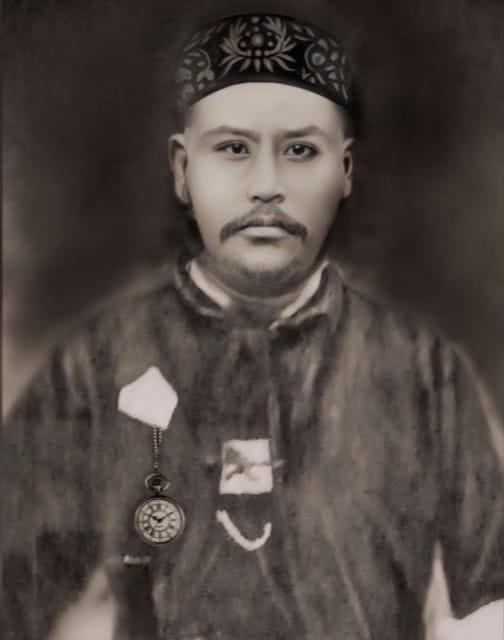
EOI, 16 July 2024: Ten days before Kargil Vijay Diwas Darjeeling lad Captain Brijesh Thapa will be returning home wrapped in tricolor.
His father, a retired Army colonel Bhuwenesh Thapa, and mother Nilima were stunned after hearing their son’s martyrdom on Monday night at their Siliguri’s Sashtri Nagar residence around 11 pm. An unknown phone number rang and informed them that their son died while fighting with militants Mother Nilima could not stop crying since she heard the death of her only son who was about to come on leave this July or else in November and take her for holiday to Tura in Meghalaya.
Brijesh spoke to his parents last on Sunday stating that he was speaking from his basecamp down after trekking five hours journey from the field area where he is deployed with 50 other soldiers. Brijesh was a company commander and leading the troops in one of the toughest peaks of the war zone where no vehicles passed.
Brijesh joined the Indian Army in 2019with his own efforts despite of parent’s suggestion to join in Navy and Airforce.“He wanted to join Indian Army and when we were holidaying in Laddakh, he had worn a jacket with sticker of Indian Army and then he uploaded his pictures in social media stating this will be his real image after one year.
After completing his B.Tech from a college in Mumbai, Brijesh appeared for the Combined Defence Service (CDS) examination. In 2018, he passed the Short Service Commission (SSC) examination of the defense service and joined the Army in2019. He was a music lover and use to play guitar and drum, he had bought two guitars at home and used to play during his leave. His father Bhuwenesh said, “My son had come for 12 days leave in March last year to celebrate my birthday and extended one more week and since then we did not meetup. He was brave and talented and never used to complain about any hurdles he faced in life. Namita Sakya, an aunt of the martyred soldier, said that she still can’t believe that Brijesh is no more.

The chronology of terror attackson army in J&K in July 2024:

JULY 15: Four army personnel, including an officer,killed in a gunfight with terrorists in Doda district.

JULY 8: Five army personnel killed and as manyinjured in a terrorist ambush in Kathua district.

JULY 7: An army personnel injured in a terroristattack on a security post in Rajouri district

Govt convenes all-party meet on July 21 ahead of Monsoon Session, TMC to skip meeting

PTI, New Delhi, Jul 16, 2024 : The government has convened an all-party meeting on July 21 ahead of the Monsoon Session of Parliament which will start next Monday, the Parliamentary Affairs Ministry said.

The meeting, which will be held at 11 am on Sunday, has been called by Parliamentary Affairs Minister Kiren Rijiju, the ministry said in a statement.

This will be Leader of Opposition and Congress MP Rahul Gandhi’s first time at the customary session-eve meeting of floor leaders from all parties if he attends it.

The Trinamool Congress (TMC) said no representatives from the party will attend the meeting as July 21 is observed by the party as Martyrs’ Day.

TMC’s parliamentary party leader in Rajya Sabha Derek O’Brien wrote to Rijiju and informed him that his party will not be able to attend the meet.

“For 30 years now, 21st July has been observed as ‘Martyrs’ Day’ in Bengal in honour of our 13 colleagues who were unlawfully killed in a police firing on the day in 1993.

“In this context, all MPs of the All India Trinamool Congress including myself will be in our home state to mark the day along with other party colleagues. Therefore, no MP will be able to attend the meeting,” he said.

The July 21 Martyrs’ Day is observed in memory of 13 Congress supporters who were shot dead in firing by the Kolkata Police in 1993 during a march to the state secretariat — Writers Buildings — when the CPI(M)-led Left Front was in power in West Bengal.

West Bengal Chief Minister Mamata Banerjee was the state Youth Congress chief at that time and she continued to mark the day by holding a rally every year even after forming the TMC on January 1, 1998.

The Monsoon Session of Parliament is scheduled to begin on July 22 and will conclude on August 12. The Union Budget will be presented on July 23.

The first Parliament session after the formation of the 18th Lok Sabha witnessed the opposition INDIA bloc raising issues like the recent NEET controversy, Manipur situation, and price rise among others, resulting in uproars and adjournments.

Protests were also witnessed in both Houses during Prime Minister Narendra Modi’s reply to the Motion of Thanks on the President’s address. In the Lok Sabha, opposition MPs raised slogans demanding a statement on Manipur during the prime minister’s reply, while in the Rajya Sabha, the opposition had staged a walkout. 

E-notice from govt office? MHA cyber wing says check Internet, call department

A letter attached to these emails, as per the advisory issued on July 4, made allegations of child pornography, pedophilia, cyber pornography, sexually explicit exhibit etc. against the receivers of the said e-mails
PTI, New Delhi, 14.07.24 : On receiving a suspicious e-notice from a government office on the email, people should check the Internet to authenticate the name of the official named in it and call the mentioned department, the Union home ministry’s cyber crime unit said on Sunday.

Users should be aware of “fake emails” sent in the garb of a government e-notice, said the Indian Cyber Crime Coordination Centre (I4C) in a public advertisement.
 
This could be a con that can make people “a victim of cyber fraud”, the ad cautioned.

The I4C suggested counter-measures before clicking or responding to such emails: check if the email has originated from an authentic government website that ends with “gov.in”; check the internet for information regarding officials named in the email; and call the mentioned department to verify the email received.

Early this month, the Union finance ministry had issued a public advisory alerting email users about fraudulent e-mails bearing names, signatures, stamps and logos of Delhi Police Cyber Crime and Economic Offence, Central Economic Intelligence Bureau (CEIB), the Intelligence Bureau and Cyber Cell of Delhi.

A letter attached to these emails, as per the advisory issued on July 4, made allegations of child pornography, pedophilia, cyber pornography, sexually explicit exhibit etc. against the receivers of the said e-mails.

The fraudsters, it said, use different e-mail addresses for sending such fake e-mails with attachment.

“Receiver of any such email should be aware about this fraudulent attempt. It is informed to the general public that any such e-mails with the attachment should not be responded to and such cases may be reported to the nearest police station/cyber police station,” it said.

The Indian Cyber Crime Coordination Centre (I4C), an organisation under the ministry of home affairs (MHA) to deal with cyber crimes in a comprehensive manner, had issued a similar advisory in August last year cautioning users against such counterfeit emails impersonating the name of its CEO bearing subject titles like ‘urgent notification’ and ‘court notification’.

“These misleading emails are targeted to various government offices, individuals and falsely accuse them of cyber crimes, urging them to respond,” the I4C said.

The logos of I4C, IB and Delhi Police used in these emails are “intentionally fake, deceptive and created with malicious motives,” it said.

Several officers in the national capital’s Central Secretariat received such suspicious emails last week which were falsely stated to have been issued by a person working at “MEA Messaging Team NIC High Commission of India.” The MHA and I4C ad issued on Sunday said such suspicious emails and other types of cyber frauds should be reported immediately to www.cybercrime.gov.in or call the cyber crime helpline no 1930.

How cell and gene therapies revolutionising cancer care in India

 These treatments are becoming increasingly effective, affordable, and accessible
Dr Gaurav Kharya : Our body is made up of cells, and whatever happens to it—good or bad—happens at a cellular level. Cancer, for example, occurs due to a small change in the cell that prompts it to proliferate abnormally. Also, cancer spreads in the body because the immune cells lose their ability to identify the danger cancer cells pose and stop them from growing. We treat cancer by surgically removing the cancer cells from the body or by giving drugs that kill the malignant cells.

The advancement in our capability to manipulate the body’s immune cells to identify and eliminate cancer cells is remarkable, particularly at the cellular level. No wonder, cell and gene therapies, once considered futuristic medicine, are now a reality, offering hope to millions by redefining the battle against cancer.

Chimeric Antigen Receptor (CAR) T-cell therapy and gene editing tools, like CRISPR-Cas9, are two revolutionary innovations that allow us to personalize treatments based on the genetic profiles of both the patient and the cancer. In CAR T-cell therapy, we extract the patient’s T-cells and add a marker to their surface to restore their ability to detect and eradicate malignant cells. And because these are the body’s own cells, the treatment has almost negligible side effects. Moreover, some of these immune cells remain in the memory and prevent cancer relapse. These are also called living drugs because once injected, these cells stay in the body and guard against the relapse of the cancer.

However, the current cost of these therapies is prohibitive. The high cost, along with the need for advanced medical infrastructure and specialised training for healthcare providers, has limited their availability. Yet, the government is making significant investments in biotech innovations through infrastructure development and by offering research grants. This support allows several Indian companies to focus on developing indigenous CAR T-cell therapies. These initiatives will greatly contribute to reducing the cost of these treatments, ensuring that Indian patients have access to them. Moreover, India’s generic pharmaceutical sector is using its expertise to develop biosimilars and gene therapies, which will further contribute to the affordability of these cutting-edge treatments.

Cell and gene therapies have proven to be effective in treating various malignancies such as leukemia, lymphoma, and myeloma. Numerous clinical trials are currently underway worldwide to assess their efficacy. In India, several hospitals and research centers have also initiated clinical trials to test these therapies against a wider range of cancers, tailoring them to the genetic profiles prevalent in the Indian population.

Furthermore, cutting-edge research in this field will ensure that India will soon have more than one CAR T cell products available for its population. Researchers in India are working on developing third and fourth-generation CARs that will be effective against multiple tumor-associated antigens.

Unlike first-generation CARs, which are mono-specific and target only one type of antigen, these CARs will be able to target two antigens and, hence, be more effective in preventing cancer relapse.

Collaboration between the public and private sectors, as well as foreign alliances, has produced a favorable environment in the country for innovation. Besides, collaborations with global biotech and pharmaceutical giants are facilitating technology transfer and capacity building, enabling India to take a leap into the future of cancer care.

As cell and gene therapies continue to advance, they are poised to redefine cancer care in India and around the world. With ongoing advancements in technology and research, these treatments are becoming increasingly effective, affordable, and accessible, strengthening our fight against cancer.

The significance of these therapies extends beyond the clinical outcomes. They represent a paradigm shift in cancer treatment, moving away from the traditional one-size-fits-all approach to a more personalized and precise form of medicine. For patients, this means medications that are tailored to suit their unique genetic composition, resulting in improved clinical outcomes and fewer side effects.

Undoubtedly, we still need to overcome several hurdles to make these therapies available to all, including addressing regulatory frameworks and ensuring equitable access. Nevertheless, the progress we have made so far serves as a beacon of hope not only for cancer patients in India but worldwide.

Calcutta High Court sets aside single-bench order in TET case

The board moved the division bench of Justice Harish Tandon and Justice Prasenjit Biswas contending that the candidate had applied to write the test, held on December 11, 2022, as a general category candidate
Subhankar Chowdhury, Calcutta, 13.07.24 :  A division bench of the high court on Friday set aside an October 2023 order by Justice Abhjit Gangopadhyay that directed the state primary education board to treat a candidate who had failed to clear the teachers’ eligibility test (TET) in the general category as an OBC candidate.

Justice Gangopadhyay had declared the candidate as having passed the test because her score was sufficient for reserved category candidates.

The judge resigned a few months later and won in the Lok Sabha elections as a BJP candidate.

The board moved the division bench of Justice Harish Tandon and Justice Prasenjit Biswas contending that the candidate had applied to write the test, held on December 11, 2022, as a general category candidate.

The board submitted that the petitioner got a copy of the certificate that identified her as an OBC candidate in November 2023, long after the test was held. Hence, the examinee could not be treated as an OBC candidate.

TET is held to shortlist candidates for teaching jobs in government-aided primary schools.

The division bench said in its order on Friday: “The petitioner has not filed the category of certificate before the cut-off date, which means that she had not claimed reservation…. Production of certificate by the writ petitioner at the later stage could not make her entitled to seek reservation. Therefore, on the said date she could not be considered eligible to apply under the OBC-B category, especially when the advertisement notice issued by the appellant/board stipulated that the last date for receipt of applications shall for all purpose be the cut-off date for determining the eligibility.”

The order said the single bench “is not correct” in holding that the petitioner can be considered an OBC-B candidate and she should be declared as passed.

“Therefore, there is illegality and material irregularity in the impugned order dated 09.10.2023 passed by the learned Single Bench…and as such it is liable to be
set aside.”

The president of the board, Gautam Paul, said: “We do not know how Justice Abhijit Gangopadhyay considered the petitioner’s prayer. We are happy with the order of the division bench.” 

Sikkim govt declares second, fourth Saturdays holiday for employees

PTI, GANGTOK, JULY 12, 2024 : The Sikkim government declared the second and fourth Saturdays of every month as a holiday for its employees. In a circular issued by the Department of Personnel on Thursday, the state government said it would give additional time to the employees to rest. 

The government also asked its employees to strictly comply with the working hours, from 10am to 4.30 am. 

“It has been seen that many government employees report for duty very late in the morning and leave office much before the scheduled time in the evening. This hampers the implementation of development-oriented policies and programmes. 

Reporting late also causes undue harassment to the public who visit offices regularly for official works,” it said. 

“Considering this, it is hereby ordered that all government employees should report for duty latest by 10 am and should remain in their respective offices till 4.30 pm,” it added. 

Half-day casual leave would be deducted if an employee is found to have reported after 10.30 am or left the place of duty before 4.30 pm without valid official reasons, the circular said. 

It also asked departmental heads to undertake surprise checking of the attendance of the employees.

Special status demand triggers political slugfest in Bihar

PTI, Patna, July 12, 2024 : The ruling NDA in Bihar and the opposition Mahagathbandhan on Friday crossed swords over the demand for special status to the state, which seems to have intensified ahead of the Parliament’s budget session.
    
The demand was first made soon after the creation of Jharkhand robbed the state of its mineral wealth, though the Centre has been of the view that the grant of special status was no longer possible since the provision was scrapped by the 14th Finance Commission.

Senior Congress leader and former Lok Sabha Speaker Meira Kumar, whose party is a part of the opposition coalition in the state, took potshots at the BJP-JD(U) combine.

She said, “There could not be a greater irony that the BJP, which rules the Centre, is not accepting the demand raised by the JD(U) despite being dependent on the ally.”

The allusion was to the JD(U), headed by Chief Minister Nitish Kumar, passing a resolution at its national executive meeting held last month seeking special category status, or, adequate assistance in the form of a special economic package.

The Congress leader also took a swipe at the JD(U) supremo and said, “The PM should show some respect for his ally who has realigned with him after ditching us and making umpteenth volte-face”.

The CM, who had helped the formation of the INDIA bloc, returned to the BJP-led NDA in January this year.

Kumar’s deputy Vijay Kumar Sinha, who belongs to the BJP, was asked about a meeting, in Delhi a day ago, between Union Finance Minister Nirmala Sitharaman and Samrat Choudhary, another Bihar Deputy CM who holds the finance portfolio and is understood to have submitted before her the state’s expectations from the upcoming budget.

Evading a direct reply, Sinha said, “The PM has made it clear that he wants a ‘Viksit Bharat’ (developed India). That is possible only when Bihar, too, is developed. All that is needed for growth of each and every state, will be done.”

Choudhary, who also heads the state BJP, returned from the national capital in the evening, and asserted, “The prime minister has always been concerned about the development of Bihar and we look forward to full cooperation from the PM and the Union finance minister.”

He also ducked pointed queries about the demand for special status raised vehemently by the JD(U), saying “all works that are pending in Bihar will be completed with central help”.

Meanwhile, state minister and senior JD(U) leader Shravan Kumar alleged that the demand for special status was “ignored” by the previous Congress-led UPA government at the Centre and hoped that Modi would give Bihar its due.

Earlier, NDA partner Lok Janshakti Party (Ram Vilas) headed by Union minister Chirag Paswan had also come out in support of the demand.

The party’s MP Arun Bharti had told PTI-Video, “Our party has been in support of special status to Bihar since the very beginning. We are confident of some assistance, in the form of either special status or a special package.”

However, the RJD, which helms the Mahagathbandhan, lashed out at the NDA claiming that the ruling coalition was trying to hoodwink the people.

RJD MLA Bhai Virendra said, “The BJP and the JD(U) share power in the Centre as well as in the state. Yet, instead of taking the necessary steps, they are raising demands. Do they think the people are fools?”.

The RJD leader, whose party was ruling Bihar when it was bifurcated in 2000, pointed out that the demand for special status was first raised by the Rabri Devi government.

“I do not wish to create much controversy by taking names. But the NDA was in power, at the Centre, at the time and its leaders deliberately denied Bihar special status fearing that my party would get the credit,” claimed Bhai Virendra.

NBMCH: State sanctions Rs 1 cr for renovation of super speciality block

MP, 9 July 2024, Siliguri: The Super specialty block of North Bengal Medical College and Hospital (NBMCH) is not yet fully operational. However, some wards of the block have been damaged even before they have become operational. False ceilings in many wards are damaged. 
Parts of the false ceiling have come loose and have become a potential risk for patients. According to the sources, the Central agency that did the work denied taking further responsibility. 
Hence, the state government has sanctioned Rs 1 crore to renovate the wards. Dr. Sanjay Mallick, the Superintendent of NBMCH said: “The Central agency constructed the building about a year ago. They have already clarified that after the handover, they will not take any responsibility for the building. 
The state government has, therefore sanctioned Rs 1 crore for the renovation work. We will start the indoor wards after the renovation.” In 2014, the Union Ministry of Health sanctioned Rs 150 crore for building the super speciality block in NBMCH premises. The work for which started in 2015. 
In 2018, the government cancelled the contract and blacklisted the company which had been doing the construction work for not completing the work on time. After that, a fresh tender was called. 
The outdoor section of the block was opened in November 2022. Later, the building was handed over to the NBMCH authorities last year. The block is not yet fully operational due to a shortage of equipment. 
Last month, Kaustav Nayek, Director of Medical Education (DME) visited the hospital and had given instructions to shift wards to the new block. It has been decided that the wards will be shifted only after renovation. 
The six-storied building is spread over 15,000 square meters. Different departments will be shifted to this block and the old building will be renovated. 
Courtesy& source- Millennium Post 
https://www.millenniumpost.in/bengal/nbmch-state-sanctions-rs-1-cr-for-renovation-of-super-speciality-block-571206

More rains in forecast for north Bengal: Very heavy rainfall expected till July 11

PTI, KOLKATA, JULY 9, 2024 : Heavy to very heavy rain is likely till July 11 in northern West Bengal, already affected by torrential downpours over the last several days, the Met Department said on Tuesday. Chief Minister Mamata Banerjee on Monday asked the administration to ensure round-the-clock monitoring of the situation.
An active monsoon trough and a cyclonic circulation in northeast Assam are very likely to bring heavy to very heavy rainfall with isolated extremely heavy downpours over northern West Bengal till July 11, the Met Department said.
The intensity of rain in the region is likely to decrease slightly on July 12 and 13, it said. Gajaldoba in Jalpaiguri district recorded the state’s highest rainfall at 180 mm in 24 hours till 8.30 am on Tuesday, it added.
The other places in northern West Bengal which recorded significantly high rainfall during the period are Sevoke (170mm), Buxaduar (150 mm), Nagrakata (140mm), Jalpaiguri town (130 mm) and Bhutanghat (120 mm), the data said. 
Landslides in the hills, damaging roads, including National Highway 10 that connects West Bengal with Sikkim, and waterlogging at various places in the plains, have occurred owing to the unabated rainfall in the districts of Darjeeling, Kalimpong, Jalpaiguri , Alipurduar and Cooch Behar.

Saffron party leadership to revamp state BJP, major reshuffle awaited

Central BJP leaders are aiming to restructure the saffron party’s organisation at the state and district level ahead of the 2026 Assembly elections in view of the party’s poor performance in the Lok Sabha elections.
RAJIB CHAKRABORTY | SNS  | Kolkata | July 8, 2024 : Saffron party leadership to revamp state BJP, major reshuffle awaited

Central BJP leaders are aiming to restructure the saffron party’s organisation at the state and district level ahead of the 2026 Assembly elections in view of the party’s poor performance in the Lok Sabha elections. According to sources, some central party leaders, who are dealing with organisation affairs are keeping in close touch with some state BJP leaders. The party leadership is said to be planning to replace the presidents of at least 15 out of 43 organisational districts in Bengal. Both winning and losing candidates in the Lok Sabha elections will be utilised for organisational work, said the BJP sources. There is even a possibility of a change in the state BJP president.

On Friday, BJP’s national president J P Nadda assigned new organisational responsibilities in 24 states except West Bengal. Sources said that as the post-election analysis at the grassroots level has revealed several reasons for the BJP’s poor performance in the Lok Sabha elections in Bengal, so the Delhi headquarters are taking stock of the situation. The saffron party leadership is planning a significant organisational overhaul in view of the disappointing election results.Reports indicated that nearly 15 district presidents will be replaced before the Puja. Additionally, recently state president Sukanta Majumdar hinted at a possible change in his position, noting that the party’s principle is “one person, one post”. He had recently stated: “Our party’s policy is one person, one post.

Therefore, since I have become a minister, I may have to step down. However, the final decision will be made by the central leadership. Our party’s structure undergoes changes from the top to the bottom in terms of organisational restructuring.” The focus will primarily be on revamping the district organisations, from the district to the mandal levels. Most district presidents in areas with poor results in the 2024 Lok Sabha elections will be replaced.

Over 300 mandal presidents may also be replaced. Furthermore, the majority of booth committees will be restructured. While Mr Majumdar did not directly comment on the organisational reshuffle, a state BJP leader claimed that any changes in the state BJP’s organisational structure would be on the directives of the central leadership. However, sources within the BJP have confirmed that organisational changes are indeed taking place at various levels within the state BJP.

A few days ago, state BJP leaders met at the Salt Lake party office for a post-election review meeting, where it was decided to gather reports from the district level. Subsequently, review meetings are being held in various districts with mandal presidents, district and zone in-charges, and assembly in-charges. The complete grassroots reports will soon be submitted to the state committee, which will then send the refined reports to the central leadership. The grassroots leaders and workers have identified several issues responsible for the party’s poor performance in the Lok Sabha elections during the review meetings, including that many senior workers were not involved in the election work, booth organisations were quite lax, incorrect booth reports were sent, with optimistic projections that did not match reality.

BJP workers were lax in door-to-door campaigning, and voters were not adequately approached. There was also a lack of coordination between district presidents and party candidates in most Lok Sabha constituencies. Frequent meetings and large gatherings by central leaders resulted in insufficient grassroots voter outreach, said the sources. These issues are being discussed within the party. Organisational reshuffles are expected in several districts, including Howrah, Hooghly, South 24-Parganas, West Midnapore, Jhargram, Bankura, and Burdwan. Both Lok Sabha constituencies in Howrah did not yield satisfactory results, the Hooghly seat was lost, and even though Arambagh was considered a positive seat, it was lost. The Burdwan-Durgapur seat was lost, and even though Asansol was considered positive, it was lost as well.

Additionally, there is internal conflict within the party in Burdwan, necessitating organisational restructuring. South 24-Parganas performed very poorly, and reports of factionalism have surfaced. Organisational changes are also expected in Midnapur, Jhargram, and Ghatal. The Bankura seat was lost, and there was significant internal conflict within the party before the elections. In Bishnupur, BJP won by a very small margin. Consequently, organisational changes are planned in Bankura, Bishnupur, Birbhum, and Bolpur.

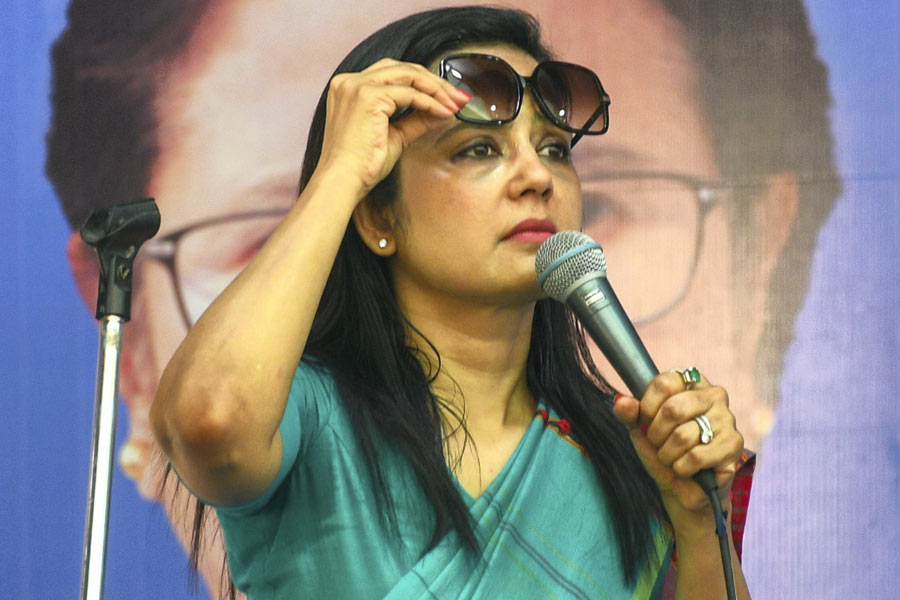
Delhi police file FIR under new criminal laws against Trinamul MP Mahua Moitra

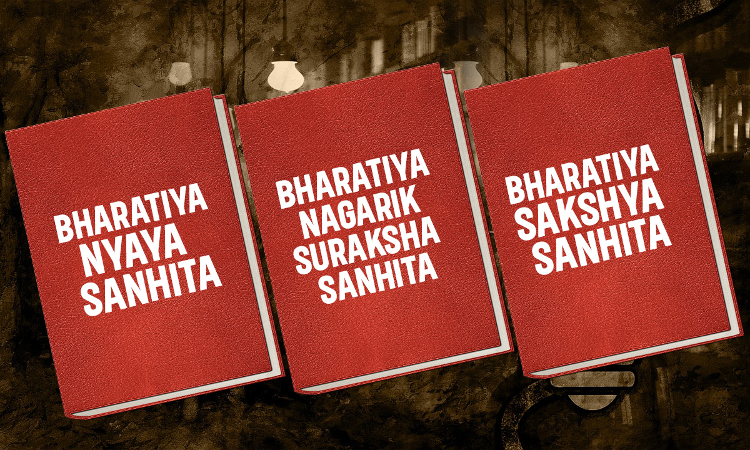
Sources said Mahua had been booked under Section 79 of the Bharatiya Nyay Sanhita (BNS), which deals with gestures or acts intended at outraging a woman’s modesty

Imran Ahmed Siddiqui, TT, New Delhi, 08.07.24 : Delhi police on Sunday filed an FIR under the new criminal laws against Trinamool Congress MP Mahua Moitra over her “derogatory” remarks against National Commission of Women chief Rekha Sharma.

Sources said Mahua had been booked under Section 79 of the Bharatiya Nyay

Sanhita (BNS), which deals with gestures or acts intended at outraging a woman’s modesty. Sources said Mahua was the first politician to have been booked under the new BNS, which has replaced the Indian Penal Code.

The commission had earlier sought an FIR against the MP.

Mahua had on July 4 commented on a video posted on X that showed a man holding an umbrella over Sharma’s head and walking behind her during the commission chief’s visit to the site of the Hathras stampede.

Several social media users felt that having someone else hold an umbrella over one’s head was “insensitive”, especially at the site of a tragedy, and asked why Sharma could not hold the umbrella herself.

“She is too busy holding up her boss’s pajamas,” Mahua had posted on X. She later deleted the post.

On July 5, the women’s commission put up a post on X saying: “The National Commission for Women has taken suo mot(u) cognizance of the derogatory remark made by Ms. Mahua Moitra, Member of Parliament, against Ms. Rekha Sharma, Chairperson, NCW. The crude remarks are outrageous and a violation of a woman’s right to dignity.”

It added: “The Commission observed that this remark attracts Section 79 of the Bharatiya Nyay Sanhita, 2023. NCW strongly condemns these defamatory remarks and requests strict action against Ms. Moitra. An FIR should be registered against Ms. Moitra and a detailed action report should be communicated to the Commission within 3 days.”

Responding to the commission’s post, Mahua wrote: “Come on Delhi Police please take action immediately on these suo mot(u) orders. Am in Nadia in case you need me in the next 3 days to make a quick arrest. I Can Hold My Own Umbrella.”

In another post, Mahua shared screenshots of past posts, allegedly from Sharma’s account, that she said passed “crude” comments against political leaders such as Sonia Gandhi, Arvind Kejriwal and Lalu Prasad.

Mahua wrote: “Also Delhi Police while you’re at it can you please register an FIR against another serial offender under your new Act.”

The BNS came into effect on July 1, replacing the Indian Penal Code.

Yet to get reply from Centre on conducting own medical entrance exam: Bengal Education Minister Bratya Basu

Basu said the Centre’s mishandling of the UGC-NET exam jeopardised the careers of lakhs of teaching job aspirants in higher educational institutions

PTI, Calcutta, 06.07.24 : West Bengal Education Minister Bratya Basu on Saturday sought the scrapping of NEET, and demanded that the states be allowed to conduct their own entrance exams for medical courses as was the practice earlier.


Speaking to reporters on the sidelines of the pre-counselling fair organised by the Association of Professional Academic Institutions, he said the irregularities in NEET have plunged the future of 23 lakh students into uncertainty.

Basu said his government has already written to the Centre regarding this but is yet to get a reply.

“Before academic year 2016-17, medical entrance exams were conducted by West Bengal Joint Entrance Examinations Board in a transparent manner, and there used to be no controversy over it,” he claimed.

Basu alleged the Centre’s attitude was against the federal structure of the country.

“In a democracy, you cannot ignore the opinions of the state governments, you cannot disregard the states that are run by non-BJP governments,” he said.

Basu said the Centre’s mishandling of the UGC-NET exam jeopardised the careers of lakhs of teaching job aspirants in higher educational institutions.

On the pending students’ union elections in colleges, he said, “We are positive about it. The process will begin after Durga Puja.” While inaugurating the fair, Basu called upon students to take up whichever course he or she wanted.

“With the emergence of digital media, a fourth industrial revolution has begun,” he said.

“A student can now choose topics in sync with current trends,” he added.

SC to hear on July 8 plea on free sanitary pads for class 6-12 girl students

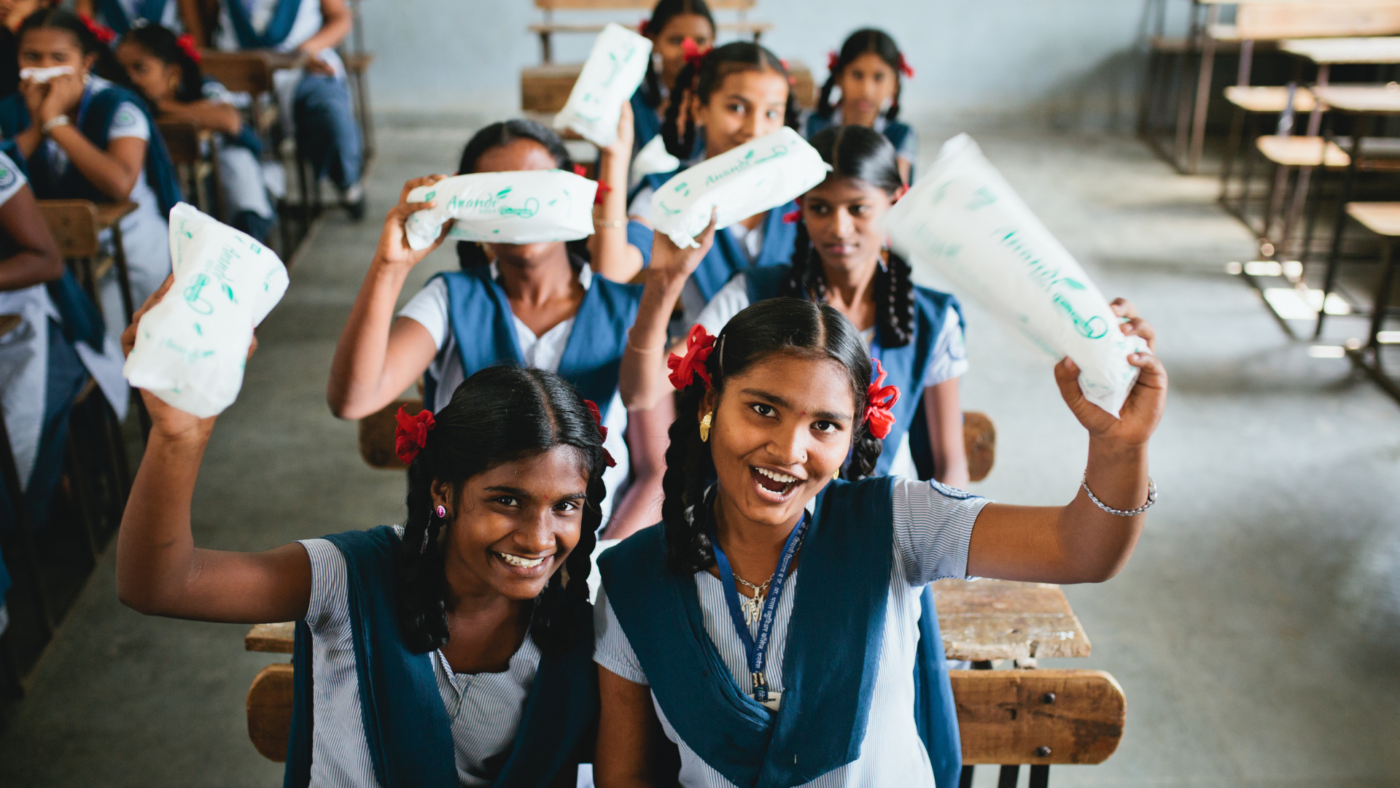
PTI, 6 July 2024 : The Supreme Court is scheduled to hear on July 8 a plea seeking directions to the Centre and states to provide free sanitary pads to girl students of class 6-12 and ensure separate female toilet facilities in all government-aided and residential schools.
A bench of Chief Justice D Y Chandrachud and Justices J P Pardiwala and Manoj Misra is scheduled to hear the plea of Congress leader and social worker Jaya Thakur in which she has highlighted the difficulties faced by adolescent females from poor backgrounds in the schools.
During the last hearing of the matter on February 5, Additional Solicitor General Aishwarya Bhati informed that the Centre is in the process of collating all necessary material to form a national policy on the distribution of menstrual hygiene products to school-going girls in terms of the orders dated April 10, 2023, and November 6, 2023.
On June 13, the Union education ministry, in an advisory to schools, said girl students should be allowed to take necessary restroom breaks during board exams for classes 10 and 12 and free sanitary napkins must be made available at all examination centres.
The Supreme Court is set to reopen on July 8 after summer vacation.
On November 6, the top court directed the Centre to lay down a national model for building toilets commensurate with the number of girl students in all government-aided and residential schools across the country.
While emphasising uniform procedure, it also asked the Union government about the policy it has formulated for the distribution of sanitary napkins to female school students nationally.
During the hearing, the Centre informed the apex court that a draft national policy for the distribution of sanitary napkins free of cost to school-going girls has been formulated and sent to stakeholders to elicit their comments.
The top court earlier warned the states, which had not submitted their response to the Centre on formulating a uniform national policy on menstrual hygiene for girls studying in schools, that it would take recourse to the “coercive arm of the law” if they failed to do so.
On April 10, the apex court appointed the secretary of the Ministry of Health and Family Welfare (MOHFW) as the nodal officer to coordinate with states and UTs and collect relevant data for formulating a national policy.
It noted that MoHFW, the Ministry of Education and the Ministry of Jal Shakti have schemes on menstrual hygiene management.
The court also ordered all states and UTs to submit their menstrual hygiene management strategies and plans that are being executed with the help of funds provided by the Centre or through their own resources to the Mission Steering Group of the National Health Mission within four weeks.
The apex court said the states and UTs shall also indicate to the Mission Steering Group of the National Health Mission the appropriate ratio of female toilets for residential and non-residential schools in their respective territories.
It asked all states and UTs to also indicate the steps which have been taken to provide low-cost sanitary pads and vending machines in schools and their appropriate disposal.
The plea filed by Congress leader Thakur has said adolescent females from poor backgrounds between the ages of 11 and 18 years face serious difficulties in receiving education, a constitutional right under Article 21A of the Constitution.
“These are adolescent females who are not equipped with and are also not educated by their parents about menstruation and menstrual hygiene.
“The deprived economic status and illiteracy lead to a prevalence of unhygienic and unhealthy practices which have serious health consequences, increase obstinacy and lead to eventual dropping out from schools,” the petition said.

Teesta River erosion leaves hundreds displaced

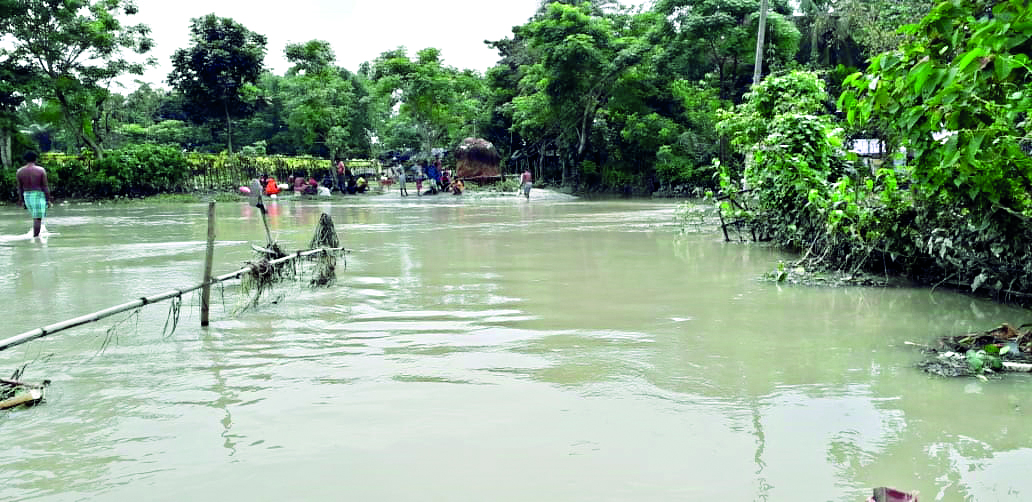
Dibyendu Sinha, MP, 5 July 2024, Jalpaiguri: Around 50 to 60 houses have been submerged in the erosion of the Teesta River basin, leaving hundreds homeless. Approximately 500 bighas of agricultural land, including a primary school and an ICDS centre, have been engulfed by the river. 

This incident occurred in the Bahir Char area of Jalpaiguri Sadar Block, within the Bowalmari Nandan Pur Gram Panchayat area. According to local sources, river erosion began last week but intensified significantly over the past two days. 
The issue has been reported to the local Gram Panchayat and block administration. Mihir Karmakar, BDO of Sadar Block, stated that authorities are investigating the matter. Meanwhile, the District Flood Control has issued a yellow alert for the unprotected area of Teesta in Jalpaiguri Domhani and a red alert for the unprotected area in Mekhliganj. 
Jalpaiguri Sadar Block encompasses several basin areas along the Teesta River. Among them, Bahir Char, situated alongside Teesta in the Boalmari Nandanpur Gram Panchayat area, is the largest. This char, measuring 8-km-long and 4-km-wide, is home to 260 families with a population exceeding 2,000. 
While the river’s water level rises every monsoon, recent years have seen exacerbated erosion issues. Last year, 2,000 bighas of land was lost to river erosion, a situation repeated this year. 
Local resident Charan Mandal reported that his house and 20 bighas of land were lost to erosion on Thursday, with Sadhan Sarkar experiencing a similar loss of 15 bighas of land. Most of the damage occurred in the Dhar Para, Kanai Nagar and Kalampur areas. 
Jiten Chandra Biswas, local Panchayat member, lamented: “The Char area previously housed the only primary school in Kalampur. 
On Friday morning, the school was swept into the river, leaving the future uncertain for 50 students. The ICDS centre adjacent to the school suffered the same fate. Residents have demanded a protective ring dam to mitigate river erosion, but no action has been taken yet. If this situation persists, conditions will worsen in the days ahead.” 
Meanwhile, the Sikkim Meteorological department has issued a red alert for five districts in North Bengal. Gopinath Raha, a department official, warned: 
“These districts are likely to experience heavy to very heavy rainfall in the next 48 hours, tapering off by Sunday.” 
The Jalpaiguri district Irrigation department’s Flood Control reported periodic releases of water from the Gajoldoba Teesta Barrage, with 3,010 cumec water released on Friday afternoon. 
 https://www.millenniumpost.in/bengal/teesta-river-erosion-leaves-hundreds-displaced-570747

WBJEEB publishes rules & regulations for e-counselling of students

Amitava Banerjee4 July 2024 11:35 PM Darjeeling: Teesta Bazar in Kalimpong observed a bandh on Thursday demanding compensation, rehabilitation and permanent protection from the River Teesta. The bandh call was given by Teesta Sangrakshan Mancha (TSM). All business establishments remained closed on Thursday with a public meeting also being held apprising the residents of the demands.
The TSM has demanded a reassessment of the compensation to be handed over by the NHPC. Incidentally, Teesta Bazar was badly flooded in the flash flood in the River Teesta triggered by a glacial lake outburst in North Sikkim on October 4, 2023. Many families were displaced, houses damaged and livelihoods ended owing to the Teesta flood. According to the National Emergency Response Centre of India (NDMI) in the October 2023 Teesta disaster, there were over 100 deaths and over 70 missing individuals. Around 4,500 were evacuated. Around 90,000 people were affected. Additionally, about 2,000 houses were damaged.
With the advent of monsoons, Teesta Bazar continues to suffer with surge in the water level and the roads inundated. The residents complain that not much has been done in the way of compensation or rehabilitation of the affected families despite more than 8 months having passed since the widespread devastation.
“There were many (read political parties) who came and made tall promises but failed to live up to their commitments. Finally we were compelled to constitute the TSM, consisting of residents and people who have been affected by the calamity. It is an apolitical outfit. The day was observed in memory of all those who had lost their lives in the flash flood of October 4, 2023. It is also in support of our demands for permanent protection, rehabilitation and relief,” stated Madan Chettri of the TSM. “Earlier the district administration had worked out the compensation with the NHPC.
This time it is being done by the GTA and the compensation amount is not sufficient. Though we thank the GTA for initiating the process, we want a reassessment of the compensation amount,” stated Kishor Pradhan of the Mancha.
He further added that the GTA’s proposal to the NHPC of Rs 21 crore to build the protection wall to strengthen the embankment is not sufficient.
“We don’t want stop gap measures. Let there be permanent protection,” added Pradhan. Regarding future programmes, Pradhan stated: “It will depend on the reaction of the government and administration. We dont expect things to happen in a day or two. We know it will take time and we are willing to wait. However, we want a clear policy to be framed to mitigate this problem all along the Teesta permanently.”
The Mancha plans to invite experts, NGO, representatives of all political parties, public representatives, administration in the next meeting.
Courtesy & source- Millennium Post

https://www.millenniumpost.in/bengal/teesta-bazar-observes-bandh-in-demand-of-speedy-rehabilitation-570614

New laws intend to establish justice oriented system based on spirt of Constitution: Expert

PTI, July 04, 2024, Mumbai : The new criminal laws that came into force nationwide on July 1 are intended to establish a justice oriented system based on the spirit of the Constitution, speakers at a workshop said here on Thursday. 

The Bharatiya Nyaya Sanhita (BNS), Bhartiya Nagrik Suraksha Sanhita (BNSS) and Bharatiya Sakshya Adhiniyam (BAS) have replaced the British-era Indian Penal Code, Code of Criminal Procedure and Indian Evidence Act, respectively. 
The workshop, organised by the Press Information Bureau (PIB), also highlighted salient features of the new laws, which include the enhanced use of technology, streamlining of victim protection and permitting audio-video recording of victim’s statement.
“The new criminal laws are intended to overhaul the colonial era Indian Penal Code and establish a justice-oriented system based on Indian thinking and spirit of the Constitution. They focus on justice rather than punishment and are to ensure victim centric justice,” said Deputy Director of Maharashtra Police Academy Kakasaheb Dole, who was the keynote speaker at the event. 
The BNSS gives citizens the right to file an FIR through oral or by electronic communication (e-FIR), and further, irrespective of the area where the offence or crime is committed, a citizen can file an FIR anywhere in the country, Dole added., the police officer said. 
“Now, citizens can appear as an accused, victim or witness through audio-video conferencing for the purposes of examination. Rape victims can now record e-statement online and they need not necessarily visit police stations,” Dole said. 
It will take some time before everyone gets used to the new laws, adding that community service for petty crimes is an important aspect of these new laws, said advocate Abhineet Pange.

गोरुबथानमा युद्धवीर गुरुङको प्रतिमा स्थापना गर्ने योजना

कालिमन्युज, कालेबुंग, ३ जुलाई २०२४: युद्धवीर गुरुङ जसको नाउँमा गोरुबथानको दुई सम्भवत प्रथम दुई शैक्षिक संस्थाहरू स्थापना गरिएको छ, उनको स्मृतिमा गोरुबथानको मालबस्तीमा प्रतिमा स्थापना गर्ने योजना राखिएको छ | गोरुबथानमा पहिलो स्थापित शैक्षिक संस्थान युद्धवीर मेमोरियल स्कुल थियो, जसलाई पछि युद्धवीर प्राथमिक विद्यालय भनियो र अन्ततः युद्धवीर निम्न बुनियादी पाठशाला(जुनियर बेसिक स्कुल)मा बढोत्तरी भएको थियो।

यसैगरी, यसलाई माध्यमिक शिक्षाको निम्ति युद्धवीर उच्च बुनियादी पाठशाला (सिनियर बेसिक स्कुल)मा बढोत्तरी गरियो, पछि यही उच्च बिद्यालयमा र अन्ततः बढोत्तरी गरिएर युद्धवीर उच्चत्तर माध्यमिक विद्यालय(हायर सेकेन्डरी स्कुल)मा परिणत भएको थियो। यही विधालय नै गोरुबथानको वर्तमान सरकारी कलेजको आधार पनि हो।

गोरुबथानमा शैक्षिक यात्राको विजारोपण गर्ने विद्यालय – जसको नाममा यी दूई विद्यालयहरु स्थापित गरिएको थियो अर्थात् युद्धवीर गुरुङको स्मृतिमा सालिक निर्माणार्थ गठन गरिएको युद्धवीर गुरुङ सालिक निर्माण समितिद्वारा आगामी ८ जुलाई सोमबारको दिन युद्धवीर उच्चतर माध्यमिक विद्यालयमा अपराह्न २ बजे आमसभा आयोजन भइरहेको छ। उक्त सभामा युद्धवीर जुनियर बेसिक पाठशाला, युद्धवीर उच्चतर माध्यमिक विद्यालयमा पठनपाठन गर्ने पूर्व विद्यार्थीलगायत गोरुबथानका बुद्धिजीवी, शुभचिन्तक सबैलाई आयोजक पक्षबाट उपस्थितिको निम्ति हार्दिक अनुरोध गरिएको छ।
उक्त सभामा युद्धवीर गुरुङको सालिक निर्माण, धर्मशालादेखि सेरिकल्चरसम्मको बाटोलाई युद्धवीर गुरुङ मार्ग नामाकरण अनि युद्धवीर गुरुङलाई दस्तावेजीकरण गर्नको निम्ति स्मारिका तयार गरिने विषयमाथि चर्चा, सुझाव, सरसल्लाह हुनेछ। तसर्थ यस महत्वपूर्ण सभामा सबैलाई उपस्थिति भइदिन आयोजक पक्षबाट सभापति पुरण राईले हार्दिक अपिल गरेका छन्।

युद्धवीरका आफन्तहरूले यो बिद्यालयको निम्ति आफ्नो जमिन दान गरेका थिए, जसलाई पछि धर्मशालाबाट शुरु भएको मूल प्राथमिक र माध्यमिक बिद्यालयहरूलाई आजको स्थानमा माल बस्तीमा स्थानान्तर गरिएको थियो।

गोरुबथानको शैक्षिक इतिहासको आधिकारिक दस्तावेज पल्ट्याउँदा शुरुमा नै युद्धवीर गुरुङको नाम स्वर्ण अक्षरले लेखिएको पाउँछौँ। ब्रिटिश इस्ट इण्डिया कम्पनीको जमानामा जहाँ उनीहरूको सन्तान र केही हुने खानेका छोराछोरीलाई मात्र लेख्ने/पढ्ने अवसर थियो। यस्तोमा हुँदा खानेका नानीहरूले पनि शिक्षा आर्जन गर्न पाउनुपर्छ भन्ने सोच राख्ने गोरुबथानका त्यस ताकका विद्वान/विदुषीहरूको परामर्शमा गोरुबथानमा पनि पाठशाला स्थापना गर्ने विचारको विजारोपन भयो। यही परिकल्पनालाई कार्यान्वयन गर्न स्व. डम्बरसिंह गुरुङ अघि आउनुभयो र आफ्नो बाबुको नाममा गोरुबथानको धर्मशाला नजिक एउटा घरलाई युद्धवीर गुरुङ मेमोरियल पाठशाला नामकरण गरी पठनपाठन शुरु गरियो। यही नै थियो गोरुबथानमा ज्ञानको ज्योति बाल्ने प्रथम आधिकारिक पहल।

स्व. युद्धवीर गुरुङकै नाममा स्थापित युद्धवीर बुनियादी पाठशाला, युद्धवीर उच्चतर माध्यमिक विद्यालयले गोरुबथान लगायत डुवर्सको ठूलो भागको शैक्षिक विकासमा गरिमामय योगदान पुराउँदै आइरहेको छ। गुरुङकै दूरदर्शिता एवं नि:स्वार्थ सहयोगकै कारण शिक्षाको भुकभुके उज्यालो पनि छिर्न नसकेको गोरुबथानको शैक्षिक स्तर अहिले लोभलाग्दो अवस्थामा आइपुगेको छ। यसले डुवर्सका मानिसहरूलाई विशेष गरि वरिपरिका १० देखि १५ चिया बगान र २० देखि ३० बस्तीहरुका विद्यार्थीहरुलाई प्राय ८६ वर्षदेखि शिक्षादान दिइरहेको छ |

1938 मा स्थापित युद्धवीर जुनियर बेसिक पाठशालाले 1958 मा सरकारी मान्यता पाएको थियो। जतिबेला स्कुल निरीक्षक पदमा यद्धवीर गुरुङकै नाति कृष्ण बहादुर गुरुङ आसिन थिए। युद्धवीर निम्न बुनियादी पाठशालालाई बढोत्तरी गरेर अहिलेको युद्धवीर उच्चतर माध्यमिक विद्यालय 1948 मा स्थापित गरिएको थियो। जुन वर्ष दार्जिलिङ सरकारी महाविद्यालयको पनि स्थापना भएको थियो।

error: Content is protected !!
Exit mobile version