Category Archives: National

Guv Bose shows CCTV footage of Raj Bhavan to common people

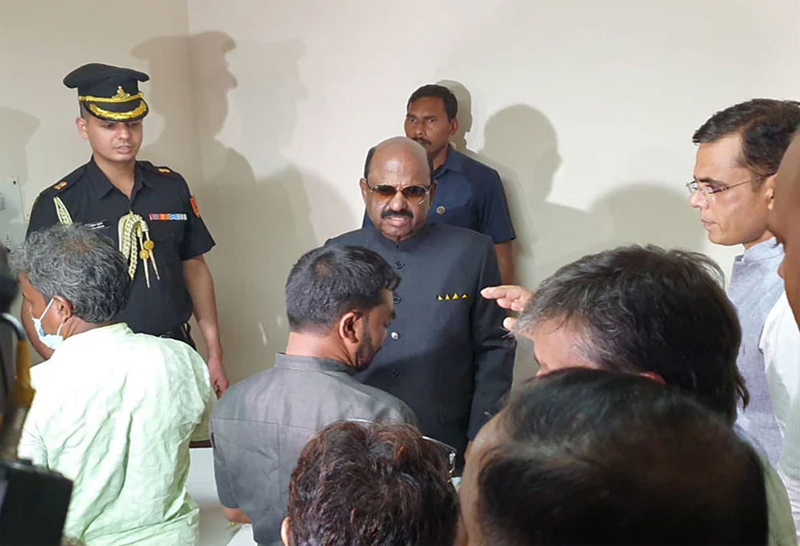
IANS, Kolkata, May 9, 2024 : Amid allegations of molestation against West Bengal Governor C.V. Ananda Bose, the Governor’s House on Thursday showed 69-minute CCTV footage of the Raj Bhavan premises dated May 2 to around 100 ‘common people’.


On May 2, a temporary female staff at the Raj Bhavan filed a police complaint accusing the Governor of ‘outraging her modesty’, triggering a political storm in the state.

Denying the charge vehemently from the beginning, the Governor on Wednesday announced that the CCTV footage of the Raj Bhavan will be screened at the Governor’s House for the common people, barring Chief Minister Mamata Banerjee and members of the police force, on Thursday.

In the CCTV footage screened in three parts, the Governor could not be seen in any frame.

The footage from May 2 showed recordings of two CCTV cameras installed in the North Gate of the Raj Bhavan from 5.32 p,m. to 6.41 p.m. The screening event was titled ‘Sach Ka Samna’.

Although the Governor was not spotted in the footage, the complainant was seen twice — once entering the police post inside the Raj Bhavan premises, and then coming out of it and entering an adjacent room.

Heavy deployment of police was seen in the footage on account of the arrival of Prime Minister Narendra Modi at the Raj Bhavan on the night of May 2.

Since the announcement of the screening on Wednesday, the Governor’s office received hundreds of applications from the common people seeking to attend the event.

The CCTV cameras inside the Governor’s House are maintained by the Public Works Department, while the monitoring is done by the Kolkata Police.

ED to file chargesheet against Kejriwal, Kavitha

 Enforcement Directorate plans to file a charge sheet in the Delhi excise policy-linked money laundering case, naming Arvind Kejriwal, BRS leader K Kavitha, and others as accused, including individuals and companies.

PTI, May 09, 2024: The Enforcement Directorate (ED) is expected to soon file a fresh charge sheet in the Delhi excise policy-linked money laundering case and it may name Chief Minister Arvind Kejriwal, BRS leader K Kavitha and some others as accused, official sources said on Thursday. The federal agency had arrested Kejriwal from his official residence here on March 21 under the Prevention of Money Laundering Act (PMLA) while Kavitha, the MLC daughter of former Telangana chief minister K Chandrashekar Rao, was taken into custody from Hyderabad on March 15.

Official sources said a prosecution complaint against half-a-dozen entities, including the two politicians, some linked individuals and companies, has been readied and the agency may file it before a special PMLA court here within the next 4-5 days.

The accused will be charged with money laundering and the prosecution complaint will be filed under sections 45 and 44(1) of the PMLA, the sources said.

The agency may also name the Aam Aadmi Party (AAP) in this charge sheet along with attachment of some fresh assets in the case that was registered in 2022.

BJP, Oppn at loggerheads overEAC-PM paper on population

 ‘The question arises that if by this pace the population is increasing and Congress is hell bent upon giving reservation to the Muslims on the basis of population, they will cut the share of the SCs, STs and the OBCs’ 
PTI, New Delhi, 09.05.24 :  The BJP on Thursday expressed concern over the pace of increase in Muslim population in the country and wondered its impact on the reservation provided to SCs, STs and OBCs, claiming the Congress is “hell bent” on providing quota to the minority community if voted to power.

The ruling party’s reaction came after a recent working paper by the Economic Advisory Council to the Prime Minister (EAC-PM) said the share of the Hindu population decreased by 7.82 per cent between 1950 and 2015 in India, while that of Muslims increased by 43.15 per cent, suggesting that there is a conducive environment in the country to foster diversity. The paper titled ‘Share of Religious Minorities: A Cross-Country Analysis (1950-2015)’ further said the share of Jains in the population of India decreased from 0.45 per cent in 1950 to 0.36 per cent in 2015.

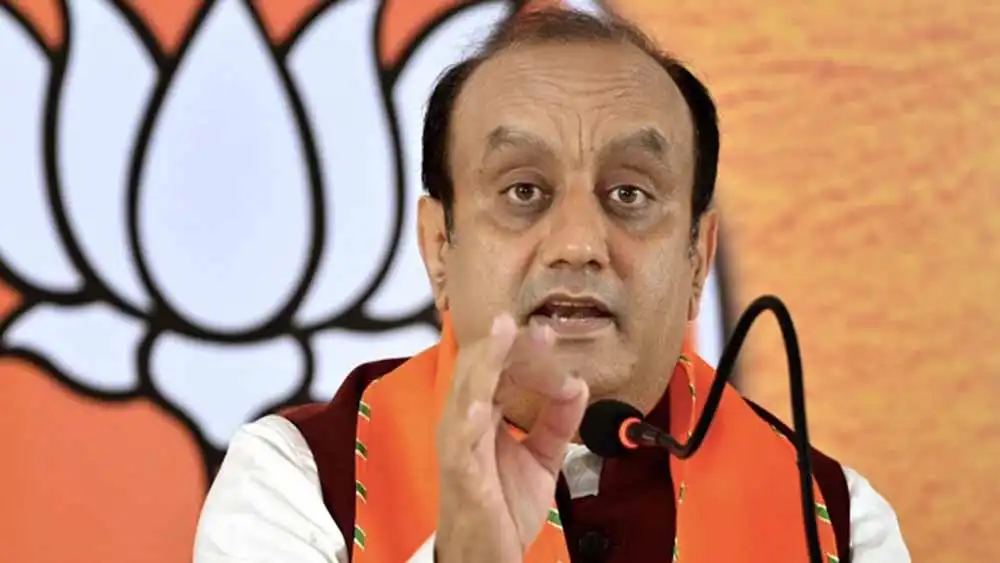
The report comes ahead of the fourth phase of the Lok Sabha polls. “It’s a very well-known fact, which has been in the public domain for around a decade. If you see the 1951 census, Hindus were having 88 per cent population and Muslims 9.5 per cent. In the 2011 census, Hindus (population) reduced to 79.8 percent from 80 percent while Muslims’ percentage went up by more than 14.5,” BJP national spokesperson Sudhanshu Trivedi told PTI, when asked for comment.

“But, the question arises that if by this pace the population is increasing and Congress is hell bent upon giving reservation to the Muslims on the basis of population, they will cut the share of the SCs, STs and the OBCs,” he added.

Trivedi said the Congress, if voted to power will, then keep on “changing” the share of reservation in future with increase in the Muslim population, “which is more likely because they (Muslims) are having possibility of multiple marriages”. Muslims share in the reservation will keep on increasing also because of “conversion and infiltration because they are having a secular cover from them (the Congress)”, he added.

“So this is a bigger question and a bigger challenge which they (Congress) have to answer,” the BJP spokesperson said. Senior BJP leader and Union minister Rajeev Chandrasekhar said that the EAC-PM’s report raises many questions because one particular community is “increasing its population in a manner where demography of India is being altered, changed”.

“This leads to some questions that need to be asked and answered,” he said, adding “How much of growth in Muslim community is being caused by illegal immigration and conversion?” he asked. “What is the impact of this significant increase in the minority community’s (Muslims) population on the rights and opportunities (available) for the other minority communities? There are Jains, Buddhists, Sikhs and Christians. Is there any crowding out of these minority communities as a consequence of this (rise in Muslim population)?” Chandrasekhar asked. He alleged that some political parties including the Congress are making “huge attempt to alter the Constitution and bring religion based reservation”.

“So, what will be the consequence when you have the Muslim community increasing its population so rapidly, from 9 per cent to 14.5 per cent and there are political forces that want to give them reservation,” he told PTI. “What will be the consequence of that on the OBC, SC and ST communities who suffered for centuries in India and have been excluded from development,” he said, adding that these are the questions which needs to be asked and answered because they will shape the future of India.

Chandrasekhar said: adding “How much of growth in Muslim community is being caused by illegal immigration and conversion?” “What is the impact of this significant increase in the minority community’s (Muslims)population on the rights and opportunities (available) for the other minority communities? There are Jains, Buddhists, Sikhs and Christians. Is there any crowding out of these minority communities as a consequence of this (rise in Muslim population)?” the Union minister asked. 

He alleged that some political parties including the Congress are making” huge attempt to alter the Constitution and bring religion based reservation”. “So, what will be the consequence when you have the Muslim community increasing its population so rapidly, from nine per cent to 14.5 per cent and there are political forces that want to give them reservation,” he told newspersons. 

“What will be the consequence of that on the OBC,SC and ST communities who suffered for centuries in India and have been excluded from development,” he said, adding that these are the questions which needs to be asked and answered because they will shape the future of India.
However, Opposition leaders accused the BJP of trying to create communal divide over the report. CPI general secretary D Raja and RJD leader Tejashwi Yadav slammed the Union government for not conducting the census, and called the working paper by the Economic Advisory Council to the Prime Minister (EAC-PM) an attempt to get votes by creating strife. Union minister and BJP leader Giriraj Singh meanwhile used the report to target the Congress, and alleged that Hindu population in the country has gone down due to its politics of appeasement. Asked about the report, Yadav said the BJP is trying to spread hatred.

“The census that was to happen in 2020-21 has not been done till now, it’s 2024… Their aim is only to mislead the people of the country, and to spread hatred. This is the agenda of Prime Minister Narendra Modi and BJP. They have fooled people of this country for ten years, and they want to do that again,” he alleged. Raja questioned the timing of the report and said: “Why has the PM’s economic advisory council come out with this report at a time when the country is going for elections? 

The Prime Minister is already trying to polarise people in the name of Muslims, talking about handing over keys of Ram Mandir to Muslims… he is taking up all such issues. That means there is an attempt to polarise people by bringing out such data. People should be cautious of such reports.

“The CPI leader said it is a “study between 1950 and 2015. Mr Modi came to power in 2014. This government has not conducted any census, has not given any data for those who died due to Covid. They have not given any data on migrant workers, or prevailing poverty. But how was this data collected?” Singh, the Union Rural Development Minister who is fighting from the Begusarai seat in Bihar, said some people want to mislead the nation, but the truth cannot be hidden. “In 1947, we had around 88 per cent Hindu population, now we are 70 percent. Muslims were eight percent, now government figures say they are 15-16 per cent, I would say they are 20 percent…” Singh claimed.

“Congress made this country a ‘dharmshala’ (inn). In 1971, the Bangladeshi infiltrators who came, made India and Bihar a sanctuary for Rohingyas, Bangladeshis… They were converted into a vote bank, it was a conspiracy to finish Sanatan. Now they are giving reservations through the backdoor…,” he alleged.

“Hindu population is decreasing, Muslim population is increasing… It shows that in the days to come, they want to make India an Islamic state, “the Union minister claimed. According to the working paper” Share of Religious Minorities: 

A Cross-Country Analysis (1950-2015)”, share of the Hindu population decreased by 7.82 percent between 1950 and 2015 (from84.68 per cent to 78.06 per cent). The share of Muslim population in 1950was 9.84 per cent and increased to 14.09 per cent in 2015 — a 43.15 percent increase in their share, it claimed. 

The paper said the data indicates that “there is a conducive environment to foster diversity in the society,” adding that it is not possible to promote better life outcomes for the disadvantaged sections of society without providing a nurturing environment and societal support through a bottom-up approach

SC reserves orders on state’s challenge to CBI probing cases

The stand taken by the Central government today was the reiteration of the position stated by it in the course of its submissions on 3 May and earlier in its affidavit in response to West Bengal government’s petition.

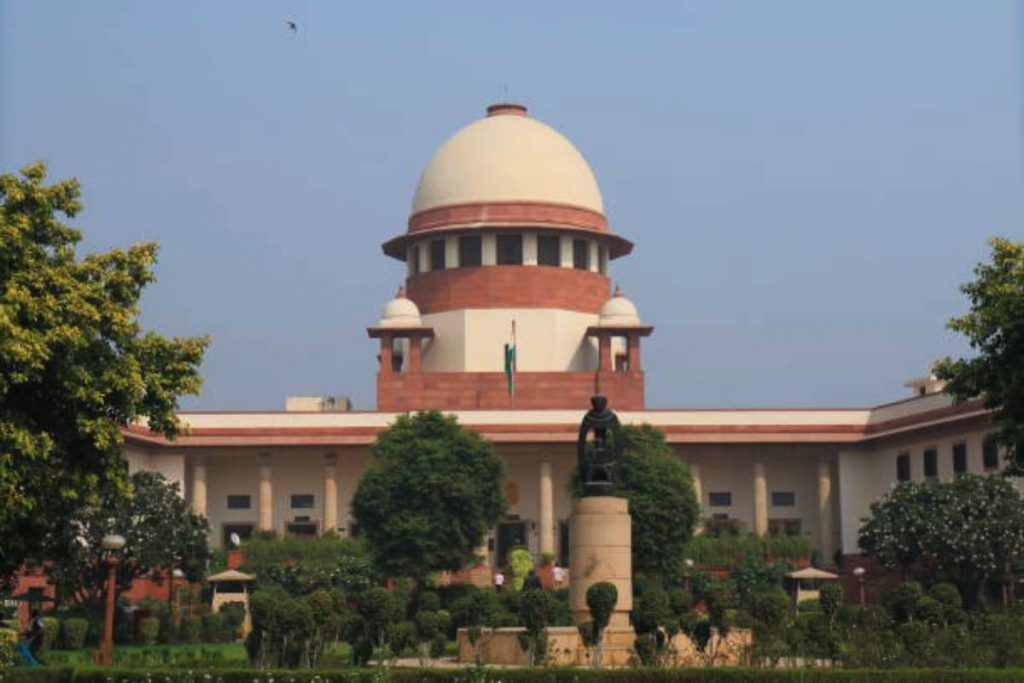
Parmod Kumar | SNS  |  New Delhi | May 9, 2024 : he Supreme Court on Wednesday reserved its judgment on the West Bengal government’s plea challenging the Central Bureau of Investigation undertaking investigation into the cases in the state without its statutorily mandated prior consent, as state government asserted that such a situation would be in derogation of the federal nature of Centre-State relationship under Indian constitution.

Reserving the judgment, a Bench of Justice B R Gavai and Justice Sandeep Mehta gave both – the petitioner West Bengal government and the central government time till Friday, 17 May, to file note of their respective submissions not more than 20 to 25 pages each. Giving time till 17 May to file written submissions, the Bench said that they would be writing the judgment during a seven week-long summer vacation of the top court starting from 20 May.

While the West Bengal government asserted that the Central Bureau of Investigation cannot register cases and undertake any investigation in the State without its prior nod, after it has already withdrawn its general consent since 16 November, 2018, the central government reiterated that the central investigating agency was an independent of its control and was not functioning under its control and supervision.

By its 16 November decision, the West Bengal government has withdrawn its general consent permitting the CBI to undertake any investigation in the state.

The Solicitor General, Tushar Mehta appearing for the central government said that its (central government) presence in the CBI was limited to the transfer, posting, territorial jurisdiction – areas it can investigate – and the finances of the agency including emoluments. As far as registration of cases and their investigation was concerned, the agency was an autonomous and independent entity.

On a poser from the Bench as to under which ministry the CBI comes, the Solicitor General Mehta said that it could be the department of personnel & training (DoPT) or the ministry of home affairs. However, the Solicitor General said that the government cannot ask the CBI to register cases.

The stand taken by the Central government today was the reiteration of the position stated by it in the course of its submissions on 3 May and earlier in its affidavit in response to West Bengal government’s petition.

However, an attempt by the Solicitor General Mehta drawing a parallel between the independence enjoyed by the CBI with that of the independence of the judiciary was not accepted by the Court. The bench said any comparison of independence of CBI with that of judiciary is an “incorrect analogy”.

Appearing for the West Bengal government, senior advocate Kapil Sibal told the Bench that after the state government withdrew its general consent to the CBI to probe cases in the state, the central agency could not have undertaken any investigation in the State without prior consent of the state government.

“The West Bengal government had withdrawn the consent on 16 November, 2018. The cases registered by the CBI, which are under the challenge, after the withdrawal of the consent” could not be investigated, Sibal told the Bench pointing out that, “The constitutional question is whether after the withdrawal of the consent, can you (central government) allow your agency to enters my State, without my consent.”

He further argued that when in parliament a question is asked about the CBI, it is the DoPT under the Prime Minister that answers the questions.

Assailing the Centre’s stand that CBI can register cases on its own, Sibal said, “That is the most dangerous proposition that the Centre has advanced before the court, which will be destructive of the federal nature of the Centre-State relationship.”

Sibal cited the instance of “CBI registering a case in a state without its prior nod and the same is challenged and by the time the matter is decided it would take 4 to 5 years and by then the trial in the case would be over.”

The West Bengal government in its suit has challenged the registration of cases by the CBI without its consent. It has referred to the provisions of the Delhi Special Police Establishment Act 1946, stating that the CBI is mandated under the statute to take the State government’s consent before registering cases.

Delhi High Court asks Google, Microsoft to seek Delhi High Court asks Google, Microsoft to seek review of ruling on removal of non-consensual intimate images

They said the search engines do not ‘host’ any content, and once an objectionable content has been removed from the site hosting it, it will not appear in search results as well

PTI, New Delhi, 09.05.24 : The Delhi High Court on Monday asked Microsoft, which owns ‘Bing’, and Google to seek a review of an order by a single judge directing them to identify and de-index non-consensual intimate images without requesting for their specific URLs, after the search engine giants filed an appeal against the ruling.

The senior counsel for the appellants said unlike in cases of child sexual abuse material, non-consensual intimate images cannot be detected by their current technology and therefore it was not possible for them to comply with the order passed by the single judge in April 2023.
Their senior lawyers assured the court a new technology is being developed but it has not yet reached a stage where it can detect such non-consensual content on its own.

They said the search engines do not “host” any content, and once an objectionable content has been removed from the site hosting it, it will not appear in search results as well.

Stating that “no one can ask you to do the impossible”, a bench headed by Acting Chief Justice Manmohan asked them to approach the single judge to reconsider his directions.

“Keeping view of the aforesaid, it would be appropriate if the appellants file a review and bring the aforesaid facts to the notice of the single judge. In the event the appellants are aggrieved by order of the single judge in the review petition, the appellants shall be at liberty to revive the present appeals,” the bench, also comprising Justice Manmeet PS Arora, said.

As the senior counsel for Google sought sought an assurance that no coercive action would be taken against them for non-compliance with the single judge’s directions, the court observed no such action has been taken till now.

In an order passed on April 26, 2023, the single judge had said it was the responsibility of the search engines to immediately cease access to any offending content and the victim cannot be made to face humiliation or harassment by having to approach the authorities again seeking the same relief.

The ruling came on a petition by a woman who sought blocking of certain sites exhibiting her intimate images.

The single judge had stated “Non-Consensual Intimate Images (NCII) abuse” , which includes “revenge porn”, violates the right to privacy and causes psychological damage to the victim.

The single judge had asserted that search engines were obligated to observe due diligence while discharging their duties under Rule 3 of the IT Rules, including making reasonable efforts to prevent hosting, displaying, uploading or sharing of any information that is invasive of another person’s privacy and violates any law for the time being in force, or they will lose the protection from liability accorded to them under Section 79 of the IT Act.

“If information is relating to content which is prima facie in the nature of any (NCII) material.., the search engine is required to take all reasonable and practicable measures to remove or disable access to such content which is hosted, stored, published or transmitted by it,” the single judge had said.

“The time-frame as stipulated under Rule 3 of the IT Rules must be strictly followed without any exceptions, and if there is even minor deviation from the said time-frame, then the protection from liability accorded to a search engine under Section 79 of the IT Rules cannot be invoked by the search engine,” the single judge bench had stated.

ED in SC opposes interim bail to Delhi CM Arvind Kejriwal, says electioneering not fundamental right

It is relevant to note that the right to campaign for an election is neither a fundamental right nor a constitutional right and not even a legal right: ED
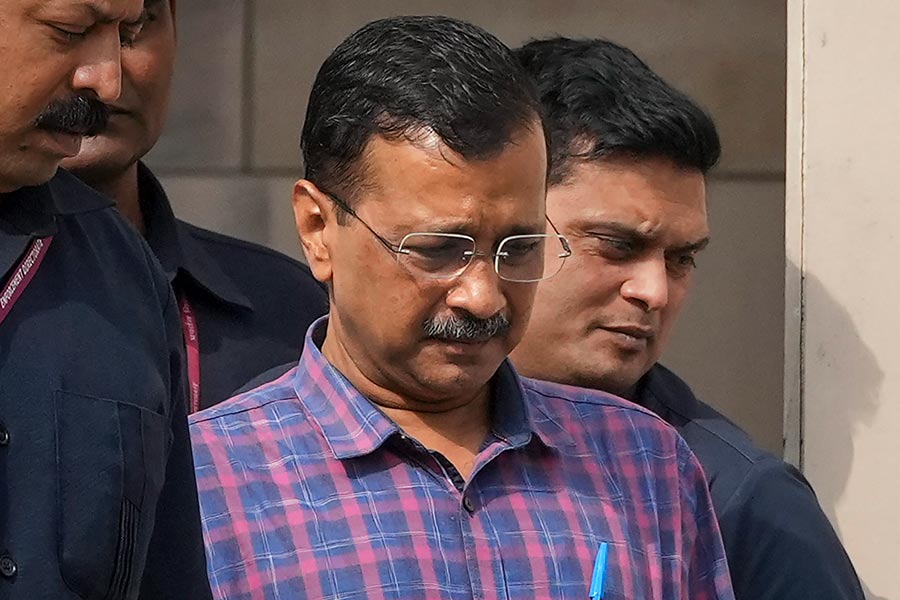
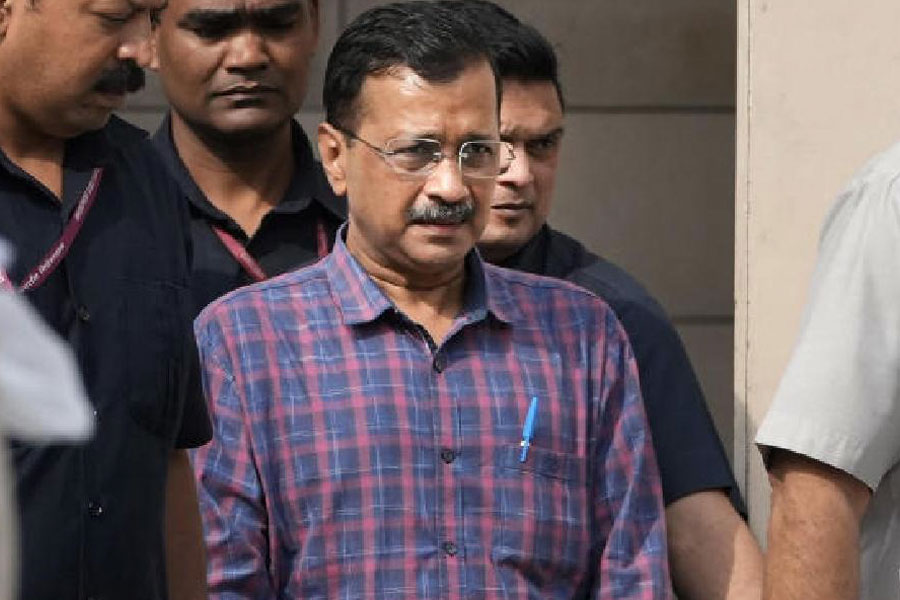
Arvind Kejriwal : File photo

PTI, New Delhi, 09.05.24 : The Enforcement Directorate (ED) on Thursday opposed in the Supreme Court the grant of interim bail to Delhi Chief Minister Arvind Kejriwal in a money-laundering case linked to the alleged excise policy scam, saying the right to campaign in elections is neither fundamental nor constitutional.

In a fresh affidavit filed in the top court, the ED said no political leader has ever been granted interim bail for campaigning even if he is not contesting polls.
“It is relevant to note that the right to campaign for an election is neither a fundamental right nor a constitutional right and not even a legal right,” the agency said. It added that to its knowledge, “no political leader has been granted interim bail for campaigning even though he is not the contesting candidate. Even a contesting candidate is not granted interim bail if he is in custody for his own campaigning”.

On Wednesday, Justice Sanjiv Khanna, who headed the bench that heard Kejriwal’s petition against his arrest in the case, said, “We will pronounce the interim order (on bail) on Friday. The main matter related to the challenge to arrest will also be taken up on the same day.” The Aam Aadmi Party (AAP) leader was arrested on March 21 and is currently lodged in Tihar Jail under judicial custody.

On May 7, the bench, also comprising Justice Dipankar Datta, had reserved its verdict on Kejriwal’s interim bail plea.

On Tuesday, a Delhi court extended Kejriwal’s judicial custody in the case till May 20.

The Delhi High Court had, on April 9, upheld the AAP leader’s arrest, saying there was no illegality and the ED was left with “little option” after he skipped repeated summonses and refused to join the investigation.

The matter relates to alleged corruption and money laundering in the formulation and execution of the Delhi government’s now-scrapped excise policy for 2021-22.

Phase 3 records 77.53% voter turnout in 4 LS seats in state

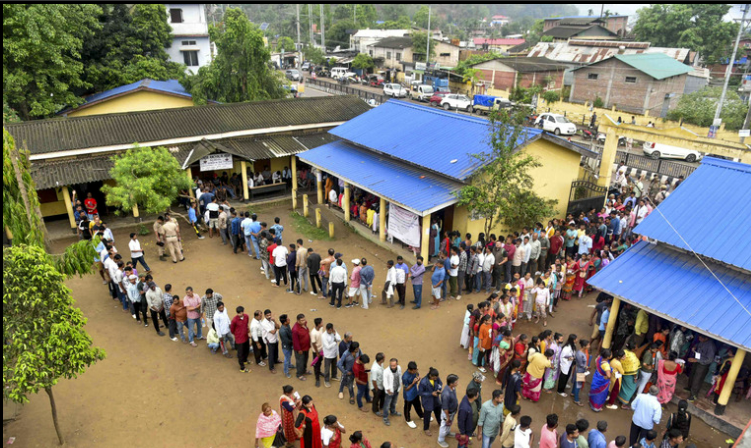
MP, 9 May 2024, Kolkata: The four Parliamentary constituencies in Bengal that went for polls on Tuesday in the third phase of elections, witnessed the lowest voter turnout in the last four decades. 

The four constituencies that had consistently witnessed 80 per cent turnout recorded 77.53 per cent voting, with the only saving grace being Murshidabad that saw over 80 per cent polls. Considering the last two Lok Sabha elections, there has been a decline of nearly four per cent. In 2019 and 2014, the four constituencies saw an average voter turnout of 81.66 and 81.85 per cent, respectively. 
Murshidabad, historically known for high voter participation, recorded 81.52 per cent in this election making it the lowest ever turnout in the last 40 years. In the 1980 Lok Sabha polls, Murshidabad recorded a turnout of 80.31 per cent, which is less than the current polling percentage.
Similarly, Jangipur registered a turnout of only 73.71 per cent, its lowest since 1977 when it was 58.07 percent. In Malda district, comprising Malda South and Malda North constituencies, the voter turnout was also low with Malda South recording 76.69 per cent and Malda North at 76.03 per cent. 
Prior to this, the district only saw a turnout of 75.54 per cent in 1980, which is lower than the current turnout. Interestingly, before the delimitation in 2004, Malda was only one constituency, which was subsequently divided into Malda South and Malda North. 
“The installation of CCTV cameras in all the polling stations and the strategic deployment of Central Forces have contributed significantly in keeping away the unwanted elements from the election process. We have also taken suitable measures for corrections in the voters list that resulted in weeding out fake voters from the list. This may have contributed to this turnout.  However, considering the other constituencies in the country that went for polls, our polling has been satisfactory,” an official in the office of Bengal CEO (Chief Electoral Officer) said. He added that there was hardly any complaint of false voting in this election. The genuine voters only exercised their franchise. 
A section of political analysts however believe that absentee voters and public apathy toward engaging in the democratic process, possibly due to widespread political corruption in recent months, may have significantly contributed to the low voter turnout in this election. 
https://www.millenniumpost.in/bengal/phase-3-records-7753-voter-turnout-in-4-ls-seats-in-state-563034

NH 10 opens today after 3 days closure and carpeting

KalimNews, Kalimpong, 9 May 2024 : After 3 days of closure NH 10 from Rabi Jhora to 29th Mile opened today from 6 am. Normal traffic is plying in this highway. The road was closed for some repairing work and bituminous work. 

Earlier Balasubramanian T, District Magistrate of Kalimpong had notified that the said highway from Rabi Jhora to 29th Mile shall be closed from 6th May for 72 hours for carrying out bituminous work. 

His earlier order stated that a prayer has been received from the Executive Engineer II, National Highway, Division IX, P.W (Roads) requesting restriction and diversion of movement of all type of vehicles to carry out bituminous work at the stretch between Rabi bora to Gail Khola along NH 10. Therefore the administration finds it necessary to impose temporary restriction for movement of all type of vehicles to carry out the said bituminous work at the stretch between Rabi bora to Gail Khola along NH 10 to be carried on by PWD, National Highway, Division IX, P.W (Roads). 

There was protest from the drivers for closure of the highway as normal traffic on NH 10 was closed for several times and they had to follow the restriction of movement for all types of vehicles in the NH 10 specially from Rabi Jhora to 29th Mile.  

The alternative route allowed to were diversion routes for small vehicles to move from Rangpoo towards Siliguri via Munsong – 17’1′ Mile – Algarah – Lava -Gorubathan and to Siliguri and vice versa round the clock. 

For small vehicles was from Chitrey – Kalimpong town Algarah – Lava – Gorubathan and to Siliguri and vice versa round the clock. 

For goods Vehicle was from Chitrey – Kalimpong town Algarah – Lava – Gorubathan and to Siliguri and vice versa from 21.00 hrs to 06.00 hrs. 
And for goods vehicle and small vehicles from Reshi – Pedong – Algarah – Lava – Gorubathan and to Siliguri and vice versa round the clock. 

American nationals apprehended at Border with fake Aadhar card

Photo Source & courtesy : Siliguri Times

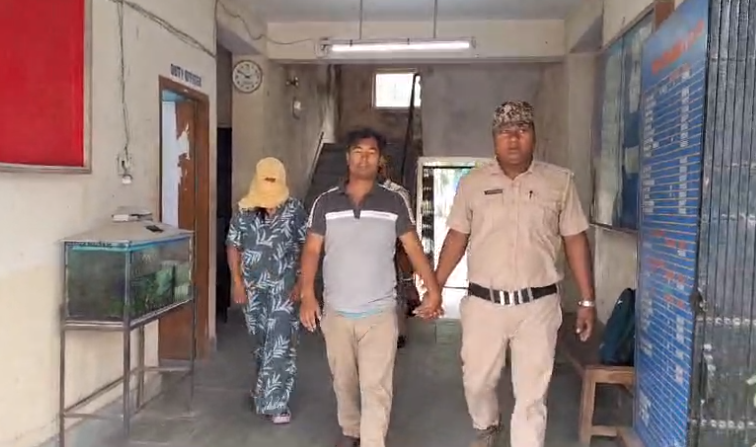
PRASHANT ACHARYA, EOI, SILIGURI, MAY 8, 2024 : SSB’s 41 battalion on Tuesday afternoon apprehended two American nationals along with an Indian while they were entering India from Nepal via Panitanki border outpost. 

The arrested were identified as Naina Kala Poudel and Younis Biswakarma, both US national and Nima Poudel, a resident of Kalchini under Alipurduar district. 
According to SSB sources, Naina Kala Poudel (40) resident of English Drive in US along with her niece Eunice Biswa (11) of New York City came to India from America and landed at Bagdogra airport on March 19 this year. 
The two US citizens and the Indian were arrested with fake Aadhaar at Kharibari Indo-Nepal border.  
KalimNews: Siliguri Times reports that According to reports, the incident unfolded after Neena and Nima Tamang engaged in holy matrimony on April 13 in India, following which they embarked on a honeymoon trip to Nepal on April 21. 
However, their return journey encountered a setback when they were intercepted by Sashastra Seema Bal (SSB) personnel at the border checkpoint. Sources within the SSB revealed that the trio attempted to enter India using counterfeit Aadhaar cards, raising suspicion among border security officials. 
Siluri Time further adds that  Upon investigation, it was revealed that the American nationals paid ₹10,000 in Hamiltonganj of Alipurduar for the making of the counterfeit aadhaar cards and left for Nepal. Subsequently, they were arrested at the Indo-Nepal border. Following their apprehension, the SSB handed over the individuals to Kharibari police for further legal proceedings. At present, the case has been forwarded to the Siliguri Sub-Divisional Court while the matter is under further investigation.  (source: https://siliguritimes.com/two-american-citizens-arrested-at-indo-nepal-border-with-fake-aadhaar-cards-in-kharibari/)

Smugglers shot dead in Phansidewa

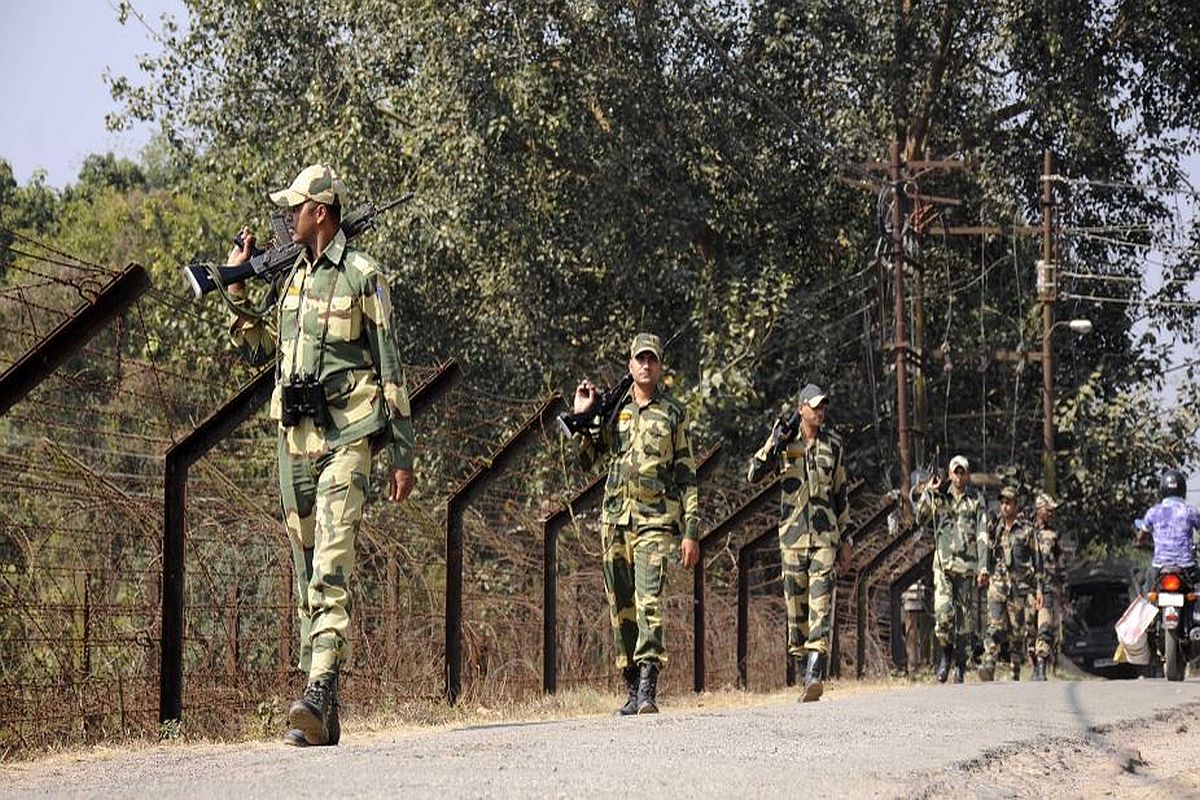
EOI, SILIGURI, MAY 8, 2024 : Two suspected smugglers were killed in BSF firing on the India-Bangladesh border under Phansidewa in Darjeeling district. Iftikar-ul Hasan, OC Phansidewa police station along with BSF officers visited the spot to enquire into the incident.

According to Sujoy Kumar Roy, officer-in-charge of Tetuloa Model police station in Bangladesh the dead bodies were that of Abdul Jalil (24) and Yasin Ali (23)both residents under Bagduria district of Bangladesh., Quoting their families and neighbours, 
Roy said that BSF personnel opened fire when the t
wo tried to bring in cows illegally from India. (

Supreme Court to pass order on interim bail to Arvind Kejriwal on May 10

We will pronounce the interim order (on interim bail) on Friday. The main matter related to the challenge to arrest will also be taken on the same day, says Justice Sanjiv Khanna
Arvind Kejriwal File picture

PTI, New Delhi, 08.05.24 : The Supreme Court will deliver its order on granting interim bail to Delhi Chief Minister Arvind Kejriwal in a money laundering case linked to the alleged excise policy scam on May 10.

Justice Sanjiv Khanna, who headed the bench which heard Kejriwal’s petition against his arrest in the case, said, “We will pronounce the interim order (on interim bail) on Friday. The main matter related to the challenge to arrest will also be taken on the same day.” Justice Khanna, who was sitting in a different combination with Justices MM Sundresh and Bela M Trivedi, made the remark after Additional Solicitor General SV Raju, who was appearing for the Centre in a matter related to Goods and Services Tax, sought clarification on the listing of Kejriwal’s plea.

The Aam Aadmi Party (AAP) leader was arrested on March 21 and is currently lodged in Tihar Jail under judicial custody.

On May 7, the bench, also comprising Justice Dipankar Datta, had reserved its verdict on interim bail to Kejriwal.

The two-judge bench had risen without pronouncing order on granting Kejriwal interim bail to enable him to campaign in the Lok Sabha elections.

The bench had reserved its decision after hearing the arguments put forth by senior advocate Abhishek Singhvi and Additional Solicitor General S V Raju, who appeared for Kejriwal and the Enforcement Directorate, respectively.

Solicitor General Tushar Mehta, who also appeared for the probe agency, had staunchly opposed showing any leniency to Kejriwal on account of the Lok Sabha polls and said granting interim bail to the AAP national convenor would amount to creating a separate class for politicians.

The bench has divided the hearing on Kejriwal’s petition against his arrest into two parts.

His main petition challenges his arrest by the ED and seeks it to be declared as illegal, while the second aspect pertains to grant of interim bail keeping in mind the ongoing Lok Sabha polls.

The court reserved the order on the issue of grant of interim bail.

On Tuesday, a Delhi court has extended Kejriwal’s judicial custody in the money laundering case till May 20.

The Delhi High Court had on April 9 upheld Kejriwal’s arrest, saying there was no illegality and the ED was left with “little option” after he skipped repeated summonses and refused to join the investigation.

The matter relates to alleged corruption and money laundering in the formulation and execution of the Delhi government’s now-scrapped excise policy for 2021-22.

J P Nadda, Amit Malviya summoned by Bengaluru police over social media post

 For the purpose of investigation of the said case, you are hereby directed to appear before the undersigned investigation officer at 11 am at High grounds police station within seven days of receipt of this notice, read the summons
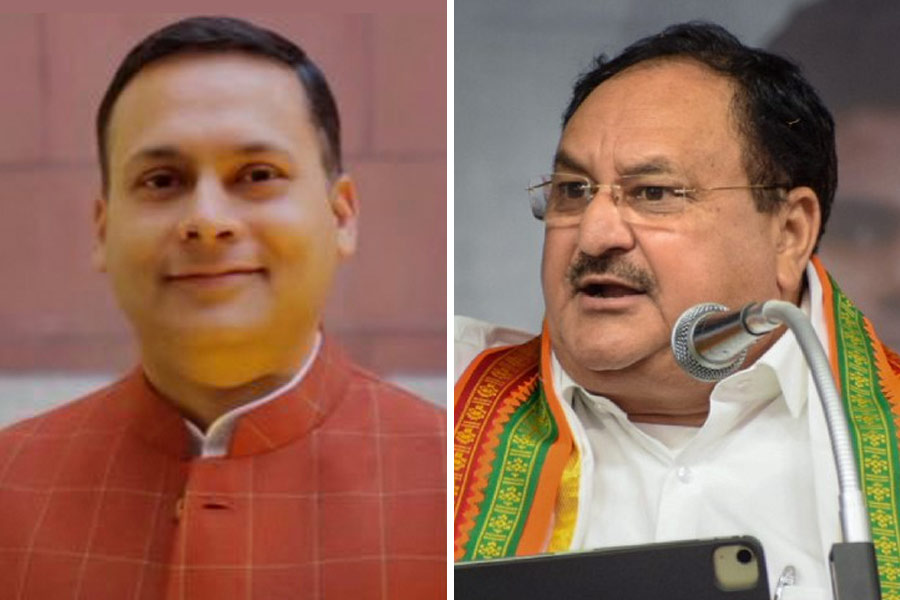
BJP’s IT cell head Amit Malviya and BJP President J P Nadda, File picture.

PTI, Bengaluru, 08.05.24 : Bengaluru Police has summoned BJP President J P Nadda and the party’s IT cell head Amit Malviya in connection with a social media post allegedly intimidating members of SC and ST community not to vote for a particular candidate, officials said on Wednesday.

They have been asked to join the probe at the High grounds police station here.

“For the purpose of investigation of the said case, you are hereby directed to appear before the undersigned investigation officer at 11 am at High grounds police station within seven days of receipt of this notice,” the summons read.

The move comes after an FIR was registered against Nadda, Malviya and BJP’s Karnataka unit chief B Y Vijayendra in connection with a social media following a complaint filed by the Karnataka Pradesh Congress Committee (KPCC) with the Election Commission and police on May 5 alleging violation of model code of conduct.

They were booked under sections of Representation of People Act and section 505 (2) (Statements creating or promoting enmity, hatred or ill-will between classes) of the Indian Penal Code, a senior police officer said.

In the complaint, the KPCC cited the video uploaded on social media platform ‘X’ by the official account of Karnataka State BJP which, it alleged, is operated by Malviya, on instructions of Nadda and Vijayendra, BJP State President and Social Media incharge- Karnataka BJP, on May 4.

“The said video posted on social media featured animated characters of (Congress leader) Rahul Gandhi and (Chief Minister) Siddaramaiah. In the clip, SC, ST and OBC community are portrayed as “eggs” in a nest and it also suggested Rahul Gandhi planting a big egg labelled as Muslim community. It is projected as though funds are being fed to the chick depicting the Muslim community, which then kicks out SC, ST and OBC community,” it alleged.

“The act of the accused person (s) is to wantonly provoke rioting and promote enmity between different religions and is prejudicial to maintenance of harmony apart from intimidating members of SC/ST community not to vote for particular candidate and causing enmity against members of SC/ST community,” the complaint alleged.

Nepalese national held with carcasses of wild animals

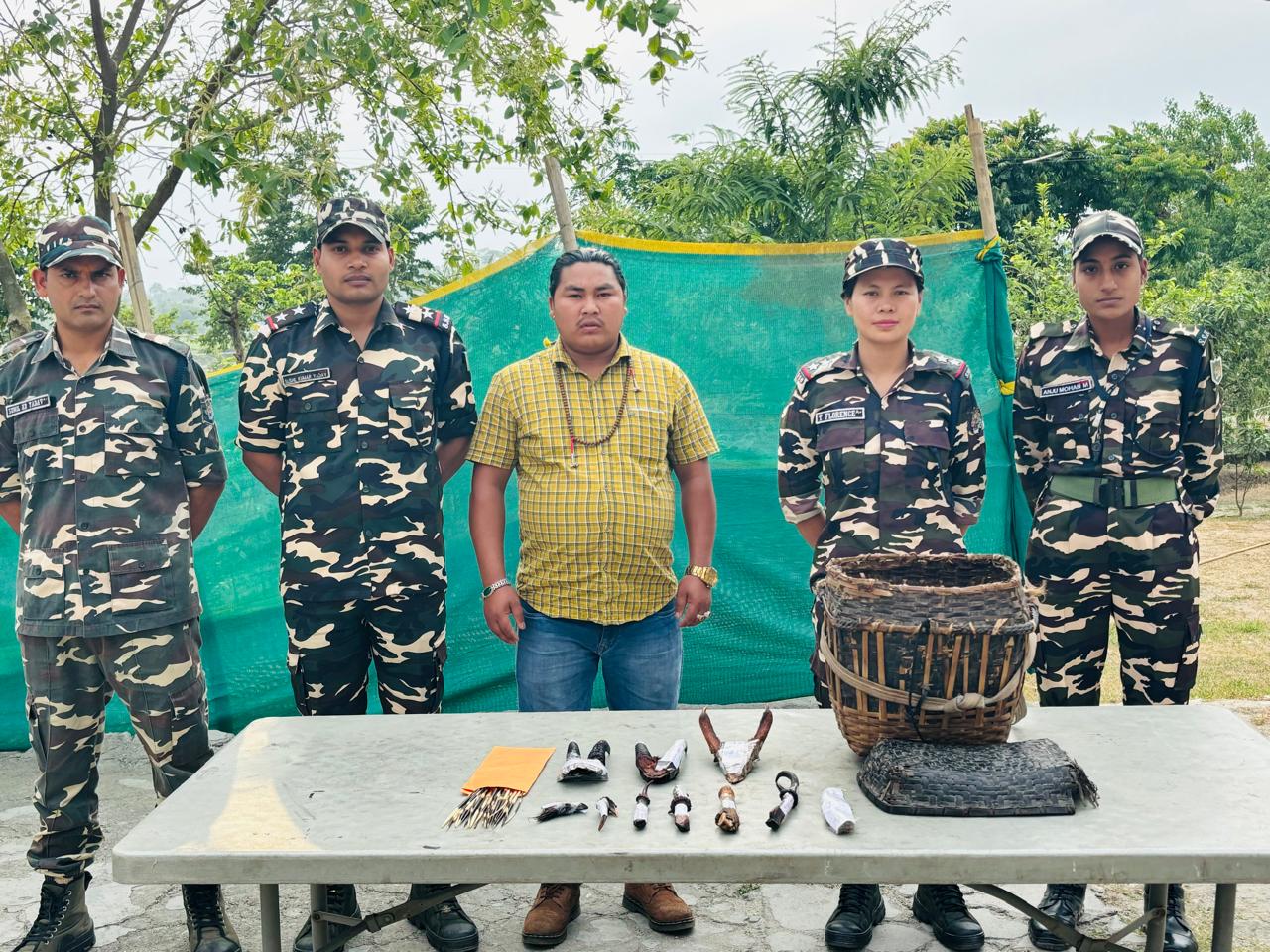
Photo Courtesy: Siliguri TimesMP,8 May 2024, Siliguri: A Nepalese national was arrested with several body parts of wild animals in the Panitanki area on the India-Nepal border in Kharibari on Monday night. The accused has been identified as Dambar Sapkota (29), a resident of Nepal.

According to sources, on Monday night, the 41 number battalion of SSB conducted a naka check at the Indo-Nepal Border, where they stopped a four-wheeler. While checking the vehicle, the jawans recovered 5 deer horns, 30 pieces of thorn, a deer skull, snake bone and horn of Himalayan Goral. 
The arrested was later handed over to Tukriajhar Forest department. Sources said that the accused was taking them from Sikkim to Nepal but before he entered Nepal, the SSB caught him. 
The accused was produced at Siliguri Court on Tuesday and has been taken in remand. Debesh Pandey, Divisional Forest Officer of Kurseong Wildlife Division said: “We are investigating whether the accused is involved in international wildlife trafficking or if anyone else is involved in the case.” 
https://www.millenniumpost.in/bengal/nepalese-natl-held-with-carcasses-of-wild-animals-562885?infinitescroll=1

ED recovers huge cash from domestic help allegedly linked to Jharkhand minister’s secy

The premises are alleged to be of the domestic help of Jharkhand Rural Development Minister Alamgir Alam’s personal secretary Sanjiv Lal
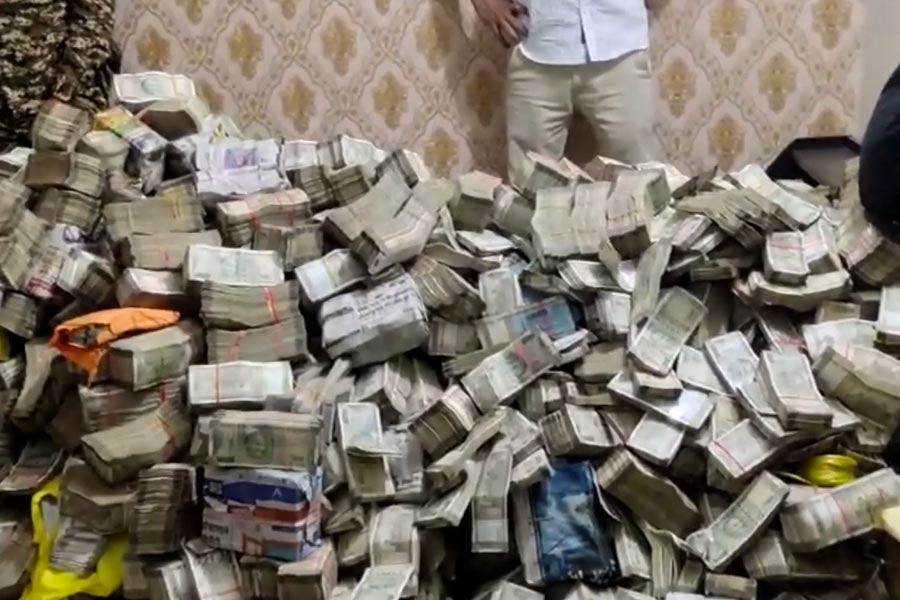
A huge amount of “unaccounted” cash which was recovered by the Enforcement Directorate from premises of Sanjiv Lal, allegedly an aide of Jharkhand minister Alamgir Alam, in Ranchi, Monday, May 6, 2024.: PTI

PTI,  Ranchi, 06.05.24 : 

 The Enforcement Directorate on Monday claimed to have recovered a huge amount of “unaccounted” cash during searches at the premises of a domestic help allegedly linked to the secretary of Jharkhand minister Alamgir Alam, official sources said.

Videos and photos shared by the sources showed officials of the central probe agency taking out wads of currency notes from large bags in a room located in a building at Gadikhana Chowk.

Some central force security personnel were also seen.

A domestic help of Jharkhand Rural Development Minister Alam’s personal secretary Sanjiv Lal is alleged to be residing at this location.

When contacted by PTI, Alam said, “I have no official information regarding this so far.” “I have been watching TV and it says the premises are linked to the official PS (private secretary) provided to me by the government,” he added.

ED sources said the note-counting machines have been deployed to count the cash to ascertain the exact amount which could range between Rs 20-30 crore.

The cash is largely in the denomination of Rs 500 and some jewellery has also been recovered, the sources said.

Alam (70), is a Congress leader and represents the Pakur seat in the Jharkhand assembly.

The searches are linked to a money laundering case against the former chief engineer of the rural development department, Veerendra Kumar Ram, who was arrested by the ED last year.

“Veerendra Kumar Ram, posted as chief engineer in the Rural Works Department in Ranchi, had generated proceeds of crime in the name of commission from contractors in lieu of allotment of tenders to them,” the agency had alleged in a statement issued last year in April after it attached assets worth Rs 39 crore of the officer.

“The proceeds of crime thus generated were used by Veerendra Kumar Ram and his family members to live a very lavish lifestyle,” it said.

The money laundering case against Ram stems from a complaint of the Jharkhand anti-corruption bureau (ACB). 

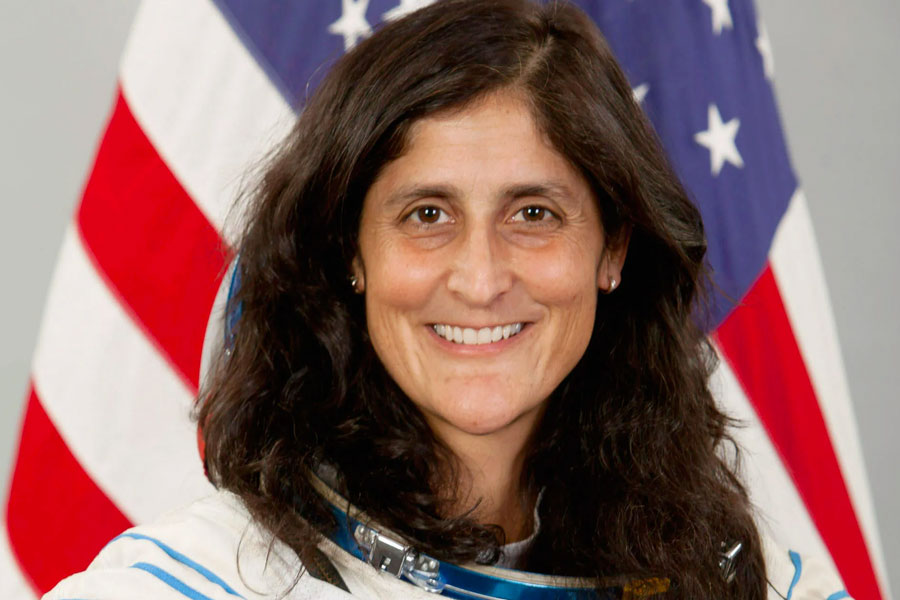
Indian-origin astronaut Sunita Williams set to fly into space for a third time on May 7

Starliner will carry Williams, 58, and Butch Wilmore to the International Space Station, marking what could be a momentous and long-awaited victory for the beleaguered Boeing programmeSunit,  Williams : File 

PTI, Washington, 06.05.24, : Indian-origin astronaut Sunita Williams is ready to fly into space for the third time on Tuesday as the pilot aboard Boeing’s Starliner spacecraft in its the first crewed test flight.

Boeing’s Starliner will blast off for the International Space Station from Cape Canaveral in Florida.

Starliner will carry Williams, 58, and Butch Wilmore to the International Space Station, marking what could be a momentous and long-awaited victory for the beleaguered Boeing programme.

The scheduled lift-off is set for 22:34 local time on Monday (8:04  am IST on Tuesday) “We are all here because we are all ready. Our friends and family have heard about it and we’ve talked about it and they are happy and proud that we are part of the process to fix it all,” the BBC quoted Williams as saying The mission has been delayed for several years because of setbacks in the spacecraft’s development.

If it is successful, it will become the second private firm able to provide crew transport to and from the ISS, alongside Elon Musk’s SpaceX.

Such a scenario — with both SpaceX’s Crew Dragon and Starliner flying regularly — is one for which the US space agency has long waited.

“Design and development is hard — particularly with a human space vehicle,” said Mark Nappi, vice president and Starliner programme manager at Boeing, during a Thursday news briefing.

“There’s a number of things that were surprises along the way that we had to overcome. … It certainly made the team very, very strong. I’m very proud of how they’ve overcome every single issue that we’ve encountered and gotten us to this point,” Nappi said.

“This is history in the making,” NASA Administrator Bill Nelson said of the upcoming Starliner mission during a March 22 news conference. “We’re now in the golden era of space exploration.” SpaceX and Boeing developed their respective vehicles under NASA’s Commercial Crew Programme, a partnership with private industry contractors. From the outset, the space agency aimed to have both companies operating at once. The Crew Dragon and Starliner spacecraft would each serve as a backup to the other, giving astronauts the option to keep flying, even if technical issues or other setbacks grounded one spacecraft.

Williams received her commission as an Ensign in the United States Navy from the United States Naval Academy in May 1987.

Williams was selected as an astronaut by NASA in 1998 and is a veteran of two space missions, Expeditions 14/15 and 32/33.

She served as a flight engineer on Expedition 32 and then commander of Expedition 33.

During her first spaceflight, Expedition 14/15, Williams was launched with the crew of STS-116 on December 9, 2006, docking with the International Space Station on December 11, 2006. While onboard, she established a world record for females with four spacewalks totalling 29 hours and 17 minutes. Astronaut Peggy Whitson subsequently broke the record in 2008 with a total of five spacewalks.

On Expedition 32/33, Williams was launched from the Baikonur Cosmodrome in Kazakhstan, along with Russian Soyuz commander Yuri Malenchenko and Flight Engineer Akihiko Hoshide of the Japan Aerospace Exploration Agency, on July 14, 2012.

Williams spent four months conducting research and exploration aboard the orbiting laboratory.

She landed in Kazakhstan on November 18, 2012, after spending 127 days in space.

During their Expedition, Williams and Hoshide performed three spacewalks to replace a component that relays power from the space station’s solar arrays to its systems and repair an ammonia leak on a station radiator. With 50 hours and 40 minutes, Williams once again held the record for total cumulative spacewalk time by a female astronaut. The record has since been overtaken by Peggy Whitson. Williams has spent a cumulative total of 322 days in space.

Williams was born in Euclid, Ohio, to Indian-American neuroanatomist Deepak Pandya and Slovene-American Ursuline Bonnie (Zalokar) Pandya.

She holds a physical science degree from the US Naval Academy and a Master of Science in Engineering Management from Florida Institute of Technology.

14-year-old girl in Chhattisgarh kills elder brother for stopping her from using mobile phone

Rajnandgaon, May 5 (PTI) A 14-year-old girl allegedly hacked her elder brother to death with an axe after he scolded her for talking to boys on mobile phone in Chhattisgarh’s Khairagarh-Chhuikhadan-Gandai district, police said.

The teenager has been detained for the offence that took place at Amlidihkala village under Chhuikhadan police station limits on Friday, the police said in a statement on Saturday.


The girl told the police that she and her brother (18) were at home at the time of the incident while the other family members had gone out for work.


Her brother reprimanded her claiming she talked to boys on mobile phone, and asked her not to use the phone anymore.


Angry over the rebuke, the girl allegedly hit her brother on his throat with an axe when he had fallen asleep. Her brother died on the spot, police said.


The girl then had a bath and cleaned the blood stains on her clothes before telling neighbours that her brother had been murdered.


After being alerted by villagers, a police team reached the spot and launched an investigation into the incident.


During questioning by police, the girl admitted to have killed him, the statement said.


A case was registered and further investigation was underway.

Record-breaking election spending set to ignite rural demand, feel experts

PTI, Kolkata: Even as the 2024 Lok Sabha polls have started to unfold, anticipation remained high not only in the political landscape but also about the ripple effects on the economy, particularly in rural India, as experts described the elections as the most expensive one ever fought in the country’s history. 


With an expenditure of a staggering Rs 1.35 lakh crore estimated by N Bhaskara Rao, who chairs the Centre for Media Studies and has been tracking election spending for 35 years, significant parts of the amount spent during the polls will reach the pockets of India’s rural population boosting sales, business houses feel.

According to a study, about 35 per cent of election expenditure in the 2019 Lok Sabha elections in India was made on campaigns and publicity. 

The second highest expenditure head was payments to voters via various means – hiring workers, purchasing campaign materials, freebies and direct cash transfers in some cases. Industry leaders expect these will have a positive impact on the economy, especially in India’s countryside
He said his company aims to leverage this opportunity by monitoring rural market dynamics and adapting its product offerings and marketing strategies to align with the evolving preferences and needs of rural consumers. 

“The company also plans to intensify its efforts to expand its distribution network and enhance brand visibility in rural areas to capture a larger share of the anticipated post-election market growth,” Bhajanka said. Shreeram Bagla, Managing Director of city-based snacks major Annapurna Swadisht, highlighted that rural demand for the FMCG sector as a whole had been slightly subdued during the second and third quarters of the 2023-24 fiscal.

“We are expecting a steady recovery in demand in the rural and semi-urban markets in the wake of higher spending on election-related expenses. The government seems to be laying a major thrust on boosting the rural economy. This is likely to spur consumption in villages, thereby shoring up the demand for FMCG products,” Bagla noted. Emami Ltd, another FMCG major with considerable rural dependence, also expressed a positive outlook. 

“We expect the economy to bounce back on multiple counts in the backdrop of the election. First, anticipation of a good monsoon is expected to boost the rural economy. Secondly, with the softening of raw material prices, while companies are gearing up to pass on the benefits to the consumers, they will also invest more in brand building. The combination of these will definitely push the demand for the FMCG sector up,” Emami Wholetime Director & Vice Chairman, Mohan Goenka, told PTI.

Amnish Aggarwal, head of Institutional Research at Prabhudas Lilladher, while offering a nuanced perspective, pointed out that in present circumstances election spending may not be boosting rural demand in the manner it did before. Reflecting on the trends observed in past elections, Aggarwal underscored that the correlation between poll expenditure translating into a surge in rural demand is over-hyped in current times due to cash movement restrictions which are imposed with the model code of conduct. 

“This direct correlation was perhaps true a decade or more ago. Factors like the anticipation of a good monsoon and inflation play pivotal roles in shaping consumer behaviour in current times compared to cash flow during polls,” he said. 

Political parties, though, acknowledged that demand for vehicles goes up during poll seasons, whether sourced from rentals or new purchases for use in election activities. Automobile sales in March this year were up by 10 per cent over last year, totalling 3.7 lakh vehicles. However, a senior official of a major car company said that on account of model code of conduct-related restrictions, overall sales of both passenger and commercial vehicles were subdued in April. 

Grassroots-level workers of political parties said that there has been a high purchase of snacks and beverages and certain FMCG items required for workers. FMCG products are also used as freebies for audiences brought to political rallies, they said. 

A shopkeeper in Hooghly district stated, “Local political leaders become more generous during election times, and we sell more.” West Bengal’s Chief Electoral Officer confirmed that since the commencement of MCC, freebies worth Rs 57.67 crore have been seized from the state.