Category Archives: Health

Kalyani JNM Hospital Doctors Announce Mass Resignation Amid Ongoing Protests for Safety

Baby Chakraborty, KalimNews, October 13, 2024,  Kalyani :  In a significant development, 77 doctors from Kalyani JNM Hospital have decided to stage a ‘public resignation’ in solidarity with junior doctors currently on hunger strike. The doctors have formally communicated their decision to the hospital registrar via email, stating they will cease all medical duties starting Monday.


The mass resignation stems from growing concerns for both patient safety and the well-being of the junior doctors, who are facing severe health challenges as they continue their hunger strike. These junior doctors are advocating for a 10-point safety protocol to ensure better working conditions, particularly amid the ongoing festival season when patient inflow tends to rise.

In their email, the resigning doctors expressed that forcing medical staff to work under these conditions could lead to a crisis in patient care. “The mental state of our team is deteriorating, and it is becoming increasingly difficult to provide adequate treatment,” they stated, highlighting the urgency of their situation.

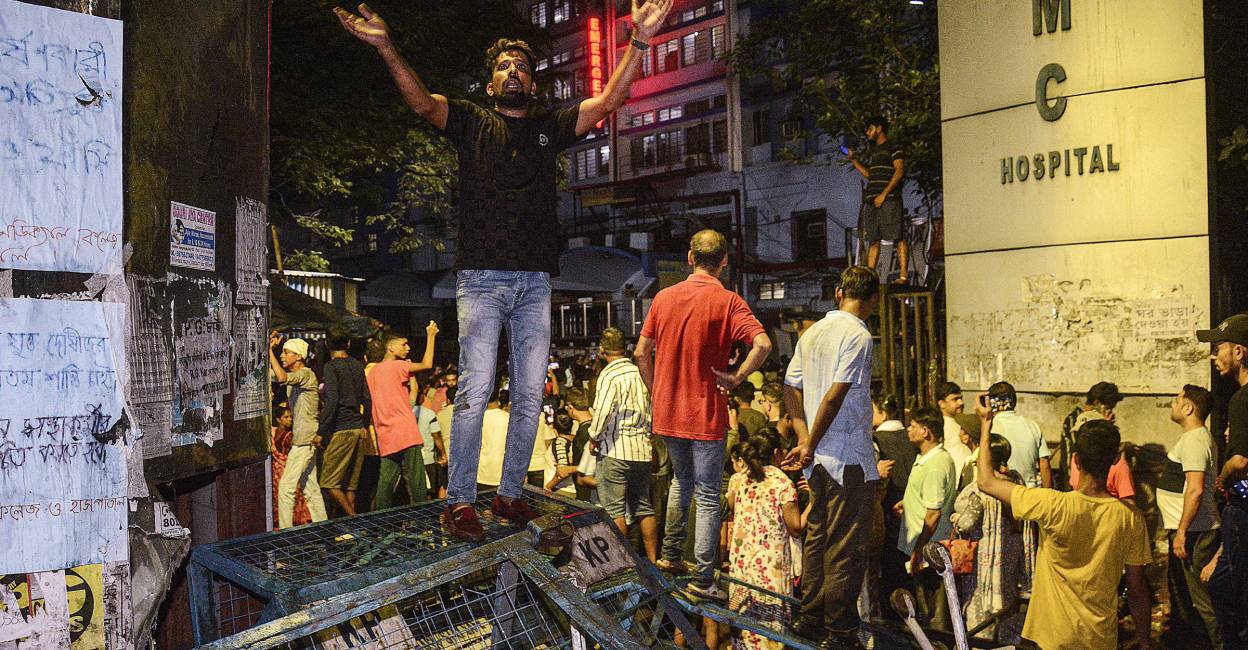
This public resignation follows a wave of similar actions from doctors at RG Kar, SSKM, and other hospitals, all rallying behind the junior doctors’ cause. Eight junior doctors are currently on hunger strike at Dharmatala, making a bold statement during this festive time to demand immediate attention from the government.

As the healthcare community stands united in their fight for safety and better working conditions, the situation at Kalyani JNM Hospital remains tense, with many now looking to the government for a swift resolution to these critical issues.

Mass Resignation: 50 Senior Doctors of RG Kar and Other Hospitals Resign in Support of Junior Doctors’ Movement

Baby Chakraborty, KalimNews, 

October 7, 2024, Kolkata  :  In a dramatic escalation of the ongoing medical crisis in West Bengal, 50 senior doctors from several prominent hospitals, including RG Kar Medical College and Hospital, have submitted their resignations in a show of solidarity with the junior doctors’ movement. The resigning doctors include heads of various departments, signaling a significant challenge to the state’s healthcare system.

Reports indicate that doctors from other major medical institutions, such as NRS Medical College and Hospital and SSKM Hospital, have also joined the growing protest. This mass resignation is seen as an unprecedented move by senior medical professionals to increase pressure on the state government in support of the junior doctors’ 10-point demand, which includes better working conditions and systemic reforms in the healthcare sector.

Escalating Crisis

The movement began with junior doctors staging a hunger strike at Dharmatala, demanding immediate action on their grievances. As of Monday, the number of junior doctors participating in the hunger strike has continued to grow. In a new development, 3-4 specialist doctors—referred to as “player doctors” for their leadership and influence in the medical community—joined the hunger strike, signaling that the protest is gaining momentum beyond the junior ranks.

Many of the senior doctors who have aligned themselves with the movement are former students of RG Kar Medical College Hospital, creating a powerful bond of solidarity between the two generations of medical professionals. They see the junior doctors’ struggle as a legitimate fight for better working conditions, patient safety, and reforms that would benefit both healthcare providers and recipients.

Relay Hunger Strike and Mass Resignation

On Monday night, the Joint Platform of Doctors, an organization representing senior medical professionals, announced in a press release their decision to initiate a relay fasting program. According to the statement, senior doctors will participate in this fasting program from 9 a.m. to 9 p.m. each day, in a rotating manner, to show continuous support for the junior doctors without completely abandoning their duties. However, this symbolic act of protest took a serious turn when 50 senior doctors submitted their resignations during the ongoing relay fast.

The mass resignation followed a meeting of department heads earlier that day. The decision was made collectively by the doctors as a way to further intensify pressure on the state government. Despite the resignations, the senior doctors have clarified that they will not abandon their patients. In their statement, they reassured the public that they will continue to provide care and services at the hospitals, even as their formal roles as state employees come to an end.

“We are resigning in protest, but we will remain with our patients. This movement is not against the people, but for a better healthcare system,” one of the senior doctors stated, underlining their commitment to patient care despite the dire circumstances.

Implications for the State’s Healthcare System

The mass resignation of senior doctors has triggered alarm across the state’s healthcare institutions. With the growing number of junior doctors on hunger strike and the absence of key senior medical staff, there is rising concern about the potential collapse of the state’s healthcare system if the situation is not resolved soon.

Several senior officials in the health department have expressed fears that the mass resignation could cripple the functioning of key hospitals, especially if the protest continues for an extended period. Emergency services and critical care units are already feeling the strain, and any further disruption could lead to severe consequences for patient care.

The state government, thus far, has not provided any official response to the mass resignation, but insiders suggest that high-level discussions are underway to find a resolution. The demands of the junior doctors, which range from better working hours to addressing patient safety concerns, have received widespread support from medical professionals and civil society groups, but negotiations with the state have yet to yield concrete results.

A Call for Urgent Resolution

As the protest continues to gain momentum and the healthcare system teeters on the brink of collapse, there are growing calls for urgent intervention from the state government. Many within the medical community are warning that if the government does not engage in meaningful dialogue with the protesting doctors, the situation could spiral into a full-blown healthcare crisis.

Meanwhile, the public remains on edge, as many patients and their families express concern about the availability of medical care in the days ahead. The doctors, both junior and senior, remain committed to their cause but have also reassured the public that their protest is aimed at improving the very system that serves the people.

With the situation hanging in the balance, the state now faces the dual challenge of addressing the doctors’ demands while maintaining the functionality of its healthcare infrastructure.

Junior Doctors’ Lawyer Voices Concern in Supreme Court: Influential Accused Still in Hospital

Baby Chakraborty, KalimNews, September 30, 2014, Kolkata:  In a significant development, junior doctors have raised their concerns in the Supreme Court regarding the delay in action against seven influential individuals accused in a case of financial corruption. Their lawyer, Indira Jaisingh, voiced the doctors’ frustrations, pointing out that despite the seriousness of the allegations, these individuals remain in the hospital, sparking worries among the junior medical staff.


During Monday’s hearing, Jaisingh highlighted the gravity of the situation, remarking, “This is not just a case of financial corruption; it involves a broader context of systemic abuse. Four members of the medical council, present at the scene of a rape and murder, are still hospitalized.” She further pressed the court to suspend the seven accused individuals, arguing that the delay in action jeopardizes the safety and peace of mind of the junior doctors.

Jaisingh questioned how the junior doctors could confidently return to work if the authorities fail to act swiftly. In response, the Chief Justice of the Supreme Court instructed that the state should take immediate action as soon as the Central Bureau of Investigation (CBI) releases the names of those under investigation.

The state’s lawyer reassured the court, stating, “No matter how influential these individuals may be, the state will take prompt action once the CBI discloses their identities. There will be no hesitation in enforcing the law against them.”

The case has garnered widespread attention, as the junior doctors continue to demand justice and protection, while the public awaits further developments in the high-profile corruption investigation.

Junior Doctors at National Medical College Hospital Attacked by Intoxicated Patient and Family

Baby Chakraborty, KalimNews, 30 September 2024, Kolkata: In a disturbing incident at National Medical College Hospital, junior doctors were assaulted by an intoxicated patient and his family. Following a similar incident at Sagar Dutta Hospital, this attack included verbal abuse and death threats, causing widespread concern at one of Kolkata’s key medical facilities.


The altercation occurred when a patient, accompanied by friends, arrived at the hospital’s emergency department in an inebriated state, with severe hand injuries. After the doctors recommended an operation, the patient demanded immediate treatment, which the doctors explained was not feasible without proper preparation. This refusal triggered chaos in the hospital, with the patient and his relatives becoming aggressive and issuing threats against the doctors.

Five junior doctors from the surgery emergency unit were on duty during the incident. They reported that the patient and his family threatened to harm them. Following the attack, a formal complaint was lodged at the Beniyapukur police station. The police have since launched an investigation, arresting four individuals in connection with the assault and requesting CCTV footage from the hospital for further review.

This incident has raised serious concerns about the safety and security of medical professionals at the hospital. Many doctors have expressed feelings of extreme insecurity, questioning the adequacy of safety measures in place to protect them while they perform their duties.

In response to the complaint, police officials were stationed at the hospital for an extended period. However, the incident has sparked a broader conversation about the protection of healthcare workers in high-stress environments like emergency departments.

Chief Minister Mamata Banerjee Holds Mega Health Review Meeting at Nabanna, Announces Major Reforms and Allocations

Baby Chakraborty, KalimNews, 26 September 2024, Calcutta – Chief Minister Mamata Banerjee presided over a significant health sector review meeting at Nabanna on Thursday, convening top officials from across the state’s healthcare system. In attendance were the principals of state medical colleges, superintendents of government hospitals, heads of various departments, district magistrates, and senior law enforcement officers, including superintendents of police.


During the extensive discussions, the Chief Minister focused on critical areas of West Bengal’s healthcare infrastructure and governance. Addressing journalists following the meeting, she outlined the key issues and decisions taken to enhance the state’s healthcare system.

One of the major announcements was the allocation of ₹100 crore towards infrastructure development, particularly aimed at improving basic amenities such as restrooms, washrooms, and the installation of CCTV systems to strengthen security within hospitals. These upgrades are seen as vital to improving the overall patient and staff experience in state-run medical facilities.

In a significant administrative reform, Chief Minister Banerjee announced that the chairmanship of Patient Welfare Associations (PWAs) would now be assigned to the principals of the respective medical colleges. This shift is expected to streamline decision-making and improve the efficiency of patient care management at these institutions. “The principal will directly oversee the welfare of the patients, ensuring quicker and more responsive action,” she emphasized.

Security within government hospitals also emerged as a key focus. The Chief Minister revealed that Surjit Kar Purkayastha, a veteran officer, has been appointed to oversee security measures across state medical facilities. This move comes in the wake of concerns over hospital safety and the need for a more robust security framework to protect patients, staff, and infrastructure.

Furthering the push for modernized governance, the Chief Minister called for the immediate introduction of biometric systems in state medical institutions. This step is aimed at enhancing accountability and ensuring punctuality among staff, which has been a persistent concern in the state’s healthcare sector.

Chief Minister Banerjee’s comprehensive review and subsequent announcements mark a decisive step towards addressing the longstanding challenges within the public healthcare system in West Bengal. With an emphasis on infrastructure, security, and administrative reform, her government is seeking to provide more efficient and patient-friendly services across the state.

Safe Maternity Services Shine Through Floods in Ghatal: A Community Effort!

Baby Chakraborty, KalimNews, September 24, 2024, West Medinipur: In a remarkable display of dedication and compassion, district officials in West Medinipur ensured safe maternity services for expectant mothers during the ongoing flood crisis. District Magistrate Khurshed Ali Qadri and Superintendent of Police Dhritiman Sarkar visited the Mothers Hub and Maternity Department at Ghatal Hospital on Tuesday to oversee operations and provide support.


Despite the challenging flood conditions, 112 expectant mothers from various flood-prone areas were safely transported to the hospital. Many faced perilous journeys; some were brought in using tractors, while others utilized Civil Defense and SDRF boats to navigate the flooded terrain.

During their visit, the officials distributed sarees to the admitted women and provided fruits and essentials to five new mothers, demonstrating the administration’s commitment to the well-being of both mothers and newborns.


Thanks to the collaborative efforts of ASHA workers, healthcare professionals, and local administration, there were no reported fatalities during this critical time, and the births proceeded smoothly. Of the 112 women admitted, 56 mothers have already given birth and have returned home as the waters recede. Currently, 24 mothers with newborns remain hospitalized, primarily because their homes are still inundated.

Moreover, reports indicate that over 30 additional mothers are in good health and recovering well. This concerted effort highlights the resilience and determination of the community and local authorities to prioritize maternal health and safety, even in the face of natural disasters.

The successful management of maternity services amid such adversity stands as a testament to the strength of the local healthcare system and the unwavering support of the community. As the floodwaters begin to recede, the focus remains on ensuring the safety and health of all mothers and their newborns in Ghatal.

Abhaya Clinic Steps Up for Medical Services in Flood-Affected Areas

Baby Chakraborty | KalimNews | September 21, 2024 | West Medinipur: In a heartwarming display of dedication and humanity, a team of junior doctors from Arjikar Medical College, Kolkata, under the banner of ‘Abhaya Clinic,’ has come forward to provide medical relief to the flood-ravaged village of Kanakhali in Keshpur, West Medinipur. The village has been submerged under water for days, with many residents trapped inside their homes and struggling to cope with worsening health conditions.

The junior doctors, who have been actively agitating in the RG Kar case, took time off from their protest to stand in solidarity with the flood victims. Braving the hazardous conditions, they treated patients while standing knee-deep in water, ensuring that no one was left unattended despite the challenging circumstances. In addition to addressing immediate physical ailments, the doctors offered vital health advice regarding the potential risks of post-flood diseases, aiming to prevent the spread of waterborne and other infectious illnesses.

The initiative didn’t stop at medical care. The doctors went door-to-door, distributing essential medicines, dry food, and other relief materials to those stranded by the floods. Their compassionate efforts have made a profound impact on the local population, with many residents praising the team for their tireless service in a time of need.


One local resident expressed deep gratitude, saying, “Since the flood, we’ve been facing a rise in diseases and physical ailments. The medical team from RG Kar didn’t just provide treatment but also brought much-needed relief. The humanity and dedication they’ve shown in such a critical situation is invaluable to us.”

The junior doctors, led by Balai Bahulya, have once again proven their unwavering commitment to their duties, stepping up to serve even amidst a crisis. Their actions have provided a glimmer of hope and solidarity to a community in desperate need, further cementing their role as essential caregivers in the region.

Avaya Clinic by Junior Doctors of Sagar Dutta Medical College and Hospital


Baby Chakraborty, KalimNews, 16 September 2024, Kolkata – Despite heavy rain, a protest is being held today, Sunday, outside the Avaya Clinic, run by junior doctors of Sagar Dutta Medical College and Hospital. The protestors are demanding swift justice for the rape and murder of Tilottama, calling for the immediate identification and strictest punishment of the culprits involved.

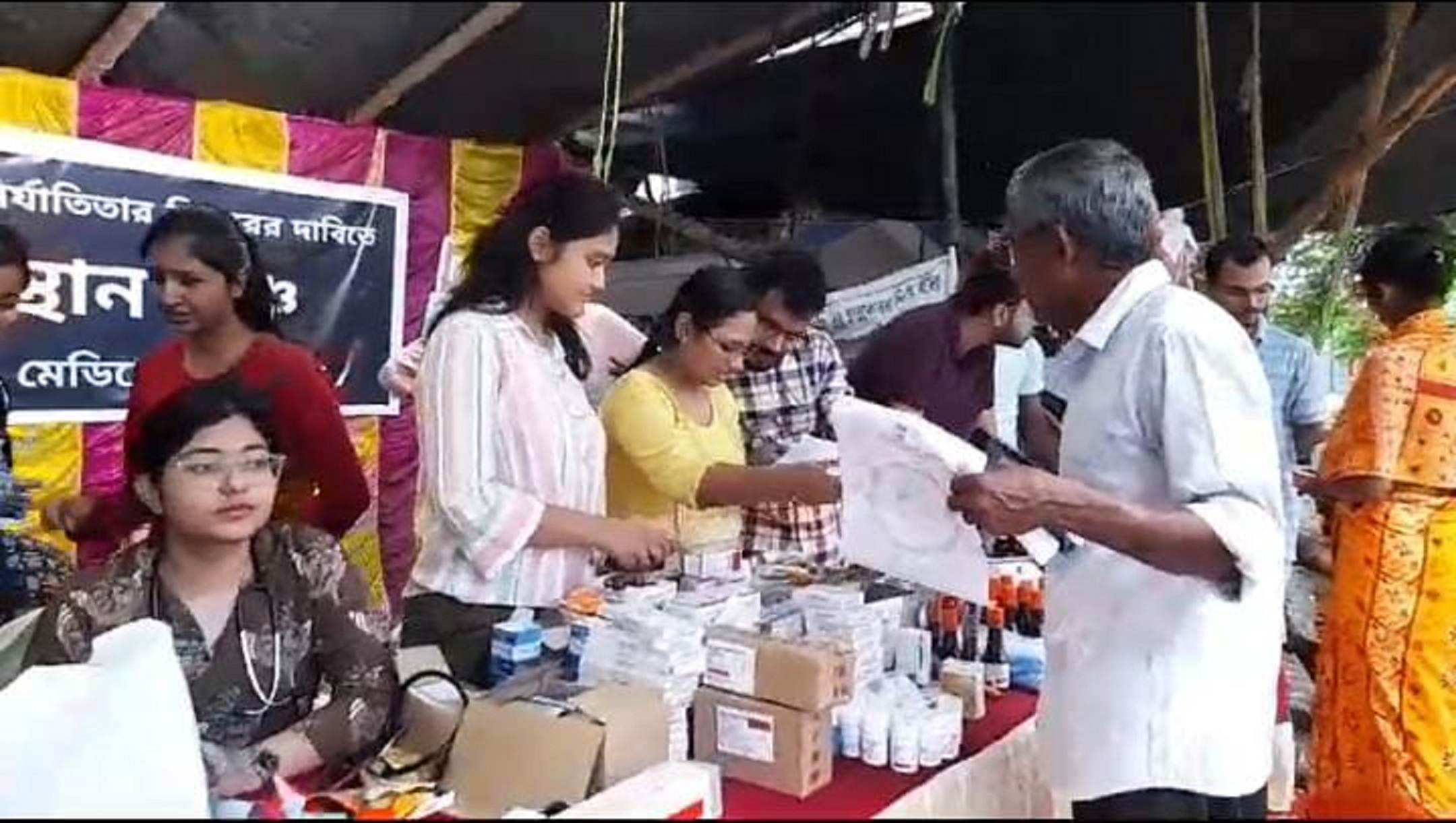
While the protest continues, the Avaya Clinic remains operational, providing essential medical care to patients. Doctors from various departments, including pediatrics, ophthalmology, and internal medicine, are attending to patients at the clinic. In addition to consultations, free medicines are being distributed to those in need.

The clinic, which is managed by junior doctors, is offering comprehensive care despite the challenging weather conditions. Services range from general medical check-ups to specialized treatments, such as eye care and pediatric care. The junior doctors are working tirelessly to ensure that no patient is left untreated, even under difficult circumstances.

The family members of the patients have expressed their gratitude for the servi

Cancer Survivors Share Stories of Recovery on World Lymphoma Day

Baby Chakraborty, KalimNews, September 14, 2024, Kolkata : On the occasion of World Lymphoma Day, observed annually on September 15 to raise awareness about lymphoma, cancer survivors gathered at Kolkata’s Tata Medical Center to share their inspiring stories of recovery. The event, held on Friday, featured patients who have triumphed over cancer, offering hope and motivation to those currently battling the disease.


Lymphoma, a diverse group of blood cancers affecting lymphocytes and compromising the immune system, can be effectively treated with modern medical advancements. During the event, survivors spoke about their journeys and the importance of perseverance and early treatment.

Dr. Sauriya Ghosh from the Clinical Hematology department at Tata Medical Center emphasized that despite the complexities of cancer, advanced treatments can lead to complete recovery, particularly for advanced lymphoma cases. Dr. Reena Nair highlighted the significant progress in cancer treatment methods, noting that many patients now experience quicker recoveries. Dr. Devaranjani Chattopadhyay reassured attendees that with proper treatment, lymphoma and other cancers can be fully cured, encouraging patients to seek medical help without fear.

The survivors shared their personal experiences, underlining the message of resilience. Saugata Halder, a retired South Eastern Railway employee from Dum Dum, was diagnosed with cancer in 2016. After a year of treatment at Tata Medical Center, he is now in full remission and encourages others to seek treatment without hesitation.

Shampa Pal from Konnagar, who was diagnosed with cancer 12 years ago, shared her success story of recovery and advised prompt treatment and a positive mindset. Manisha Banerjee from Virati, who overcame cancer after initially being treated for a hernia, expressed that, even at 70, she remains healthy and active, encouraging others not to panic.

The event concluded with a minute’s silence in honor of the RG tax incident, and all participants wore “We Want Justice” badges. The survivors’ stories and medical insights aimed to boost the morale of current patients and emphasize the effectiveness of modern cancer treatments.

RG Kar rape and murder case: Mamata Banerjee says ready to resign for sake of Bengal people

A 30-member delegation of junior doctors refuse to meet Bengal CM, after their request for a live broadcast of the meeting was turned down by the West Bengal government

PTI, Calcutta, 12.09.24: West Bengal Chief Minister Mamata Banerjee addresses a press conference amid a stalemate with protesting doctors over their slew of demands over RG Kar Hospital rape and murder incident, at Nabanna, Howrah on September 12.: PTI picture.
West Bengal Chief Minister Mamata Banerjee on Thursday offered to resign “for the sake of people” and said she also want justice for the murdered RG Kar hospital doctor.

“I apologise to the people of Bengal who expected an end to the RG Kar impasse today. They (junior doctors) came to Nabanna but did not sit for the meeting. I request them to go back to work,” Banerjee told a press conference.

“I am ready to resign for the sake of the people as, despite my best intentions and efforts in the last three days, the medics declined to hold talks,” the chief minister said.

Assuring the doctors that no action will be taken against them, she said the government is always ready for a dialogue. Her anger fell on people, who, she hinted, were masterminding the protest with vested interests.

Pointing to the proliferation of anti-government messages on social media, she said, “Our government has been insulted. Common people do not know there is a political colour to it”.

The people behind the political colour, she said, “Do not want justice. They want the chair”.

The doctors’ delegation had come till the gate of the secretariat for the meeting that was expected to begin at 5 pm. But they refused to enter as the government had refused one of their demands – the live transmission of the proceedings. The government, the Chief Minister had said, could not allow live transmission since the matter is being heard by the Supreme Court.

The government had accepted all others – including the presence of more members, 33 instead of 15, and then an extra member in the delegation that came. About live transmission, they had said they could not allow that but the proceedings will be recorded. But that proved the stumbling block for a meeting that many hoped, would end the impasse and herald the beginning of normalcy.

Banerjee said the doctors were only carrying out instructions. “I know many in the delegation were interested in talks. But two of three people were giving instructions from outside. We have all that. We could see that because it was being recorded by the press, which were standing right behind… They were giving instructions – ‘Do not negotiate, do not go to the meeting’,” the chief minister said.

The Chief Minister had waited while the debate continued outside – and she pointed out, this was not the first time. At the end of two hours, at the impromptu press conference, she said, “I apologise to the emotions of the people of Bengal. You thought this matter will be resolved today”.

Then with folded hands she said, “I have been sitting here for two hours. I waited yesterday too. Not just me, the senior officials too against whom they are complaining all the time”.

And they will wait, she said. “Uttar Pradesh, she said, took action. “We also haver ESMA (Essential services Maintenance Act). But I will not do that. I am not a supporter of Emergency”.

Her only request, she said, was that the doctors return to work, because the people are suffering – those who needed heart or kidney operations, those who need immediate care, like pregnant woman about to give birth. But there was a sting in the tale: “If the families (of patients who suffer because of the protest) want an answer from us, we will be ready for that,” she said. The government has already claimed 27 people have died because healthcare has suffered during the protest — an allegation rubbished by the doctors.

“I have tried my best to speak to the doctors. I apologise to the people Bengal, the people of the country and the world who are supporting them. Please support them. We also want justice — for Tilottama, for the patients of Bengal who are suffering,” the Chief Minister added.

The protesting doctors have demanded a string of resignations, including that of Kolkata police chief Vineet Goyal and two senior officials of the health department. They have made it clear that they are not willing to relent till their demands are met.

The case has gone to the Supreme Court after the judges took note of the matter on their own. But dealing with the protesting doctors has been left to the state government. The rape-murder case and that of financial irregularities at the hospital are being investigated by the Central Bureau of Investigation.

Junior Doctors March to Nabanna for Meeting with Chief Minister Mamata Banerjee

Baby Chakraborty, KalimNews, September 12, 2024, Kolkata: Junior doctors have launched a campaign to Nabanna, the state secretariat, with a delegation of 30 representatives, making it clear that they intend to meet Chief Minister Mamata Banerjee. The agitating doctors had communicated their decision to the Chief Secretary via email, stating their firm stance on the size of their delegation.


Before heading to Nabanna, the protesting doctors held a press briefing where they revealed that the Chief Secretary had informed them via email about a scheduled meeting with them at 5 p.m. at Nabanna. The Chief Secretary had written to the protestors on Thursday afternoon, indicating that the state would hold a discussion with the junior doctors, and Chief Minister Mamata Banerjee would be present. The letter mentioned that 15 representatives from the junior doctors’ side were expected to attend the meeting and that the discussion could be recorded for transparency.

However, the junior doctors have insisted on bringing 30 representatives instead of the 15 suggested by the administration. They have made it clear that a meeting with fewer than 30 representatives would not be feasible for them. Their intention is to meet the Chief Minister directly and discuss their demands.

The doctors arrived at Nabanna by 4:45 p.m., having organized a bus to transport their 30 representatives to the state secretariat. Their firm approach signals their determination to engage in a direct dialogue with the state administration. The junior doctors also demanded that the entire meeting be live-streamed. They argued that if Supreme Court hearings can be broadcast live, then their discussion with the state government should also be made public. They plan to present this demand to the authorities at Nabanna.

The junior doctors aim to discuss their 5-point demand during the meeting. These demands have been communicated to the Chief Secretary in advance via email. They seek a transparent discussion and believe that live streaming the meeting would help maintain clarity on the proceedings and outcomes.

This campaign by junior doctors comes in the wake of ongoing grievances over working conditions, security, and other professional issues. The doctors have been vocal about their dissatisfaction with the current state of affairs in healthcare facilities and are seeking concrete assurances and actions from the government to address these issues.

As the junior doctors prepare to sit face-to-face with the state administration, all eyes are on the outcome of this crucial meeting. The presence of the Chief Minister at the discussion is a significant step, and the junior doctors hope that their demands will be addressed adequately. The demand for live streaming adds a layer of public accountability, underscoring their desire for transparency in the negotiation process.

The state government’s response and the potential resolutions arising from this meeting could play a crucial role in shaping the future of healthcare services and the working environment for doctors in West Bengal.

Supreme Court Orders Junior Doctors to End Strike and Return to Work Amid RG Kar Hospital Case

Baby Chakraborty, KalimNews, September 9, 2024, New Delhi/ Kolkata:  

Amidst the ongoing turmoil following the tragic rape and murder of a young doctor at RG Kar Hospital in Kolkata, the Supreme Court of India has issued a stern directive to junior doctors to end their month-long strike and return to work. The strike, which began as a protest demanding justice for the slain doctor and the resignation of the Kolkata Police Commissioner, has severely impacted healthcare services in the state, leading to a reported 23 deaths due to inadequate medical attention over the 28-day period.

The protests have included a “Lalbazar Abhiyan” (march to Lalbazar) campaign, where junior doctors demanded accountability from the police administration and expressed their dissatisfaction with the handling of the case. Despite repeated pleas from the Chief Minister, Mamata Banerjee, to resume work to restore normalcy in the healthcare system, the protesting doctors have continued their strike, intensifying the crisis.

Supreme Court’s Directive to Junior Doctors
On Monday, in its second hearing on the matter, the Supreme Court of India delivered a clear message to the striking doctors, emphasizing their primary duty to provide medical care. The bench, led by Chief Justice DY Chandrachud, directed the junior doctors to return to their duties by 5 PM on Tuesday, recognizing the critical nature of the situation and the urgent need to resume healthcare services.

“Providing treatment is the foremost responsibility of doctors. Given the circumstances, it is imperative that they return to work immediately,” the Chief Justice stated during the hearing. The Supreme Court also assured the doctors that the state government would not take any punitive action against those who return to work within the stipulated time frame.

Protection from State Action, But with Conditions
The apex court further clarified that while the state government is barred from taking any action against the doctors who resume their duties on time, this immunity does not extend beyond the specified period. “If the doctors do not return to work even after the deadline, the Supreme Court cannot prevent the state government from taking necessary action against them,” the bench stated, indicating that the patience of both the judiciary and the state administration is wearing thin.

The Supreme Court’s directive is seen as an attempt to balance the need for justice for the young doctor with the broader public interest of maintaining essential health services. The court also reminded the state government of its responsibility to ensure the safety and security of all medical professionals, thereby addressing some of the concerns raised by the striking doctors.

Ongoing Crisis in West Bengal’s Healthcare System
The strike by junior doctors has thrown West Bengal’s healthcare system into chaos. Hospitals have been struggling to provide adequate services, with many patients being turned away or referred to other facilities due to a lack of medical staff. Reports from the state indicate that at least 23 people have died over the past month due to the disruption caused by the strike, underscoring the dire situation.

The Chief Minister, Mamata Banerjee, has repeatedly appealed to the striking doctors to resume their duties, emphasizing that the state government is committed to addressing their concerns. “We understand the grief and anger, but the people of Bengal need their doctors back at work. Lives are at stake,” she said, urging the medical community to act in the public interest.

A Crucial Moment for Healthcare in Bengal
The Supreme Court’s directive marks a crucial moment in the ongoing struggle between the protesting doctors and the state administration. While the demand for justice and safety for healthcare professionals remains strong, the extended strike has also exposed the vulnerabilities of the healthcare system in West Bengal, highlighting the need for a balanced approach that ensures both justice and the continuation of essential services.

As the 5 PM Tuesday deadline approaches, all eyes will be on the junior doctors to see if they heed the Supreme Court’s call to return to work or risk potential state action. The decision taken by the medical community in the coming hours will significantly impact not only the ongoing investigation but also the future of healthcare services in West Bengal.

The Supreme Court’s ruling also serves as a reminder of the delicate balance that needs to be maintained between protests for justice and the duty to serve the public. As the RG Kar Hospital case continues to unfold, it is hoped that all stakeholders can work towards a resolution that ensures both justice and the uninterrupted delivery of healthcare services to the people of West Bengal.

Rising obesity a concern, healthier lifestyle must: Economic Survey

 Obesity presents a “concerning situation” and preventive measures must be taken to enable citizens to have a healthier lifestyle, it said
A Higher BMI Makes Individuals Prone To Conditions Such As Heart Disease, Diabetes, And Hypertension. Photo: Shutterstock

PTI, New Delhi : Raising concerns over growing obesity and increase of consumption of highly processed foods laden with sugars and fat, the Economic Survey said 54 per cent of the total disease burden in India is due to unhealthy diets.
Obesity presents a “concerning situation” and preventive measures must be taken to enable citizens to have a healthier lifestyle, it said.
Click here to connect with us on WhatsApp
“Obesity is emerging as a serious concern among India’s adult population,” said the Survey, which was tabled on Monday by Finance Minister Nirmala Sitharaman in Parliament.
If India needs to “reap the gains of its demographic dividend, it is critical that its population’s health parameters transition towards a balanced and diverse diet”, it said.
Citing a report from the Indian Council for Medical Research, the Economic Survey observed that the rise in consumption of highly processed foods laden with sugars and fat, coupled with reduced physical activity and limited access to diverse foods, exacerbate micronutrient deficiencies and overweight/obesity problems.
Estimates show that the adult obesity rate in India has more than tripled, and the rise in children is the steepest in the world for India, behind Vietnam and Namibia, the survey stated, referring to a World Obesity Federation report.
The survey further said as per National Family Health Survey (NFHS), the incidence of obesity is significantly higher in urban India than in rural India. In urban India, it is 29.8 per cent in men versus 19.3 per cent of rural India.
The percentage of men facing obesity in the 18-69 age bracket has increased to 22.9 per cent in NFHS-5 from 18.9 per cent in NFHS-4. For women, it has increased from 20.6 per cent (NFHS-4) to 24 per cent (NFHS-5).
“Combined with an ageing population in some states, obesity presents a concerning situation. Preventive measures must be taken to enable citizens to have a healthier lifestyle,” the survey said.
In some states, such as in the NCT (Delhi), the proportion of women with obesity is 41.3 per cent, as against 38 per cent for men.
In Tamil Nadu, for men, obesity is 37 per cent and it is 40.4 per cent for women.
In Andhra, it is 36.3 per cent for women while for men it is 31.1 per cent.

How cell and gene therapies revolutionising cancer care in India

 These treatments are becoming increasingly effective, affordable, and accessible
Dr Gaurav Kharya : Our body is made up of cells, and whatever happens to it—good or bad—happens at a cellular level. Cancer, for example, occurs due to a small change in the cell that prompts it to proliferate abnormally. Also, cancer spreads in the body because the immune cells lose their ability to identify the danger cancer cells pose and stop them from growing. We treat cancer by surgically removing the cancer cells from the body or by giving drugs that kill the malignant cells.

The advancement in our capability to manipulate the body’s immune cells to identify and eliminate cancer cells is remarkable, particularly at the cellular level. No wonder, cell and gene therapies, once considered futuristic medicine, are now a reality, offering hope to millions by redefining the battle against cancer.

Chimeric Antigen Receptor (CAR) T-cell therapy and gene editing tools, like CRISPR-Cas9, are two revolutionary innovations that allow us to personalize treatments based on the genetic profiles of both the patient and the cancer. In CAR T-cell therapy, we extract the patient’s T-cells and add a marker to their surface to restore their ability to detect and eradicate malignant cells. And because these are the body’s own cells, the treatment has almost negligible side effects. Moreover, some of these immune cells remain in the memory and prevent cancer relapse. These are also called living drugs because once injected, these cells stay in the body and guard against the relapse of the cancer.

However, the current cost of these therapies is prohibitive. The high cost, along with the need for advanced medical infrastructure and specialised training for healthcare providers, has limited their availability. Yet, the government is making significant investments in biotech innovations through infrastructure development and by offering research grants. This support allows several Indian companies to focus on developing indigenous CAR T-cell therapies. These initiatives will greatly contribute to reducing the cost of these treatments, ensuring that Indian patients have access to them. Moreover, India’s generic pharmaceutical sector is using its expertise to develop biosimilars and gene therapies, which will further contribute to the affordability of these cutting-edge treatments.

Cell and gene therapies have proven to be effective in treating various malignancies such as leukemia, lymphoma, and myeloma. Numerous clinical trials are currently underway worldwide to assess their efficacy. In India, several hospitals and research centers have also initiated clinical trials to test these therapies against a wider range of cancers, tailoring them to the genetic profiles prevalent in the Indian population.

Furthermore, cutting-edge research in this field will ensure that India will soon have more than one CAR T cell products available for its population. Researchers in India are working on developing third and fourth-generation CARs that will be effective against multiple tumor-associated antigens.

Unlike first-generation CARs, which are mono-specific and target only one type of antigen, these CARs will be able to target two antigens and, hence, be more effective in preventing cancer relapse.

Collaboration between the public and private sectors, as well as foreign alliances, has produced a favorable environment in the country for innovation. Besides, collaborations with global biotech and pharmaceutical giants are facilitating technology transfer and capacity building, enabling India to take a leap into the future of cancer care.

As cell and gene therapies continue to advance, they are poised to redefine cancer care in India and around the world. With ongoing advancements in technology and research, these treatments are becoming increasingly effective, affordable, and accessible, strengthening our fight against cancer.

The significance of these therapies extends beyond the clinical outcomes. They represent a paradigm shift in cancer treatment, moving away from the traditional one-size-fits-all approach to a more personalized and precise form of medicine. For patients, this means medications that are tailored to suit their unique genetic composition, resulting in improved clinical outcomes and fewer side effects.

Undoubtedly, we still need to overcome several hurdles to make these therapies available to all, including addressing regulatory frameworks and ensuring equitable access. Nevertheless, the progress we have made so far serves as a beacon of hope not only for cancer patients in India but worldwide.

NBMCH: State sanctions Rs 1 cr for renovation of super speciality block

MP, 9 July 2024, Siliguri: The Super specialty block of North Bengal Medical College and Hospital (NBMCH) is not yet fully operational. However, some wards of the block have been damaged even before they have become operational. False ceilings in many wards are damaged. 
Parts of the false ceiling have come loose and have become a potential risk for patients. According to the sources, the Central agency that did the work denied taking further responsibility. 
Hence, the state government has sanctioned Rs 1 crore to renovate the wards. Dr. Sanjay Mallick, the Superintendent of NBMCH said: “The Central agency constructed the building about a year ago. They have already clarified that after the handover, they will not take any responsibility for the building. 
The state government has, therefore sanctioned Rs 1 crore for the renovation work. We will start the indoor wards after the renovation.” In 2014, the Union Ministry of Health sanctioned Rs 150 crore for building the super speciality block in NBMCH premises. The work for which started in 2015. 
In 2018, the government cancelled the contract and blacklisted the company which had been doing the construction work for not completing the work on time. After that, a fresh tender was called. 
The outdoor section of the block was opened in November 2022. Later, the building was handed over to the NBMCH authorities last year. The block is not yet fully operational due to a shortage of equipment. 
Last month, Kaustav Nayek, Director of Medical Education (DME) visited the hospital and had given instructions to shift wards to the new block. It has been decided that the wards will be shifted only after renovation. 
The six-storied building is spread over 15,000 square meters. Different departments will be shifted to this block and the old building will be renovated. 
Courtesy& source- Millennium Post 
https://www.millenniumpost.in/bengal/nbmch-state-sanctions-rs-1-cr-for-renovation-of-super-speciality-block-571206

SC to hear on July 8 plea on free sanitary pads for class 6-12 girl students

PTI, 6 July 2024 : The Supreme Court is scheduled to hear on July 8 a plea seeking directions to the Centre and states to provide free sanitary pads to girl students of class 6-12 and ensure separate female toilet facilities in all government-aided and residential schools.
A bench of Chief Justice D Y Chandrachud and Justices J P Pardiwala and Manoj Misra is scheduled to hear the plea of Congress leader and social worker Jaya Thakur in which she has highlighted the difficulties faced by adolescent females from poor backgrounds in the schools.
During the last hearing of the matter on February 5, Additional Solicitor General Aishwarya Bhati informed that the Centre is in the process of collating all necessary material to form a national policy on the distribution of menstrual hygiene products to school-going girls in terms of the orders dated April 10, 2023, and November 6, 2023.
On June 13, the Union education ministry, in an advisory to schools, said girl students should be allowed to take necessary restroom breaks during board exams for classes 10 and 12 and free sanitary napkins must be made available at all examination centres.
The Supreme Court is set to reopen on July 8 after summer vacation.
On November 6, the top court directed the Centre to lay down a national model for building toilets commensurate with the number of girl students in all government-aided and residential schools across the country.
While emphasising uniform procedure, it also asked the Union government about the policy it has formulated for the distribution of sanitary napkins to female school students nationally.
During the hearing, the Centre informed the apex court that a draft national policy for the distribution of sanitary napkins free of cost to school-going girls has been formulated and sent to stakeholders to elicit their comments.
The top court earlier warned the states, which had not submitted their response to the Centre on formulating a uniform national policy on menstrual hygiene for girls studying in schools, that it would take recourse to the “coercive arm of the law” if they failed to do so.
On April 10, the apex court appointed the secretary of the Ministry of Health and Family Welfare (MOHFW) as the nodal officer to coordinate with states and UTs and collect relevant data for formulating a national policy.
It noted that MoHFW, the Ministry of Education and the Ministry of Jal Shakti have schemes on menstrual hygiene management.
The court also ordered all states and UTs to submit their menstrual hygiene management strategies and plans that are being executed with the help of funds provided by the Centre or through their own resources to the Mission Steering Group of the National Health Mission within four weeks.
The apex court said the states and UTs shall also indicate to the Mission Steering Group of the National Health Mission the appropriate ratio of female toilets for residential and non-residential schools in their respective territories.
It asked all states and UTs to also indicate the steps which have been taken to provide low-cost sanitary pads and vending machines in schools and their appropriate disposal.
The plea filed by Congress leader Thakur has said adolescent females from poor backgrounds between the ages of 11 and 18 years face serious difficulties in receiving education, a constitutional right under Article 21A of the Constitution.
“These are adolescent females who are not equipped with and are also not educated by their parents about menstruation and menstrual hygiene.
“The deprived economic status and illiteracy lead to a prevalence of unhygienic and unhealthy practices which have serious health consequences, increase obstinacy and lead to eventual dropping out from schools,” the petition said.

The importance of digital detox for students

Meghashree Poddar, EOI, 11 June 2024 : Social media has revolutionized communication, fostering connections across vast distances. Item powers individuals to express themselves, engage ing lobal conversations, and access information readily.

However, just like how avocado is often tasteless despite being so ridiculously healthy or how many good-looking people come with nasty characters, social media, too, does have a dark side. The constant barrage of notifications, messages, and online content can be incredibly distracting. Studies link excessive screen time to negative health outcomes, including anxiety, depression, and decreased self-esteem. Digital devices can also strain eyes, cause headaches, and disrupt sleep patterns, further impacting overall well-being.
Furthermore, the curated and often unrealistic portrayals on social media can distort students’ perceptions of reality and hinder their personal development. The constant stream of seemingly perfect lives can lead to feelings of inadequacy and social comparison, impacting self-esteem and potentially contributing to body image issues.
Social media can create pressure to conform to unrealistic beauty standards, leading to a disconnect from one’s authentic self. The infiltration of digital technology into classrooms also presents challenges. The allure of notifications and readily available online content can significantly diminish attention spans and hinder learning. Students accustomed to easily accessible information might struggle with critical thinking and thorough analysis, hindering their ability to develop deeper understanding and problem-solving skills. 
This can lead to a reliance on quick online answers rather than in-depth exploration of complex topics.
Digital Detox: A call for balanced technology use:
1. Improved Focus and Attention: By disconnecting from distractions, students can regain control over their time and attention. This fosters amore mindful approach to learning, enabling them to dedicate focused time to studying and engaging in enriching activities that promote personal growth and well-being. Students can develop stronger time management skills and avoid the temptation to multitask, leading to more efficient learning.
2. Enhanced Well-being: A digital detox can reduce stress, anxiety, and improve sleep quality. This leads to increased energy levels, improved focus, and overall well-being. Students can experience a sense of calm and clarity that can benefit both academic and personal pursuits.
3. Stronger Relationships: Disconnecting from screens allows for stronger connections with friends and family through face-to-face interactions. It fosters communication, empathy, and deeper understanding. Students can learn valuable social skills that are essential for success in all aspects of life.
4. Boosted Confidence: Stepping away from the carefully curated world of social media can help students develop a more positive self-image and embrace their authentic selves, free from the pressure to conform to unrealistic online portrayals. 
Students can focus on their own strengths and interests, fostering a sense of self-worth and confidence. Digital detox periods offer a valuable opportunity for students to cultivate stronger interpersonal relationships. Disconnecting from screens allows for quality time with friends and family, fostering face-to-face interactions and strengthening social skills. 
Additionally, it allows for self-reflection and exploration of interests outside the digital realm. Students can rediscover the joy of real-world activities, engage in creative pursuits, or connect with nature. While the overuse of social media can be detrimental, this article isn’t about giving up technology. It’s about taking back control of our time, focus, and happiness.

A balanced regimen must include:
*Social Media Audit:Regularly evaluate online platforms. Identify and unfollow accounts that create negativity or encourage social comparison. Focus on following accounts that provide positive, inspiring, or educational content.
*Time Tracking: Utilize time-tracking apps or features within social media platforms to monitor daily usage. Analyze the data to identify peak us age times and areas for improvement. Set realistic goals for reducing screen time and track your progress.
*Digital-Free Zones: Designate specific times or areas as “digital-free,” such as during meals, before bed, or in specific study areas. Implement “no-phone” policies during family or social gatherings to enhance real-life interactions.
*Mindful Consumption: Be intentional about the content you engage with. Limit passive scrolling and set a purpose for each social media session. Seek out informative and inspiring content that promotes learning and personal growth.
*Notification Management: Turn off non-essential notifications to minimize distractions and maintain focus. 
Consider scheduling specific times to check social media accounts, rather than constantly being bombarded with notifications.
*Digital Detox Periods: Plan regular breaks from social media, such as a weekend without access. Use this time to engage in offline activities, reconnect with nature, and reassess digital habits. Evaluate the impact on your mental and emotional state.

Consider incorporating mindfulness practices, such as meditation or yoga, to further enhance well-being. Technology offers many benefits, but it’s essential to maintain a healthy balance. By implementing these strategies, students can reclaim control over their time, attention, and well-being. This fosters a more positive and productive learning experience, allowing them to thrive in both academic and personal spheres. 
Students who are well-rested, focused, and connected to the real world are better equipped to succeed in their studies and build meaningful relationships. 
(The views are the author’s personal)