All posts by Kalimpong News

India’s role in G7 Summit: An Overview

Annwesha Chhetri, EOI, 17 June 2024 : The Group of 7 (G7) Summit, held in the picturesque town of Fasano, Italy, concluded on June 15, leaving a significant impact on global policy and international relations. Hosted by Italian Prime Minister Giorgia Meloni, this summit focused on the two major geopolitical conflicts weighing on the international community: the war in Ukraine and the Israel-Hamas conflict.

Apart from the member countries, many other countries, including India, were invited to the Outreach Session. This was India’s 11th and Prime Minister Narendra Modi’s 5th consecutive participation at the G7 Summit. Traditionally, this group of seven countries has been a forum for some of the world’s most advanced economies to discuss and coordinate on economic policies, trade, security, and other global issues. India’s repeated invitations signal a recognition of its rise in economy, strategic importance, and leadership potential in tackling global challenges. PM Modi’s presence at the summit reflects India’s pivotal role in shaping global discourse. Therefore, India is getting a platform once again to address critical global issues, strengthen bilateral ties, and assert its role as a major player in international affairs. This year’s summit focused on themes such as economic resilience, climate change, health, security, and technological innovation—all the areas where India has a valuable contribution to make.
During the summit, PM Modi shed light on India’s economic reforms and investments like “Make in India” and “Digital India.” These initiatives aim to transform our country into a global manufacturing hub and a leader in digital innovation. With the global economy recovering from the impacts of the COVID- 19 pandemic, India’s robust growth trajectory presents an attractive proposition for foreign investment and trade partnerships. A major highlight of this summit was the launch of the Just Energy Transition Partnership (JETP). Coal accounts for nearly 70% of India’s electricity. This initiative aims to help India transition from a coal-based energy system to more sustainable and low-emission technologies. Hence, JETP is designed to provide financial support, technology, and expertise to facilitate this transition, which is expected to address both environmental concerns and economic dependencies related to coal. PM Modi also reiterated India’s ambitious climate targets, including achieving net-zero emissions by 2070 and increasing the share of renewable energy in its energy mix. He also elaborated on the “Ek Ped Maa ke Naam” campaign and urged the leaders to take part in India’s Mission LiFE initiative. Therefore, by collaborating with G7 countries, India will not only contribute to global climate goals but also support its own sustainable development agenda.
“Pharmacy of the World,” India has been a key supplier of affordable vaccines and medicines to developing countries during the pandemic. PM Modi called for strengthening global health infrastructure by ensuring equitable access to vaccines and enhancing research and development capabilities. 
India becomes a key player in the Indo-Pacific strategy, ensuring stability and security and countering China’s expanding influence. The European Union says that Beijing’s large subsidies, especially in green energy and technology, lead to very cheap products that flood the global market, making it difficult for the West to compete. “G7 countries agree on how to handle China,” a Japanese government source told AFP.
PM Modi said that India will collaborate with all countries to make artificial intelligence (AI) transparent, fair, secure, accessible, and responsible. As a founding member and lead chair of the Global Partnership for AI, India is leading the launch of the “AI Mission” with the mantra “AI for All.”
Therefore, this G7 Summit provided India with a platform to advance its economic, environmental, health, technological, and geopolitical agendas. By engaging with the world’s leading economies, India is not only strengthening its international standing but also paving the way for sustainable development and inclusive growth. 
As the world navigates through complex challenges, India’s role in shaping a resilient and cooperative global order is becoming more crucial than ever. On the sidelines of the G7 Summit, PM Modi held bilateral meetings with French President Emmanuel Macron, UK PM Rishi Sunak, Japanese PM Fumio Kishida, and Ukraine President Volodymyr Zelenskyy. He also interacted with US President Joe Biden, German Chancellor Olaf Scholz, Canada PM Justin Trudeau, and Pope Francis. After concluding the visit, PM Modi thanked the people and government of Italy for their “war m hospitality” and said, “Had a very productive day at the G7 Summit in Apulia. I interacted with the world’s leaders and discussed various subjects. Together, we aim to create impactful solutions that benefit the global community and create a better world for future generations,” in a post on X. 
(The views of the author are personal)

Rising Crime Wave in West Bengal: Extortion Gangs Draw 1990s Mumbai Parallels

Union Minister Sukanta Majumdar accused West Bengal of experiencing a surge in extortion rackets reminiscent of 1990s Mumbai. He cited recent shootouts and dacoities, suggesting a deteriorating law and order situation, and highlighted violence against opposition party workers. Minister Firhad Hakim linked recent crimes to out-of-state miscreants.


PTI, 16 June, 2024, Kolkata :  Union Minister of State for Education Sukanta Majumdar on Sunday alleged that extortion rackets were thriving in West Bengal, drawing parallels to the notorious activities of Dawood Ibrahim and Chhota Rajan gangs in Mumbai during the 1990s.

He claimed that instances of shootouts and dacoities in jewellery shops over the last couple of months prove that the “law and order situation in the state is not good.” Majumdar, also the state BJP president, alleged that these developments are reminiscent of past criminal activities in Mumbai, suggesting a worrying trend in West Bengal.

“I am reminded of the way Dawood Ibrahim, Chhota Shakil, Chhota Rajan gangs used to operate extortion rackets in Mumbai in the 1990’s. Similar rackets seem to have started in West Bengal,” Majumdar said.

He further alleged that opposition party workers have been subjected to attacks while such criminal activities continue unchecked.

Majumdar, who met with BJP workers claiming to be victims of post-poll violence perpetrated by supporters of the ruling party in West Bengal, highlighted an incident where motorbike-borne assailants shot at a businessman’s car on the busy B T Road here on Saturday.

In the early hours of Saturday, a shooting incident took place at Mirza Galib Street in central Kolkata. The incident stemmed from an altercation between two men, reportedly linked to a road rage incident the previous day.

West Bengal Minister Firhad Hakim attributed the recent dacoities in jewellery shops, including the latest one at Raniganj a few days ago, to miscreants from neighbouring states. In this connection, two persons were arrested from Jharkhand in a coordinated operation conducted jointly by the police forces of both states, officials said. 

No need to teach about riots, demolition in schools, says NCERT chief after textbook revisions

 We want to create positive citizens and that’s what is the purpose of our textbooks. We cannot have everything in them. The purpose of our education is not to create violent citizen depressed citizens. Hatred and violence are not subjects of teaching, says Dinesh Prasad Saklani

PTI, New Delhi, Jun 17, 2024 :  Rejecting accusations of saffronisation of school curriculum, NCERT’s director has said that references to Gujarat riots and Babri masjid demolition were modified in school textbooks because teaching about riots “can create violent and depressed citizens.”
    In an interaction with PTI editors at the agency’s headquarters here on Saturday, National Council of Educational Research and Training (NCERT) director Dinesh Prasad Saklani said the tweaks in textbooks are part of annual revision and should not be a subject of hue and cry.
    Asked about references to Gujarat riots or Babri masjid demolition being tweaked in NCERT textbooks, Saklani said, “Why should we teach about riots in school textbooks? We want to create positive citizens not violent and depressed individuals”.
    “Should we teach our students in a manner that they become offensive, create hatred in society or become victim of hatred? Is that education’s purpose? Should we teach about riots to such young children … when they grow up, they can learn about it but why school textbooks. Let them understand what happened and why it happened when they grow up. The hue and cry about the changes is irrelevant,” he said.
    The comments by Saklani come at a time when new textbooks have hit the market with several deletions and changes. The revised Class 12 political science textbook does not mention the Babri masjid but refers to it as a “three-domed structure”. It has pruned the Ayodhya section from four to two pages and deleted details from the earlier version.
    It instead focuses on the Supreme Court judgement that paved the way for the construction of a Ram temple at the site where the disputed structure once stood before it was torn down by Hindu activists in December 1992. The Supreme Court verdict was widely accepted in the country. The consecration of the Ram idol in the temple was performed on January 22 this year by the prime minister.
    “We want to create positive citizens and that’s what is the purpose of our textbooks. We cannot have everything in them. The purpose of our education is not to create violent citizens … depressed citizens. Hatred and violence are not subjects of teaching, they should not be focus of our textbooks,” added Saklani.
    He hinted that the same hue and cry is not made about 1984 anti-Sikh riots not being in textbooks.
    The latest deletions in the textbooks include: BJP’s ‘rath yatra’ from Somnath in Gujarat to Ayodhya; the role of kar sevaks; communal violence in the wake of the demolition of the Babri masjid; President’s rule in BJP-ruled states; and the BJP’s expression of “regret over the happenings at Ayodhya”.
    “If Supreme Court has given a verdict in favour of Ram temple, Babri masjid or Ram janmabhoomi, should it not be included in our textbooks, what is the problem in that? We have included the new updates. If we have constructed new Parliament, should our students not know about it. It is our duty to include the ancient developments and recent developments,” he said.
    Asked about allegations of saffronisation of curriculum and ultimately textbooks, Saklani said, “If something has become irrelevant … it will have to be changed. Why shouldn’t it be changed. I don’t see any saffronisation here. We teach history so students know about facts, not for making it a battleground”.
    “If we are telling about Indian Knowledge System, how can it be saffronisation? If we are telling about iron pillar in Mehrauli and saying Indians were way ahead of any metallurigical scientist, are we saying wrong? How can it be saffronisation?”
    Saklani, 61, who was head of the ancient history department at the HNB Garhwal University before taking charge as NCERT director in 2022, has faced criticism over the changes in textbooks, especially pertaining to historical facts.
    “What is wrong about changes in textbooks? Updating textbooks is a global practice, it is in interest of education. Revising textbooks is an annual exercise. Whatever is changed is decided by subject and pedagogy experts. I do not dictate or interfere in the process … there is no imposition from top.
    “There are no attempts to saffronise curriculum, everything is based on facts and evidence,” he said.
    The NCERT is revising the curriculum of the school textbooks in line with the National Education Policy (NEP) 2020.     
    From the assertion that recent studies of ancient DNA obtained from archaeological sources at Rakhigarhi, an Indus Valley site in Haryana, rule out Aryan immigration to a call for more research into whether the Harappans and the Vedic people were the same, several crucial topics have either been dropped or tweaked in textbooks.
    A two-page table detailing achievements of Mughal emperors such as Humayun, Shah Jahan, Akbar, Jahangir and Aurangzeb have also been removed.
    This is the fourth round of revision and updating of NCERT textbooks since 2014.
    Referring to the changes to the section on Ayodhya, the NCERT had said in April — “Content is updated as per latest development in politics. Text on Ayodhya issue has been thoroughly revised because of the latest changes brought by the Supreme Court’s Constitutional bench verdict and its widespread welcoming reception”.
    Saklani said that some changes have happened because the subjects were irrelevant, some to update new information while several topics were removed earlier to minimise burden on students cause by the COVID-19 pandemic and reduce duplication of content.
    The new political science textbook of Class 11, now says that political parties “give priority to the interests of a minority group” with an eye on “vote bank politics”, which leads to “minority appeasement”.
    This marks a complete shift from what was taught until the 2023-24 academic session — that if students “think hard”, they will find there is “little evidence” to suggest that vote bank politics favours the minorities in the country.
    Dropping references to the demolition of Babri Masjid, the killing of Muslims in Gujarat riots and Hindutva, and tweaking the reference to Manipur’s merger with India are among the changes made in textbooks this year.

New criminal laws will take effect from July 1: Law Minister

 Decision taken after consulting all, says MoS Meghwalter consulting all, says MoS Meghwalter consulting all, says MoS Meghwalter consulting all, says MoS Meghwalter consulting all, says MoS Meghwa
PTI, KOLKATA, 16 June 2024 : Union Minister of State for Law & Justice (Independent Charge) Arjun Ram Meghwal on Sunday said that the new criminal laws will be introduced from 1 July, dismissing opposition allegations of not being consulted before the decision was made.
 
Meghwal said that the Indian Penal Code, the Code of Criminal Procedure, and the Evidence Act will be replaced by the Bharatiya Nyaya Sanhita, the Bharatiya Nagarik Suraksha Sanhita, and the Bharatiya Sakshya Act.
 
He added that necessary training programmes and infrastructure development for implementing the new laws are already underway.
 
“The three new laws will be implemented from 1 July for providing timely, speedy, and error-free justice,” Meghwal said during a programme themed ‘India’s progressive path in the administration of criminal justice system’ here in West Bengal.
 
Meghwal addressed allegations of inadequate consultation, saying, “Some people claim they were not consulted. This is untrue. The demand for change of colonial laws has been longstanding, and the process began long ago.”
 
The minister explained that although suggestions were sought from all states, only 18 states and six union territories responded. “Even the chief justice of India, chief justices of 16 high courts, five law academies, and 22 law universities provided their suggestions,” he said.
 
“We contacted all MPs, but only 142, including members from both Houses, responded. Suggestions were also requested from all MLAs nationwide, with only 270 responding. We consulted widely, but not everyone provided feedback,” Meghwal added.
 
“These laws were formulated after four years of thorough consideration. Claims of no consultation are false. Full consultations were held, including 58 meetings chaired by Home Minister Amit Shah,” he emphasised.
 
Meghwal further explained the necessity of moving away from colonial-era laws due to societal advancements and technological involvement.
 
“With changing times and new technologies, there must be improvements. Citizens were not receiving timely justice, so we have included zero FIR, mercy petition, and gender neutrality. The system had issues, which is why changes are being made,” he reasoned.
 
He concluded by stating that the new laws are people-centric and timely, aligning with India’s rapid development.
 
Also present at the event were Chief Justice of Calcutta High Court TS Sivagnanam, Law & Justice Ministry Secretary Rajiv Mani, and Law Commission of India Member Secretary Reeta Vasishta.
 
Hopeful about UCC implementation
 
Meanwhile, Meghwal expressed hope about implementation of the uniform civil code (UCC), contending that some states have started to bring it into force.
 
“In BJP manifesto, we have mentioned about the UCC. There are states like Goa and Uttarakhand that have started implementing them. The coalition which has been formed in the Centre is a very strong government and there is nothing to worry about,” Meghwal said.
 
Last week, soon after Meghwal, an MP from the Bikaner constituency, said that the UCC is still on the BJP’s agenda, while the JD (U) said that any such move must come through consensus.
 
JD (U) leader KC Tyagi said that, while the party is not against the UCC, it wants that such a move should come through a consensus.
 
Union Law Minister Arjun Ram Meghwal made it clear that Central Government was not reconsidering the decision to implement the new criminal laws from July 1,2024. He reiterated that the laws replacing the Indian Penal Code 1860, the Indian Evidence Act 1872 and the Code of Criminal Procedure 1973 will come into force from July 1.
 

Speaking to news agency PTI, Meghwal said :

“From July 1, all three laws, Bharatiya Nyaya Sanhita, Bharatiya Nagarik Suraksha Sanhita and Bharatiya Sakshya Act will replace Indian Penal Code, Code of Criminal Procedure and Evidence Act. Looking at the current situation, there are many innovative ideas in these three laws.”


The laws were passed by the Parliament in December 2023. Though they received the assent of the President the same month, they did not come into force since the Centre deferred their notification.
 

On February 25, the Centre notified July 1 as the date on which these laws will take force.

Recently, Senior Advocate Indira Jaising had written to the Law Minister requesting that the laws be kept on hold. Several lawyers and academics have raised concerns about the new laws.

In situationships, people may commit to each other, but not to love

Ambiguity can have its own beauty, says Rohit Trilokekar
Situationships invariably mean different things to different people, even the ones involved in the same one: Pixabay

ROHIT TRILOKEKAR | TT  |  16.06.24 : 

Sohini Chatterjee sank into her favourite plush recliner by the window, in the living room of her expansive Mumbai apartment. Her lover had just left, though traces of his scent lingered. On her skin. In her soul. Forty-year-old Sohini had been seeing the twenty-something lad for a while, although the term ‘seeing’ remained something of an ‘ambiguity’ for a relationship that wasn’t yet defined. Only recently, he had tried tossing the term into their conversations. While she did his underwear during their steamy encounters.

But Sohini wasn’t ready to commit. On the other hand, the earnest lad told her he wasn’t ashamed of introducing her to his parents!
“What’s stopping you?” he asked her once, a pot of tea not the only thing brewing between them. A storm seemed around the corner, what with her just having told him it wasn’t going to work out. Perhaps it was merely for the sex that she found herself in this situationship, defined as something that means different things to different people. The one thing Sohini knew for certain was that when he filled her, she didn’t feel empty.

Things took an abrupt turn when, one day, Sohini suddenly stopped texting. It had been an unwritten rule that he would come to her place only after her confirming the rendezvous over a WhatsApp message. For months, the arrangement had proceeded smoothly. For the major part, Neel hadn’t minded the lack of commitment himself. Until he started harbouring more intense feelings for Sohini. He thought back to the time he had first laid eyes on her. She had been a breath of fresh air. They met at the Bandra railway station. In an autorickshaw line. They ended up sharing the ride, not knowing they would soon be sharing much more.

She seemed frantic…As though he were a sin she was desperately trying to hide
When Neel had asked Sohini her name, she had replied: “Oh well, you can call me Miss Chatterjee.” It was Sohini who had asked for Neel’s number. Neel’s profound shyness when he obliged was utterly endearing. The first time he came home, Sohini tutored him in the art of making love.

The one thing Neel struggled with was the secrecy. It was odd, considering they always met in Sohini’s home, never a public place. She seemed frantic, each time she opened the door to usher him in. As though he were a sin she was desperately trying to hide.

“Do you even have feelings for me?” he asked her once, to the sound of silence. Sohini was relaxing in her favourite recliner. She had just made love to Neel on it. Ah! The energy of youth… Perhaps that was what excited her most — the fact that Neel was half her age. That, and his dreamy chocolate boy looks.

A month after Sohini mysteriously vanished, Neel heard his phone ping at work. It would ping several times a day, of course, but he rarely looked at it. This time, it was different. It was almost as though he knew it were a text from Sohini. And it was. Not a single message, but several. The texts began with an apology and ended with an appeal.

Sohini knew she had to handle the situation tactfully, or she might run the risk of losing him forever. The mere thought of Neel disappearing cut like a knife through her fragile heart

From the moment Neel walked in, Sohini sensed the shift in energy. Something wasn’t quite right. She started kissing her lover passionately, but only a few moments in, Neel pulled away.

“What’s the matter, darling? Did I upset you?”

“You bet you did! What’s wrong with you? You embark on this strange relationship with me, before cutting me off like I’m some kind of tumour?”

Sohini was stupefied. In her wildest dreams, she wouldn’t have thought this innocent-looking lad could ever muster the courage to scream at her.

“Are you looking to put a label on us?” asked Sohini, teary-eyed.

“Yes! And what the hell is wrong with that?” responded Neel, shaking, almost out of control. Sohini knew she had to handle the situation tactfully, or she might run the risk of losing him forever. The mere thought of Neel disappearing cut like a knife through her fragile heart.

“I’m… sorry, jaan. I just thought we were doing fine, you know.”

“Fine? You call this fine? You’ve been using me for sex! That’s it. I just can’t take this any longer. Why did I even come here?”

Neel had fallen in love with Sohini — the cardinal sin in a situationship
Something transitory need not be meaningless, as long as it provides a genuine connection
Pixabay

Sohini’s heart was racing wildly. All of a sudden, the gravity of the situation weighed heavily on her. While she might have been comfortable with this arrangement they had shared, poor Neel had evidently wanted much more.

Neel had fallen in love with Sohini — the cardinal sin in a situationship.

That was the last day they saw each other. She went on with her mundane life, each day like the preceding one.

One day, against a backdrop of beautiful hibiscus flowers blooming in the garden, with a drizzle in motion, Sohini thought of Neel and all he meant to her. How could she ever have explained to someone fresh out of the throes of adolescence that only the quality of moments matter? That she made love to him because it made her feel something?

Neel had every right to want more. Especially because he loved Sohini. Only now did Sohini realise that she might have loved him, too. Yet, she had her own compulsions, the amorphous boundaries of another situationship that she had been in for years. One that had a label, but no clarity. Her marriage with Mr Chatterjee.

Most of us amble through life, in relationships as predictable as dal bhaat. Commitment isn’t the only thing that binds people. Especially when it’s a word sprinkled casually, like tadka on dal.

In common parlance, a situationship is defined by a lack of commitment. Some situationships, in the guise of relationships, don’t suffer from a lack of commitment to a person. What they lack is a commitment to love itself. And yet, such a fickle thing is love that the most compelling moments it produces are often transitory. Like butterflies.

Rohit Trilokekar is a novelist from Mumbai who flirts with the idea of what it means to love. His heart’s compass swerves ever so often towards Kolkata, the city he believes has the most discerning literary audience.

Sikkim Govt announces grant of Rs 5 lakh ex-gratia, govt would rebuild destroyed homes.

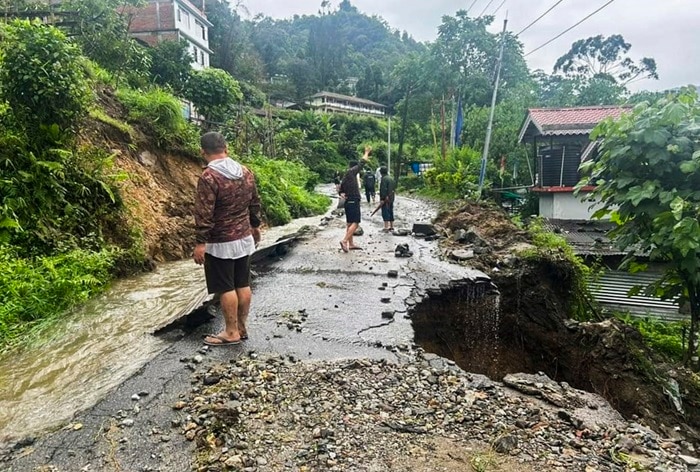
ANI, Gangtok June 15, 2024 : Following the incessant rains and landslides in Sikkim, which claimed nine lives and left 1,200-1,400 tourists stranded in the Mangan district, State Chief Minister Prem Singh Tamang announced an ex-gratia of Rs five lakh each to the families of deceased and promulgated that the government would re-build the destroyed homes.

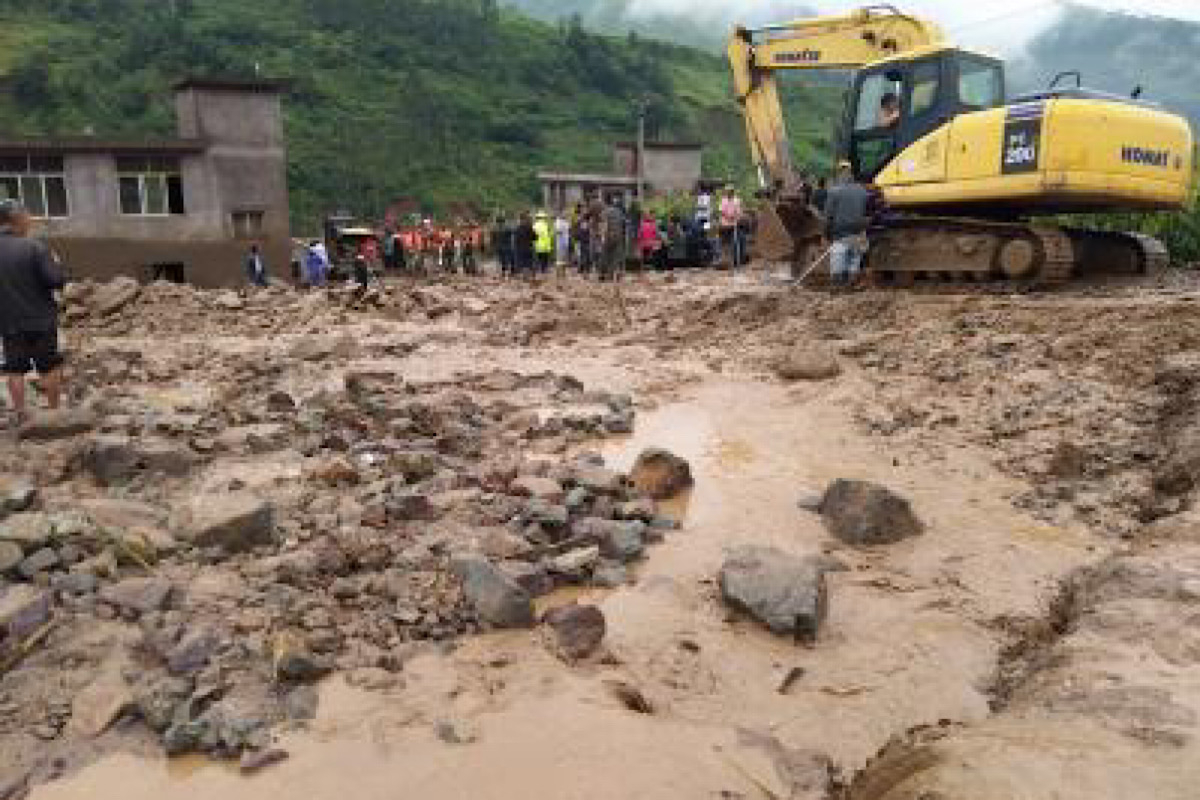
In the last three days, Sikkim has witnessed two natural calamities: a landslide in Namchi district in which three people lost their lives, and similarly, a landslide happened on the intervening nights of June 12 and 13 in Mangan district in which six people lost their lives. Around 1,200-1,400 tourists are also stranded in the Mangan district of the state.
“This is a sad incident, six people have died in the Mangan district, and in Majuwa, due to landslide three have lost their lives and several are injured. Several houses have also been damaged. A total of 67 families have been relocated. I have informed the central government about the extensive losses and have requested immediate funds to aid our response”, CM Tamang said while speaking to ANI.
“With road closures and the inability to move heavy vehicles, we are facing a surge in food prices and commodity shortages. We are taking these matters very seriously and have sought help from the centre…We are providing Rs 5 lakhs in compensation to the families of the deceased. We will also rebuild the homes of those whose properties have been destroyed or swept away”, he added.
The Chief Minister, earlier in the day, also took stock of the flood-affected areas of Yangang and Melli in Namchi where he was seen interacting with the affected families.
In a post on ‘X’, the Chief Minister wrote, “During my official visit to the landslide-stricken areas of Majhua, Yangang, in the Namchi District today, I had several key objectives: to assess the damage, oversee the disbursement of relief materials, and provide financial assistance to the affected residents. I visited several of the worst-hit areas and personally interacted with the affected residents. Listening to their concerns, I offered words of encouragement and assured them of the government’s commitment to their rehabilitation. We provided food supplies, water, sanitation, medical aid, and shelters where necessary.”
Affirming the Sikkim government’s commitment, the CM added, “To support the immediate and long-term needs of the affected families, I handed over cheques to the victims. The financial aid was categorized for immediate relief, covering emergency expenses and daily necessities. I emphasized the government’s commitment to providing long-term support to the affected areas and outlined a multi-phase plan that includes infrastructure rehabilitation.”

“My visit to Majhua, Yangang, was a significant step in addressing the immediate needs of the victims and laying the groundwork for long-term rehabilitation. The disbursement of relief materials and financial aid has provided much-needed support to the affected residents, and our commitment to ongoing assistance has instilled hope and confidence in the community. The government will continue to monitor the situation closely and ensure that all necessary resources are mobilized to aid in the recovery and rebuilding process”, stated CM Prem Singh Tamang.
Meanwhile, after tourists from West Bengal have been stuck in Sikkim due to heavy rainfall and landslides, the Bengal government has opened a help desk in Rangpo to assist tourists stranded in North Sikkim.
Due to recent heavy rain and landslides in Sikkim, many tourists from West Bengal have been stranded in Sikkim. In order to assist the stranded tourists, a Tourist Facilitation Help Desk has been opened at Rangpo, an order by the Office of the District Magistrate of Kalimpong said.
The order further provided the contact numbers of the concerned staff for the stranded tourists. People can contact:
Rabi Biswakarma – 8768095881
Puspajeet Barman – 9051499096
A day earlier, Sikkim Chief Secretary Vijay Bhushan Pathak said that they have sent a requisition for Air Force helicopters for the evacuation of tourists.
“We have sent the requisition for Air Force helicopters on behalf of the Sikkim government. As soon as the weather becomes suitable for flying, the evacuation of tourists will start,” he said.
“Gratuitous relief is being given to the families of deceased people. For those who are severely injured, their treatment is going on in hospitals,” the Chief Secretary added.

For NH 10 restoration, Centre allots Rs 500 crore, to sanction Rs 2,000 crore to rebuild it: Raju Bista

Darjeeling MP to request PM’s intervention to protect people living along Teesta banks

PRASHANT ACHARYA and YOWAN MOTHAY, EOI, KALIMPONG / SILIGURI,JUNE 15, 2024 : The Centre has allocated Rs 500 crore towards addressing the immediate repair and restoration of National Highway – 10 and is preparing a detailed project report under the supervision of scientific and terrain experts for rebuilding NH-10,and expanding it by further10 meters, for which a budget of Rs 2000 crores will be additionally sanctioned, Darjeeling M. P. Raju Bista said on Saturday.

He assured that he would approach the Centre and the West Bengal Government, Niti Aayog, National Disaster Management Authority to help solve the problems they were facing. 
During the day, Bista visited villages situated along river Teesta and interacted with people whose lives had been upturned due to the devastating flood in Teesta. 
“This year’s unusually heavy pre-monsoon rains have led to further devastating consequences in our Kalimpong, Darjeeling and Sikkim region,” he said. 
During the visit, he expressed his condolences to the families who had lost their loved ones and his solidarity with those who had been displaced or had lost their homes and livelihood due to the ongoing rains.
“The relentless rains and resulting damage highlight he region’s vulnerability, ”he said. 
“During this challenging time, it is crucial for the Centre, State, and local bodies such as Gorkhaland Territorial Administration, Panchayat Samiti, and Panchayats to collaborate effectively in responding to this unfolding disaster,”Bista told reporters at Teesta. 
He said: “In a federal structure like ours, responsibilities are divided between the Centre and the State under the Disaster Management Act, 2005 (DMA2005). 
Each state, headed by the Chief Minister through the State Disaster Management Authorities(SDMAs), is mandated to formulate and coordinate disaster response efforts based on national guidelines.
Under Chapter II Section26 (35) of the Gorkhaland Territorial Administration Act of 2011, disaster management, relief and rehabilitation are GTA’s transferred subjects. It is therefore primarily GTA’s responsibility to focus on disaster risk reduction and mitigation in our region.
However, it remains unclear whether GTA has established a dedicated body such as GTA Disaster Management Authority(GTA-DMA) or the District Disaster Management Authority (DDMA), as required under the DMA2005. Because of all this, thousands of people have continued to suffer. 
Double tragedy has struck the people who had become victims of the Teesta Floods of October 2023, and who are yet to receive any help from the West Bengal Government. Neither have they declared the Teesta Floods as “disaster”, which would have allowed Rs 120crore of SDR Funds to be used towards the rehabilitation of the people here.” 
Bista said he had formally requested intervention from Prime Minister Narendra Modi as Chairman of the National Disaster Management Authority, outlining the failure of the West Bengal Government to adequately protect lives and livelihoods along the Teesta River.
“Given the strategic significance of the region, particularly in terms of national security, I have also requested for a Central team to assess the situation and take necessary actions to fix the damage at the earliest, ”he said. 
Bista also suggested people should start ‘Teesta Aarati’ like Ganga Aarati along river Teesta to pray river God for the savior from natural disaster.

12 fatalities, 14 injured as tempo traveller plunges into Alaknanda river in Uttarakhand”

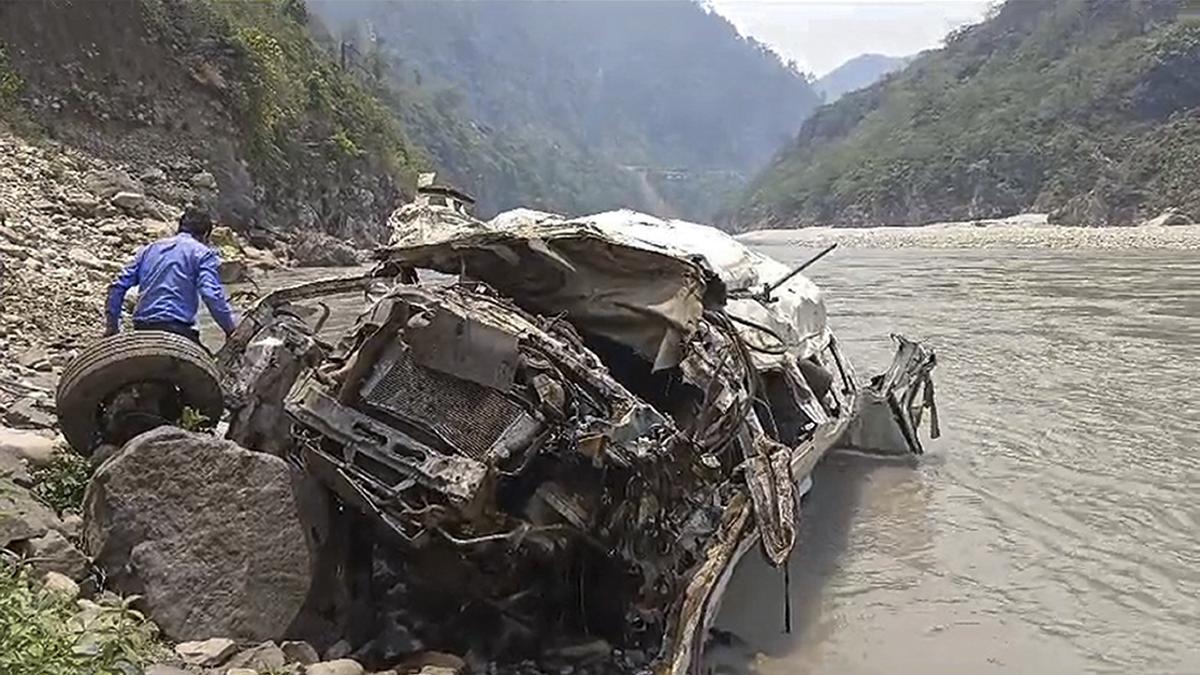
PTI, Rudraprayag, Jun 15, 2024 :  Twelve tourists lost their lives and 14 injured when a tempo traveller skidded off the road and fell into Alaknanda river on Badrinath national highway in Uttarakhand here on Saturday, officials said.

     Garhwal Inspector General of Police KS Nagnyal said that the victims of the accident were tourists on the way to visit Chopta.
     Nagnyal said 26 people were in the vehicle and most of them were residents of Delhi, ten died on the spot. Twelve people died in the accident, the IG said.
     On Chief Minister Pushkar Singh Dhami’s instructions, seven persons seriously injured in the accident have been admitted to AIIMS, Rishikesh through heli-ambulance, while six others are being treated at Rudraprayag district hospital, he said.
     District Disaster Management Officer Nandan Singh Rajwar said the accident happened around 11 am, and police and State Disaster Response Force (SDRF) teams rushed to the spot and started relief and rescue operations.
     He said that the vehicle fell on the banks of Alaknanda river about 250 meters below the road.
     Prime Minister Narendra Modi expressed grief over the accident and termed it “heartbreaking”.
     In a post on X, the Prime Minister’s Office said, “The road accident in Rudraprayag, Uttarakhand is heartbreaking. My deepest condolences to the bereaved families who lost their loved ones. Along with this, I wish speedy recovery of all the injured. Under the supervision of the state government, the local administration is engaged in providing all possible help to the victims.”
    President Droupadi Murmu condoled the loss of lives in the accident and prayed for the speedy recovery of the injured.
     In a post on X in Hindi, Murmu said, “The news of the death of several people in a road accident in Rudraprayag, Uttarakhand is sad. I express my deepest condolences to the bereaved families and pray for the speedy recovery of those injured.”
     Union Home Minister Amit Shah expressed condolences to the families of those who lost their lives in the accident.
    In a post on X, he said: “Received the tragic news of the road accident in Rudraprayag, Uttarakhand. My condolences are with the families of those who lost their lives in this accident. The local administration and SDRF teams are engaged in relief and rescue work and all possible help is being provided to the injured. I pray to God for the speedy recovery of the injured.”
     CM Dhami expressed grief over the accident and ordered the district magistrate to investigate the incident. He also directed officials to provide necessary treatment to the injured.
    In a post on X, the chief minister said that the local administration and the State Disaster Response Force (SDRF) team are engaged in relief and rescue operations and that the injured have been admitted to the nearest medical centre.
    He added, “We are fully committed to provide all possible help to the injured.”

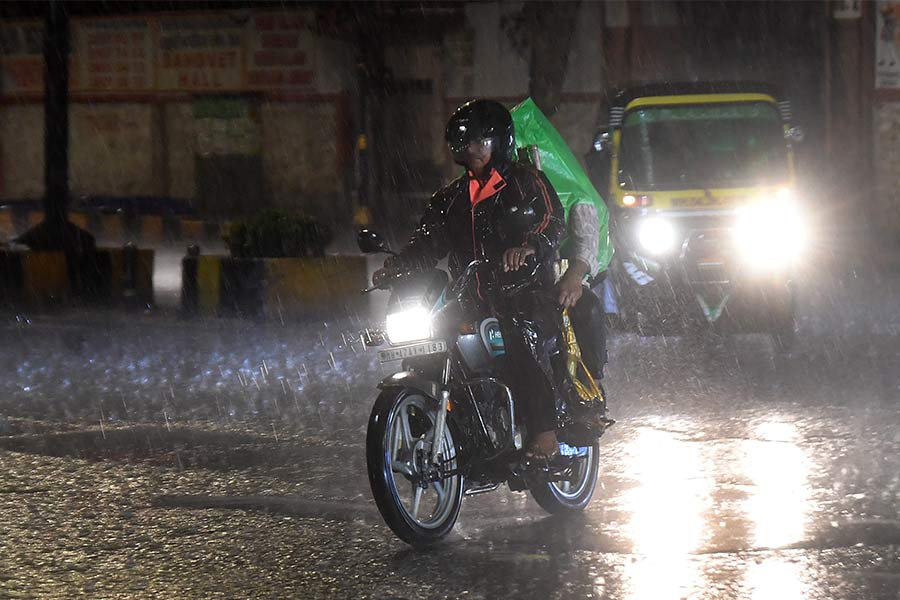
Monsoon to advance into whole of north Bengal in few days, heavy rain likely: Met department

While the sub-Himalayan districts are facing disruption in a few areas owing to heavy rain, some districts in south Bengal are likely to experience heatwave and severe heatwave conditions for the next few days, the weather office said

PTI, Calcutta, 14.06.24 : The southwest monsoon is likely to advance into the whole of sub-Himalayan West Bengal and some parts of Gangetic West Bengal in the next four to five days, the Met Department said on Friday.

Heavy to very heavy rainfall at one or two places is very likely to continue over the state’s northern districts, which are reeling under relentless downpour for the past few days.

While the sub-Himalayan districts are facing disruption in a few areas owing to heavy rain, some districts in south Bengal are likely to experience heatwave and severe heatwave conditions for the next few days, the weather office said.

It also warned of landslides in the hilly areas of Darjeeling and Kalimpong districts.

The water level is likely to rise in rivers flowing through the sub-Himalayan districts, including Teesta, Jaldhaka, Sankosh and Torsa, it said.

The Met Department recommended regulation of traffic and avoiding movement in landslide-prone areas in the hills.

In the past 24 hours till 8.30 am on Friday, Rongo in Kalimpong district recorded the highest rainfall in West Bengal at 150 mm, followed by Alipurduar (140 mm), Jhalong (140 mm), Dhupguri (120 mm), Sevoke (100 mm), Pundibari (100 mm) and Champasari (80 mm), it said.

The weatherman forecast heavy to very heavy rain in Cooch Behar, Jalpaiguri, Alipurduar, Darjeeling and Kalimpong districts in the next few days, with extremely heavy rainfall in Alipurduar district till Saturday.

1,215 tourists stranded in Mangan, flood fear in N Bengal

Lachung, a town in the Mangan district of Sikkim, is currently facing a critical situation where 1,215 tourists are unable to leave due to heavy rain and road closures. C S Rao, Principal Secretary of Tourism and Civil Aviation, confirmed this today and stated that among the stranded tourists, 15 are foreigners with 10 from Bangladesh.
SNS | Siliguri | June 15, 2024 : Lachung, a town in the Mangan district of Sikkim, is currently facing a critical situation where 1,215 tourists are unable to leave due to heavy rain and road closures. C S Rao, Principal Secretary of Tourism and Civil Aviation, confirmed this today and stated that among the stranded tourists, 15 are foreigners with 10 from Bangladesh. However, Mr. Rao assured that all tourists are safe and secure. The local authorities have advised the stranded tourists to remain in their current locations for their own safety.

The Office of the Chief Secretary of Sikkim Government is in discussions with the relevant ministry to arrange for the airlifting of all tourists, as long as weather conditions permit. The Sikkim authorities have also devised a plan to transport them by land in the event that conditions improve. The Chief Minister of Sikkim, Prem Singh Tamang, led a high-level meeting at Mintokgang today to address the recent disaster that has significantly impacted the state. The main focus of this meeting was to strategize and coordinate our response efforts in order to restore normality and ensure the safety and well-being of the residents. During the meeting, officials presented detailed reports on the extent of the damages, with a particular emphasis on critical road disruptions and immediate challenges faced by affected individuals.

They evaluated the destruction of infrastructure, particularly key roads and bridges essential for transportation and relief operations. Meanwhile, engineers from the Irrigation and Waterways department in West Bengal are closely monitoring the situation following a weather forecast predicting heavy rainfall in Mangan and surrounding areas in Sikkim within the next 24 hours. The flow of water from the Teesta river has resulted in partial impacts on Kalimpong, Darjeeling, and Jalpaiguri. In response, the authorities of the Teesta Barrage Project have systematically opened almost all gates. Chief Engineer Debasish Moulik reported a discharge rate of 3,500 cubic metres per second yesterday. Kalimpong, Alipurduar, and Jalpaiguri districts are expected to receive heavy (7- 11 cm) to very heavy (12-20 cm) rainfall between 14 and 18 June, with Alipurduar potentially experiencing extremely heavy (20 cm) rainfall on 14 June.

In the past 24 hours, Hasimara, Banarhat, and Alipurduar have already seen significant rainfall, causing local rivers to reach danger levels. Hasimara received 151 mm while Alipurduar received 141 mm of rain during this period. A Flood Control Room has been established since 1 June of this year. Chief Engineer Krishnendu Bhowmick of North Bengal has reported that engineers are closely monitoring the situation based on reports from the Central Water Commission, specifically regarding rivers originating from Sikkim and neighbouring country Bhutan which flow through northern north Bengal.

As many as 1,200 tourists stranded in North Sikkim

Sanchita Aich Bag, MP, 14 June 2024, Siliguri: Owing to incessant rainfall in Sikkim, triggering landslides, different areas of North Sikkim have been cut off. Around 1,200 tourists are reportedly stranded in Lachung and Mangan district. 

The Sikkim government, with the help of the government of India, is planning to evacuate the tourists from there. 
“As per the ground report, around 1200 domestic and 15 foreign tourists (two from Thailand, three from Nepal and 10 from Bangladesh) are stranded in Lachung, Mangan district. They are all safe and sound. The local authorities have requested all the stranded tourists to stay put in their respective place of stay and avoid taking any risks,” stated CS Rai, principal secretary, tourism and civil aviation, Government of Sikkim, in a release issued on Friday. 
“There is adequate stock of food supplies and rations to cater to all the stranded tourists. The office of the Chief Secretary, Government of Sikkim has already initiated talks with the concerned Ministry, Government of India for airlifting of all the tourists subject to clear weather conditions,” the release further stated. 
“If required the tourists shall also be evacuated by road. Tourism and Civil Aviation department, Government of Sikkim is working in close co-ordination with the concerned district administration, Police department and the tourism official at Mangan,” the release said, adding: “Only Lachung is cut off from the state, all other parts of Sikkim are open and safe for travel.” 
Meanwhile, the condition of Sikkim has affected the tourism industry. Vehicular movement has been restricted in many places on the National Highway (NH 10). Heavy vehicles are travelling through Lava-Gorubathan, which is a longer route.
The diversions to Sikkim are time taking and also costlier. Small vehicles are also charging double the amount, as the condition of the roads is very bad in some areas and detours have to be taken. 
“Sikkim plays a very important role in the tourism business of this region. NH 10 closes down often owing to landslides and floods. This road needs to be repaired permanently or an alternate route so that such problems do not occur in future,” said Samrat Sanyal, secretary of Himalayan Hospitality and Tourism Development Network. 
Siddhartha Soodh, president of Kalimpong Hotel Owners’ Association, said: “The closure of NH 10 is affecting tourism business in Kalimpong. The government should find a permanent solution to the problem.” 
“I have booked a small vehicle from Siliguri Junction to go to Gangtok, which charges Rs 5500,” said Md. Ansul Mia, a tourist from Bangladesh who was in Siliguri on the way to Bangladesh. 
Courtesy & source- Millennium Post
https://www.millenniumpost.in/bengal/as-many-as-1200-tourists-stranded-in-north-sikkim-567989?infinitescroll=1

Alert in north Bengal after rain wreaks havoc in Sikkim

PTI, Kolkata, Jun 14, 2024 :  Following incessant rainfall causing devastation in neighbouring Sikkim resulting in overflowing of the Teesta river, the West Bengal Irrigation department issued an alert for the northern districts of the state, an official said on Friday.

    
The release of water from the barrages has resulted in rising the water level of the Teesta and because of that there is a threat of flood in areas on both sides of Teesta in Jalpaiguri district, he said.
     
Teesta is one of the major rivers of the state, and Jalpaiguri district is in the floodplain of this river. A barrage across the river was built at Gajoldoba in the district. Darjeeling and Kalimpong districts in the northern part of West Bengal share borders with Sikkim where rain-triggered landslides left a trail of destruction and six dead people on Thursday.
    
“The water of Teesta is rising because of the release of water from barrages in Sikkim. Teesta is coming down with great speed and an alert has been issued in this regard. We have taken all precautionary measures. Leaves of all the officials have been cancelled,” the official told PTI.
    
The Jalpaiguri district administration has been using public address system asking inhabitants near the Teesta to move to higher land, he said, adding that the fishermen were advised not to venture into the river.
    
“In several places, Teesta is almost getting into townships. So much water is coming down from the mountain that it is not possible for the barrage to stop that. As a result, plain lands will be affected. Irrigation department officials have been sent for on-site inspection,” he added.
    
When contacted, an official of the Jalpaiguri Sadar Sub-Divisional office said the alert has been sounded in all blocks.
    
“Everything from boats to rescue equipment has been kept ready. Residents have been asked to leave river banks,” he said.
    
On Thursday, a sub-divisional magistrate went to Maynaguri to review the flood situation of the Jaldhaka River, he said, adding that the administration is working to evacuate the villagers of Odlabari gram panchayat to a safe distance.
    
In neighbouring Sikkim, at least six people were killed and 1,500-odd tourists stranded as massive landslides triggered by incessant rainfall caused devastation in Mangan district on Thursday.
    
A newly-constructed bailey bridge at Sangkalang collapsed snapping the link between Mangan with Dzongu and Chungthang. Landslides blocked stretches of roads and several houses were inundated or damaged, while electricity poles were swept away.

Kalimpong flood victims demand protection wall, compensation

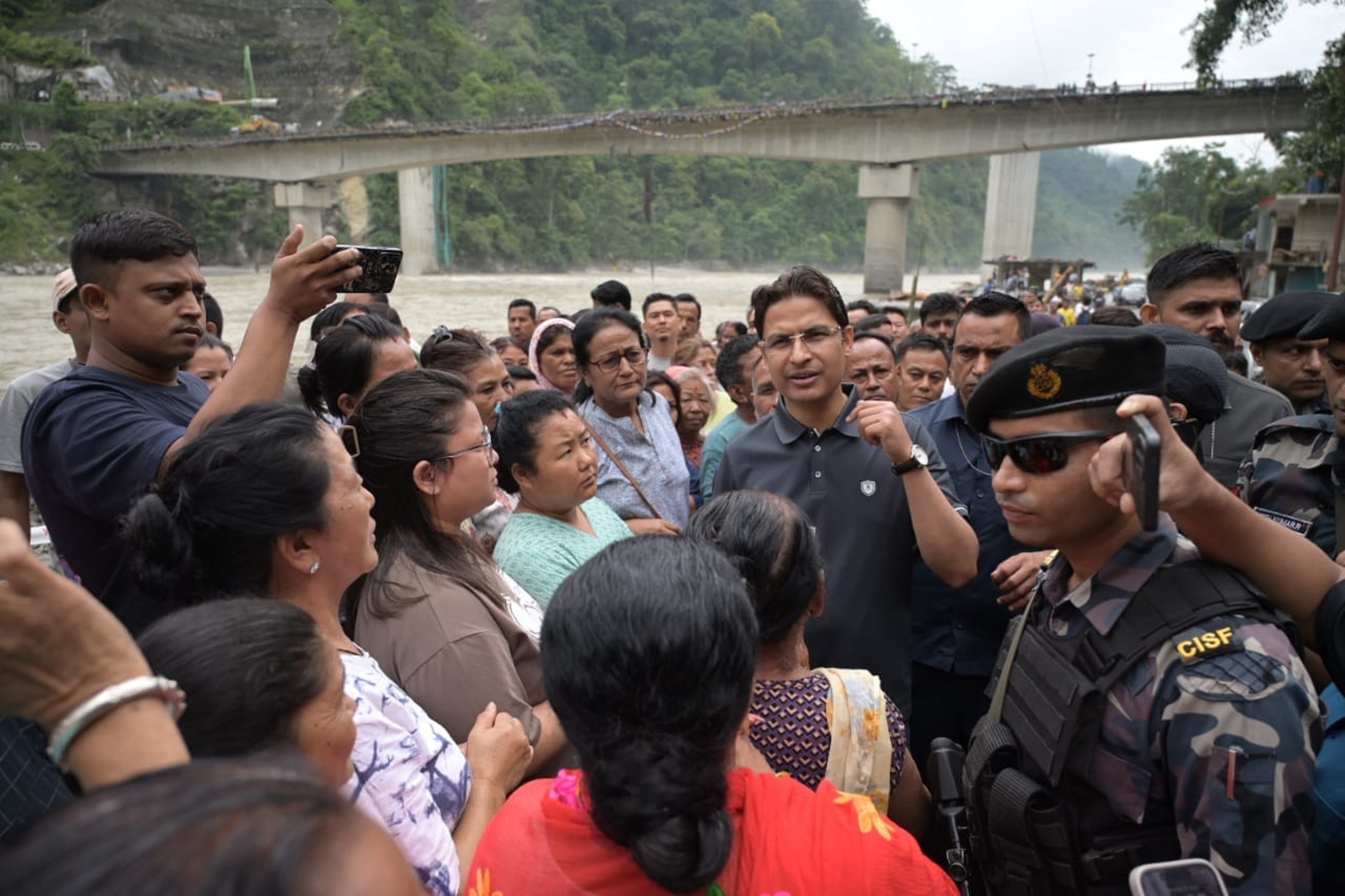
YOWAN MOTHAY, EOI, KALIMPONG, 14 JUNE 2024 : The Kalimpong district administration called an emergency meeting on Friday to deal with the Teesta disaster. The meeting was held at the Tourist Lodge in Chitre. Kalimpong Block-1 BDO Simrul Islam, Sabasad Sinora Namchu, Block-1 Panchayat Committee Chairman Mamata Gurung and other officials of PWD and NHPC were present in the meeting. 

After the first phase of the administrative meeting was held at the tourist lodge in Chitre, in the second phase, the officials held a meeting with the flood victims at the Community Hall in Teesta. In the meeting, the flood victims presented their grievances to the authorities. BDO Simrul Islam while informing about the initiatives being taken by the administration for the people of
Teesta said that the effects of the floods that occurred in the Teesta area on October 4 were still present. Hence the demand of Teesta flood victims was protection wall and compensation. 
“In the past, in the administrative meeting called by the Chief Minister in Kurseong, we had given compensation to 270 Teesta flood affected families,” he said. Besides, 104 Teesta flood affected families would get NHPC compensation soon after Gorkhaland Territorial Administration had inspected the area, he said. 
Moreover, he said that the Kalimpong District Collector has written to the PWD to raise the height of the road from below Teesta Bridge to Ravi Jhoda and the work would start soon. He also said that the families who had already received compensation from NHPC had been informed that they would not get compensation again through NHPC. 
In the afternoon the PWD officials, senior engineers, Kalimpong District Magistrate Balasubramaniam T and Kalimpong District Superintendent of Police Srihari Pandey inspected Teesta Bridge, Ravi Jhoda, Likhubhir and other flood affected areas. 
Balasubramaniam T informed ongoing works would be inspected and short-term and long-term actions would be planned to improve the.safety of the stretches of the NH-10.

Calcutta HC asks CBI to include GJM’s Bimal Gurung in murder case of Madan Tamang murder case chargesheet

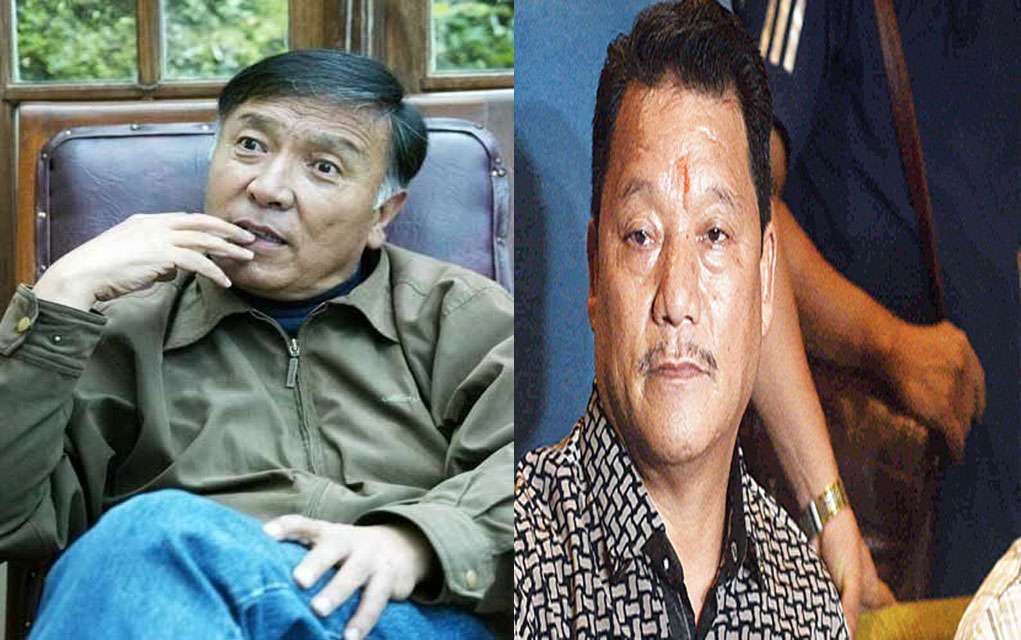
EOI & PTI, DARJEELING, JUNE 13, 2024 : The Calcutta High Court on Thursday set aside the discharge order of the City Sessions Court given to Bimal Gurung in 2017 in connection with the Madan Tamang murder case.

The City Sessions Court order removed the name of Bimal Gurung from the list of accused persons. Tamang, who headed the All India Gorkha League was hacked to death in broad daylight on May 21, 2010 near the Upper Clubside area while overseeing preparation for a public meeting. 
Along with Gurung who is the Gorkha Janmukti Morcha president 53 others had been named as accused in the CBI charge sheet. 
Initially, the CID was investigating the case but in late2010, Tamang’s wife Bharati filed a petition demanding a CBI probe. The CBI filed a chargesheet against the 54 accused, including Gurung his wife Asha and other senior GJM leaders. However, in August 2017,the City Sessions Court in Kolkata discharged Gurung from the CBI chargesheet list of accused in the murder case. 
Bharati and the CBI filed a revision writ petition in Kolkata High Court, challenging the verdict. The court of Justice Subhendu Samanta on Thursday set aside the verdict of the City Sessions Court, paving the way for a criminal revision on Gurung.” 
Now he (Gurung) will again have to stand trial as an accused in the Tamang murder case. After the 2017 verdict, except Gurung, all others were appearing trial in the court,” said a source. 
Amar Lama who is the brother of the deceased and was pursuing the case regularly said: “With the verdict of the HC today, now the way is open for Gurung’s trial”. 
Incidentally, Hamro Party leader Ajoy Edwards has offered Bharati to pursue the murder case of the slain AIGL leader.
PTI, Kolkata, Jun 13, 2024 :  The Calcutta High Court on Thursday directed the CBI to include the name of Gorkha Janmukti Morcha (GJM) supremo Bimal Gurung in the charge sheet in the murder case of Akhil Bharatiya Gorkha League (ABGL) chief Madan Tamang in 2010.

    A Kolkata court in 2017 removed the name of Gurung from the list of the accused persons. Tamang’s wife Bharti challenged the order in the high court.

    Tamang was hacked to death in Darjeeling on May 21, 2010 in broad daylight when he was overseeing preparations for a public meeting.

    Stating that the City Sessions court judge committed an error by separating Gurung from the other accused person, Justice Subhendu Samanta of the high court directed the CBI probing the murder case to include Gurung’s name in the charge sheet.

    “Complicity against Bimal Gurung has been sufficiently established,” Justice Samanta said in his order.

    Gurung’s counsel had argued before the City Sessions Court that his client was in Kalimpong the day Tamang was murdered, and that the CBI had no proof against him.

    “The charge of this case is required to be framed against Bimal Gurung with other accused persons. The alleged portion of the impugned order passed by the Learned Chief Judge of City Sessions Court through which Bimal Gurung was discharged from this case is hereby set aside,” the order read.

    Bimal Gurung, his wife Asha and several other senior leaders of the GJM had surrendered before a sessions court in Kolkata on December 21, 2016, in connection with the murder case. They were granted bail by the court.

Level of Teesta rises again, people shift to safer areas: Panic in Kalimpong

YOWAN MOTHAY, EOI, KALIMPONG, JUNE 13, 2024 : There was panic in the flood affected areas of Teesta and Malli on Thursday, with the rise in the level of water of river Teesta following incessant rains in north Sikkim. 

People in the flood-hit areas of Teesta and Malli were forced to move to other places with their important papers and other materials. 
The road communication between Kalimpong and Darjeeling was disrupted as the road below Teesta Bazar connecting with Peshok Road was submerged by the rising water level of river Teesta.There was no traffic all day. 
Kalimpong District Magistrate Balasubramaniam T, said due to heavy rains in the upper part of Sikkim, the water level in river Teesta River had increased and some places like Ravi Jhora and Teesta Bazar roads have been submerged under water. 
Traffic had been stopped from Teesta Bazar and Peshok towards Darjeeling. The traffic from Malli to Chitre had also been stopped due to cracks on the road surface. Traffic diversions had been done accordingly. 

People were worried in the absence of any effort on the part of the government to help the affected people. They were more worried as people were yet to get a by relief for the damage they suffered in the massive Teesta flood in October last year. 
“Is there no administration or a government,” people were asking. “If such a situation occurs in the beginning of monsoon, what will happen in the coming days? Where do we go? It has been almost a year since the flood in Teesta and we haven’t received anything yet. Our houses had been swept away. We are staying at our son’s house. Even this house was flooded in today’s rain. We are remembered only when there is a vote. We have nothing to do with the government,” a flood victim of Teesta said, weeping. 
The District Magistrate said, however, there was no major loss to any property. People were being constantly alerted and kept informed about the rising level of water. “All our flood shelters are ready, no one has moved into the flood shelter yet. Rainfall and water levels are being continuously monitored.” 
He said that civil security personnel and special police teams had been mobilized at strategic locations for necessary monitoring and surveillance. Disaster management teams at districts and block levels were actively monitoring the situation and the control room was active 24 hours a day’ of voters.

The rising trend of NOTA in electoral politics

Sinjini De, EOI, 14 June 2024 : n democratic politics, success is often measured by the fairness and integrity of the electoral process. When individuals vote, they express their basic political rights as citizens of the country. Just as individuals have the right to choose who forms the government, they also have the right to reject all contesting parties to express their disapproval. 

This is encapsulated by the idea of NOTA or ‘None of the Above’.Although NOTA was introduced in India in September 2013, its history traces back to 2004, when the People’s Union for Civil Liberties (PUCL), a non-governmental organization, approached the Supreme Court seeking measures to protect the ‘right to secrecy’ of voters. They argued that the Conduct of Elections Rules 1961 unjustly violated this right as the presiding officer from the ECI maintained a record of those who chose not to vote, along with their signatures and thumb impressions. 
Fast forward nine years later, and the Supreme Court of India, in the PUCL vs. Union of India judgment of 2013, directed the Election Commission of India to include NOTA in elections to the Lok Sabha and respective state legislative assemblies as a measure to safe guard voters’ choices. Following this judgment, NOTA was used for the first time in the 2013 Assembly Elections of the five states of Mizoram, Chhattisgarh, Rajasthan, Delhi, and Madhya Pradesh, and later in the 2014 General Elections as well.
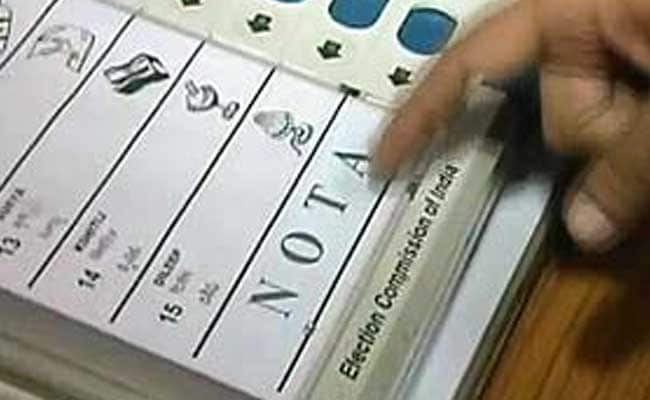
Present at the very bottom of the ballot as the last option, NOTA gives citizens the right to publicly and formally express their dissent against the contesting parties in an election. If a citizen goes through the list of political parties 
available and finds themselves unsatisfied, they can then opt for NOTA. This enables them to express their negative opinions and lack of support for the candidates while still exercising their right to vote as citizens. With the introduction of NOTA, voters now have the right to reject as well as the right to elect.
However, critics have questioned the effectiveness of this option now available to voters. The Supreme Court of India has even termed NOTA an ‘invalid vote’ since it does not change the electoral outcome in anyway. For example, in a constituency with 100 seats, if NOTA gets 99 votes, the seat will still be awarded to the party that won that one vote.
Therefore, it does not matter how many people opt for NOTA; the result will be in favor of the next best option. In some reserved constituencies, a high count of NOTA votes has been recorded. This shows bias and discrimination against candidates belonging to a certain caste and is a direct misuse of the purpose of NOTA.
Some consider NOTA a waste of votes since it does not change any outcome and only subtracts from the winning margin of the candidate who was going to win anyway. The results feel inconclusive and confusing since there is no clear mandate for the winning candidate. However, what NOTA does is successfully send a message to the contesting parties. It serves as feedback to the political 
parties and their candidates and lets them know that the public is dissatisfied with them. This then forces the concerned parties to change their ways and field better, more capable, and more ethical representatives, as they risk losing the seat if voters are dissatisfied.
While the number of NOTA voters has marginally dipped this year since its introduction in 2014, the continual presence of NOTA votes in the electoral race paints a rather distressing and alarming picture of Indian democracy. In about a third of the Lok Sabha seats in Karnataka, NOTA emerged as the third-most preferred option after the BJP and Congress. Indorere wrote electoral history by recording an all-time high of 2,18,674 NOTA votes. Similarly, North Eastern states recorded a higher number of NOTA votes than before, with Assam scoring the highest average of1.19% across 14 seats .
A high record of NOTA votes indicates that something is wrong and needs to be changed. NOTA need not restrict itself to a totally symbolic stance. In fact, the Supreme Court is considering a petition for nullifying elections and holding fresh polls in cases where NOTA secures a majority. Barring candidates who secure fewer votes than NOTA and having them bear the cost of re-election helps to mitigate the financial loss on the Centre and allows the voters to select from a fresher and better batch of candidates. However, while NOTA does provide an opportunity for the voter to voice their dissent, it also emphasizes the importance of political awareness so that NOTA is used for its intended purpose and not to undermine the representative structure of our democracy. 
(The views of the author are personal)
Modi 3.0: Ajit Doval Reappointed As NSA, PK Mishra As Principal Secretary To PM Modi

PTI, New Delhi, Jun 13, 2024 : Ajit Doval, one of India’s most celebrated spymasters, has been part of many key decisions taken by the Modi government in its first and second terms as the country’s National Security Adviser (NSA).

    He was on Thursday re-appointed as the NSA for a record third term, the government said in an order. With more than 10 years in the job, he is the longest serving NSA.
    Doval (79) holds over 33 years of extensive experience in the field including Northeast, Sikkim, Punjab and Jammu and Kashmir region.
    A master of spycraft, he spent over six years in Pakistan also, official sources said.
    Doval spearheaded the operations wing of the Intelligence Bureau (IB) — the country’s internal security intelligence agency — for a long time.
    He also founded the Multi Agency Centre (MAC), which came into force after the 2001 standoff with Pakistan. The MAC is a counterterrorism grid under the aegis of IB, they said.
    A 1968-batch IPS officer of Kerala cadre, Doval retired as chief of Intelligence Bureau (IB) in 2005.
    He was appointed as the NSA for the first time on May 30, 2014 and re-appointed for another term from May 31, 2019.
    With this fresh term, Doval becomes the first NSA to be appointed for three consecutive terms.
    During his first tenure, Doval is believed to have played a pivotal role in the 2016 surgical strikes on terror launch pads in Pakistan-occupied Kashmir after the Uri terror attack.
    He has also been widely hailed for his contribution in the national security domain, including his role during the Balakot air strike after the Pulwama terror attack in 2019.
    Doval, known as one of the best operational brains in intelligence circles, was one of the main negotiators from India with the hijackers of Indian Airlines plane IC-814 taken to Kandahar in 1999.
    Born in the Garhwal region of Uttarakhand on January 20, 1945, Doval received his education in Delhi, Ajmer and in Agra, they said.
    Having the distinction of being the first police officer who received the Kirti Chakra, a military gallantry honour, Doval will be providing his deep insight about the threats faced by the country from within and outside.
    He was awarded the honour in 1988 for conducting anti-insurgency operations in Mizoram and bringing Mizo insurgent leader Laldenga to the negotiating table by winning over six of his seven commanders.
    Doval had also clandestinely entered Myanmar and China to break the dominance of Mizo insurgent outfit, the sources said.
    Widely recognised for his clear insight into and vision on Indian and global security issues, he has been actively participating at different fora at home and abroad on strengthening the Indian security apparatus and forging closer cooperation among security forces globally.